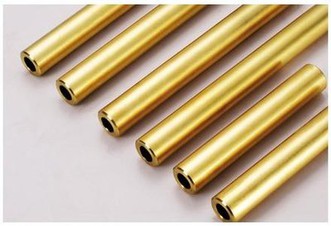
What Is T1 Copper?
T1 copper is a high-purity wrought copper grade defined by the Chinese national standard GB/T 5231-2012. This standard specifies the chemical composition, mechanical properties, and dimensional tolerances for wrought copper and copper alloys. Within this standard, T1 sits at the very top of the ordinary pure copper series.
The most important specification of T1 copper is its minimum copper content of 99.97%. This means that for every 1,000 kilograms of T1 copper, no more than 300 grams can be impurities. The allowable impurities include elements like phosphorus, iron, lead, antimony, arsenic, bismuth, and oxygen. Each of these is strictly limited to very low levels.
To understand where T1 fits in the Chinese pure copper family, here is the complete comparison:
| Grade | Minimum Cu Content | Oxygen Content | Oxygen-Free? | Typical Purity Level |
|---|---|---|---|---|
| T1 | 99.97% | < 0.002% (20 ppm) | Yes | Highest |
| T2 | 99.90% | 0.02% - 0.05% (200-500 ppm) | No | High |
| T3 | 99.70% | Not specified | No | Medium |
T1 is significantly purer than T2. The difference of 0.07% in copper content might sound small, but in technical applications, that 0.07% represents the elimination of oxygen and other harmful impurities. T1's oxygen content is 10 to 25 times lower than T2. This difference translates directly into real performance advantages.

T1 vs T2 vs T3: Which Grade Should You Choose?
| Property | T1 Copper | T2 Copper | T3 Copper |
|---|---|---|---|
| Minimum copper content | 99.97% | 99.90% | 99.70% |
| Oxygen content | < 20 ppm | 200 - 500 ppm | Not controlled |
| Oxygen-free classification | Yes | No | No |
| Electrical conductivity (% IACS) | ≥101% | ≥100% | ≥98% |
| Thermal conductivity (W/m·K) | ~391 | ~385 | ~375 |
| Hydrogen embrittlement risk | None | High | High |
| Weldability | Excellent | Fair (requires flux) | Poor |
| Outgassing in vacuum | Very low | Moderate | High |
| Relative cost | Highest | Medium | Lowest |
Choose T1 copper when your application demands:
Oxygen-free properties for welding, brazing, or hydrogen atmospheres
Maximum electrical conductivity for high-efficiency power transmission
Vacuum service where outgassing cannot be tolerated
Cryogenic temperatures where impurities can cause embrittlement
High-end audio or precision instrumentation where purity matters
Choose T2 copper when:
Your application is standard electrical or thermal management
You do not need oxygen-free properties
You are not welding the copper (or can use flux)
Budget is a concern and T1's premium is not justified
Choose T3 copper when:
The application is non-critical
Lowest cost is the primary driver
You are using the copper for basic construction or counterfeiting
What Is the ASTM Equivalent of Chinese T1 Copper?
Chinese T1 copper is approximately equivalent to ASTM C10200 (Oxygen-Free Copper).
Here is the detailed comparison between T1 and the relevant ASTM grades:
| Standard | Grade | Minimum Cu | Oxygen Content | Oxygen-Free? | Typical Conductivity |
|---|---|---|---|---|---|
| Chinese GB | T1 | 99.97% | < 20 ppm | Yes | ≥101% IACS |
| ASTM | C10100 (OFE) | 99.99% | < 5 ppm | Yes | ≥101% IACS |
| ASTM | C10200 (OF) | 99.95% | < 20 ppm | Yes | ≥100% IACS |
| ASTM | C11000 (ETP) | 99.90% | 200 - 500 ppm | No | 100% IACS |
As you can see, T1 sits between C10200 and C10100 in terms of purity. It is purer than C10200 (99.97% vs 99.95%) but not quite as pure as C10100 (99.97% vs 99.99%). In terms of oxygen content, T1 matches C10200 at below 20 ppm.
For the vast majority of engineering applications, T1 copper can directly replace C10200 with no measurable performance difference. This includes applications like:
Electrical busbars and switchgear
Transformer windings
Vacuum brazing components
Cryogenic equipment
Welded assemblies
High-conductivity contacts and terminals
Should you use T1 to replace C10100? That depends. For most applications, the difference between 99.97% and 99.99% purity is not detectable in real-world performance. However, certain ultra-demanding applications - such as certain semiconductor or aerospace components - may genuinely require C10100's 99.99% purity. In those cases, T1 is not a direct substitute. For everyone else, T1 works perfectly.
Chemical Composition of T1 Copper
| Element | Minimum (%) | Maximum (%) | Typical (ppm) |
|---|---|---|---|
| Copper (Cu) | 99.97 | 100 | 999,700+ |
| Oxygen (O) | - | 0.002 (20 ppm) | < 15 |
| Phosphorus (P) | - | 0.002 | < 10 |
| Iron (Fe) | - | 0.004 | < 20 |
| Lead (Pb) | - | 0.003 | < 10 |
| Antimony (Sb) | - | 0.002 | < 5 |
| Arsenic (As) | - | 0.002 | < 5 |
| Bismuth (Bi) | - | 0.001 | < 3 |
| Total impurities (excluding oxygen) | - | 0.03 | < 300 |
The extremely low oxygen content (below 20 ppm) is what gives T1 its oxygen-free classification. This is the single most important difference between T1 and lower grades like T2.
The very low levels of lead, bismuth, and antimony ensure good hot workability and prevent embrittlement. These elements can segregate at grain boundaries and cause cracking during hot forming or welding.
The low phosphorus content is notable. Some other oxygen-free coppers add phosphorus as a deoxidizer, but T1 achieves oxygen removal without significant phosphorus residual. This helps maintain maximum conductivity.
Electrical Conductivity of T1 Copper
T1 copper has an electrical conductivity of ≥101% IACS at 20°C.
| Material | Conductivity (% IACS) | Relative to T1 |
|---|---|---|
| T1 copper | ≥101% | Baseline |
| C10200 (ASTM OF) | ≥100% | Slightly lower |
| C11000 (ASTM ETP) | 100% | Slightly lower |
| T2 copper | ≥100% | Slightly lower |
| Pure silver | 105% | ~4% higher |
| Aluminum (pure) | 61% | ~40% lower |
| Brass (70/30) | ~28% | ~72% lower |
If you are replacing C10200 or C11000 with T1, you will not lose conductivity - you will gain a small amount. If you are designing a new system, you can use T1 with confidence at standard ampacity ratings.
Thermal Conductivity of T1 Copper
T1 copper has a thermal conductivity of approximately 391 W/(m·K) at 20°C.
| Material | Thermal Conductivity (W/(m·K)) | Relative to T1 |
|---|---|---|
| T1 copper | ~391 | Baseline |
| Silver | 429 | ~10% higher |
| C11000 copper | ~385 | ~1.5% lower |
| Aluminum 6061 | 167 | ~57% lower |
| Brass 70/30 | 120 | ~69% lower |
| Stainless steel 304 | 15 | ~96% lower |
For heat exchanger applications, the difference between T1 and standard copper is small but real. A heat exchanger made from T1 will have approximately 1.5% better heat transfer than one made from C11000. This can allow for slightly smaller designs or slightly better performance.
For cryogenic applications, thermal conductivity becomes even more critical. At low temperatures, the thermal conductivity of pure copper actually increases, while most other materials see their thermal conductivity decrease. T1's high purity ensures maximum thermal conductivity at cryogenic temperatures.
For most thermal applications, T2 copper is sufficient. Use T1 when you need every bit of thermal performance, when you are also welding the copper, or when you are operating at cryogenic temperatures.
Mechanical Properties of T1 Copper
The mechanical properties of T1 copper depend heavily on its temper condition. Copper is often supplied in one of several tempers: annealed (soft), half-hard, or hard. The temper is achieved through cold working (rolling or drawing) after annealing.
Annealed (Soft) T1 Copper
This is the most common condition for T1 copper. In the annealed state, the copper is soft, ductile, and easy to form.
| Property | Value (Annealed) |
|---|---|
| Tensile strength | 200 - 250 MPa (29 - 36 ksi) |
| Yield strength (0.2% offset) | 40 - 60 MPa (6 - 9 ksi) |
| Elongation (in 50mm) | ≥30% |
| Hardness (Vickers, HV) | 40 - 60 |
| Modulus of elasticity | 115 - 130 GPa (16.7 - 18.9 msi) |
Half-Hard T1 Copper
After moderate cold working, T1 copper becomes stronger but less ductile.
| Property | Value (Half-Hard) |
|---|---|
| Tensile strength | 250 - 300 MPa (36 - 44 ksi) |
| Yield strength (0.2% offset) | 150 - 200 MPa (22 - 29 ksi) |
| Elongation (in 50mm) | 10% - 20% |
| Hardness (Vickers, HV) | 70 - 90 |
Hard (Full Hard) T1 Copper
After significant cold working, T1 copper achieves its highest strength but lowest ductility.
| Property | Value (Hard) |
|---|---|
| Tensile strength | 300 - 360 MPa (44 - 52 ksi) |
| Yield strength (0.2% offset) | 250 - 300 MPa (36 - 44 ksi) |
| Elongation (in 50mm) | 2% - 6% |
| Hardness (Vickers, HV) | 90 - 110 |
How to choose the right temper:
Annealed: Choose this for deep drawing, complex stamping, bending, or any application where the copper will be formed into complex shapes. Annealed copper is soft and will not crack during forming.
Half-hard: Choose this for general fabrication where moderate strength is needed but some forming is still required. Half-hard copper holds its shape better than annealed while still allowing bending.
Hard: Choose this for applications that require maximum strength and stiffness, such as spring contacts or structural busbars that must resist deflection. Hard copper cannot be bent sharply without cracking.
Physical Properties of T1 Copper
| Property | Value |
|---|---|
| Density (at 20°C) | 8.94 g/cm³ (0.323 lb/in³) |
| Melting point | 1083°C (1981°F) |
| Specific heat capacity | 0.385 J/(g·K) at 20°C |
| Coefficient of thermal expansion | 17.0 × 10⁻⁶ /K (20-300°C) |
| Electrical resistivity (at 20°C) | ≤ 0.01707 Ω·mm²/m |
| Thermal diffusivity | ~115 mm²/s |
Why these properties matter:
The density of 8.94 g/cm³ is useful for weight calculations. If you are designing a busbar that will be mounted on a structure, you need to account for the weight. Copper is heavy - about 8.9 times the weight of water.
The melting point of 1083°C is high enough for most applications but low enough to make brazing and soldering straightforward. Brazing typically occurs at 600-800°C, well below the melting point.
The coefficient of thermal expansion of 17 ppm/K means copper expands about 0.017% for every degree Celsius of temperature rise. For a 1-meter-long busbar that heats up from 20°C to 80°C, the expansion would be about 1mm. This must be accounted for in mounting systems.
Available Forms of T1 Copper
T1 copper is manufactured in a variety of forms to suit different fabrication methods and end uses.
| Form | Typical Thickness / Size | Width | Common Applications |
|---|---|---|---|
| Sheet | 0.5mm - 20mm | Up to 1200mm | Stamping, shielding, gaskets, panels |
| Plate | 20mm - 100mm+ | Up to 1200mm | Busbar, heat exchanger plates, structural |
| Strip | 0.1mm - 5mm | Up to 600mm | Transformer windings, flexible connectors |
| Coil | 0.1mm - 3mm | Up to 600mm | High-volume stamping, continuous production |
| Round rod | 1mm - 100mm diameter | - | Machined parts, contacts, terminals |
| Square rod | 2mm - 50mm | - | Busbar, machined components |
| Flat bar | 2mm - 50mm thick x 10mm - 200mm wide | - | Busbar, grounding, structural |
| Tube (seamless) | 3mm - 200mm OD, 0.5mm - 10mm wall | - | Heat exchanger coils, instrumentation |
| Pipe | Larger diameters, heavier walls | - | Cryogenic transfer lines, industrial piping |
| Custom busbar | Any dimensions per drawing | - | Power distribution, switchgear, panel boards |
Tolerances and surface finish:
Standard tolerances follow GB/T 5231, which is broadly similar to ASTM B152 for sheet and strip. For critical applications, tighter tolerances can often be negotiated with suppliers. Surface finish is typically mill finish (as-rolled) unless specified otherwise. Bright annealed, polished, or other finishes are available upon request.
Applications of T1 Copper
High-End Electrical Components
T1 copper's ≥101% IACS conductivity makes it ideal for applications where electrical efficiency matters. Common uses include:
High-current busbars in switchgear and panel boards
Electrical contacts where low resistance is critical
Transformer windings for high-efficiency transformers
Grounding strips for sensitive electronic equipment
Flexible connectors made from laminated T1 strip
Vacuum Brazing and Electron Tubes
The low outgassing and excellent wetting characteristics of T1 copper make it the preferred material for:
Electron tubes (klystrons, magnetrons, traveling wave tubes)
X-ray tube components
Vacuum feedthroughs
High-vacuum chamber components
Welded bellows
Cryogenic Equipment
T1 copper maintains its properties at very low temperatures, making it suitable for:
Liquid nitrogen transfer lines (77K, -196°C)
Liquid helium transfer lines (4K, -269°C)
Cryostat components
Cold heads for cryocoolers
Thermal straps for cryogenic systems
High-End Audio Cables
In the high-end audio market, copper purity is believed to affect sound quality. While the engineering benefits of high-purity copper for audio frequencies are debatable, the market demands it. T1 copper is used for:
HiFi speaker cables
Interconnects and RCA cables
Headphone cables
Internal wiring in high-end amplifiers
Phono cables
RF and EMI Shielding
The high conductivity and good formability of T1 copper make it effective for:
RF shielding enclosures for wireless devices
EMI gaskets (in strip form)
Shielding cans for sensitive electronics
Test enclosure linings
Heat Exchangers and Thermal Management
The high thermal conductivity of T1 copper is valuable for:
HVAC heat exchangers (where welding is required)
Cooling plates for power electronics
Heat pipes (high-purity copper wicks)
Radiator cores for high-performance applications
LED heat sinks
FAQ
1. What is T1 copper?
T1 copper is a Chinese GB standard pure copper grade with minimum 99.97% copper content and oxygen content below 20 ppm, making it an oxygen-free copper. It is the highest-purity ordinary copper grade under Chinese standards, sitting above T2 (99.90%) and T3 (99.70%). T1 is used for demanding applications like high-end electrical components, vacuum brazing, cryogenic equipment, and high-end audio cables.
2. Is T1 copper oxygen-free?
Yes, T1 copper is oxygen-free. The Chinese standard GB/T 5231 requires T1 copper to have oxygen content below 0.002% (20 ppm) , which meets the international definition of oxygen-free copper. This is comparable to ASTM C10200. Being oxygen-free means T1 copper will not suffer from hydrogen embrittlement when exposed to high-temperature hydrogen atmospheres, and it offers better weldability and lower outgassing than electrolytic copper grades like T2 or C11000.
3. What is the ASTM equivalent of Chinese T1 copper?
Chinese T1 copper is approximately equivalent to ASTM C10200 (Oxygen-Free Copper) . T1 has 99.97% minimum copper content while C10200 has 99.95% minimum. Both have oxygen content below 20 ppm. For the vast majority of engineering applications - including busbars, transformer windings, vacuum components, and cryogenic equipment - T1 can directly replace C10200 with no measurable performance difference. If you need even higher purity, C10100 (99.99%) would be the next step up, but T1 is already sufficient for most technical requirements.
4. Can T1 copper replace C11000?
Yes, but it is overkill for most C11000 applications. T1 has higher purity (99.97% vs 99.90%) and better conductivity (≥101% IACS vs 100% IACS) than C11000. However, C11000 is electrolytic copper with high oxygen content (200-500 ppm), while T1 is oxygen-free. Use T1 when you need oxygen-free properties - such as for welding, vacuum brazing, or hydrogen atmospheres. For general electrical applications where C11000 works fine, T2 copper (99.90%) is a more cost-effective direct replacement.
5. What is the difference between T1 and T2 copper?
Purity and oxygen content are the two main differences. T1 has 99.97% minimum copper content and is oxygen-free (<20 ppm oxygen) . T2 has 99.90% minimum copper content and is not oxygen-free (it contains 200-500 ppm oxygen). This means T1 offers higher conductivity (≥101% IACS vs 100% IACS) , better weldability, no hydrogen embrittlement risk, and lower outgassing in vacuum. However, T2 is more economical (typically 10-20% less expensive) and works perfectly for general electrical, plumbing, and architectural applications. Choose T1 for demanding technical applications. Choose T2 for budget-sensitive general use.
6. What is T1 copper used for?
T1 copper is used for high-end applications that demand purity and oxygen-free characteristics. Common uses include: high-end electrical components (busbars, contacts, transformer windings), vacuum brazing (electron tubes, vacuum components, X-ray tubes), cryogenic equipment (liquid nitrogen and liquid helium transfer lines), high-end audio cables (HiFi speaker cables and interconnects), RF and EMI shielding, heat exchangers where welding is required, and precision instrumentation. If your application involves welding, hydrogen atmospheres, vacuum service, or cryogenic temperatures, T1 is an excellent choice.
7. What is the electrical conductivity of T1 copper?
T1 copper has electrical conductivity of ≥101% IACS at 20°C. This is higher than standard C11000 electrolytic copper (100% IACS) and comparable to other oxygen-free coppers like C10200. The high conductivity comes from the 99.97% purity and extremely low impurities. For practical purposes, a T1 busbar carrying 1000 amps will generate about 1% less heat than an equivalent C11000 busbar. For most applications this difference is small, but for high-current or efficiency-sensitive designs, it is a real advantage.
8. Can T1 copper be welded?
Yes, T1 copper has excellent weldability. Its low oxygen content is the key reason. Unlike electrolytic copper (T2, C11000), which contains 200-500 ppm oxygen and can suffer from hydrogen embrittlement and porosity during welding, T1's oxygen-free nature allows for clean, strong, ductile welds. It is suitable for TIG welding, MIG welding, resistance welding, and brazing. For best results, use appropriate filler metals (such as deoxidized copper filler ERCu) and follow standard welding practices for oxygen-free copper. No special flux is required, though shielding gas is recommended.
9. What forms is T1 copper available in?
T1 copper is available in a wide range of forms: sheet and plate (0.5mm to 100mm+ thick), strip and coil (0.1mm to 5mm thick), round rod (1mm to 100mm diameter), square rod (2mm to 50mm), flat bar (custom dimensions), tube and pipe (various sizes), and custom busbar (any dimensions per drawing). Sheet, strip, rod, and busbar are the most popular forms. Most suppliers can cut to size or produce custom dimensions. Standard temper is annealed (soft), but half-hard and hard are available on request.
10. Is T1 copper suitable for cryogenic applications?
Yes, T1 copper performs excellently at cryogenic temperatures. Unlike many metals that become brittle at low temperatures, copper does not undergo a ductile-to-brittle transition. T1 maintains good electrical conductivity, high thermal conductivity, and excellent toughness even at liquid nitrogen temperatures (-196°C) and liquid helium temperatures (-269°C). In fact, the thermal conductivity of pure copper increases as temperature decreases, reaching very high values at cryogenic temperatures. This makes T1 a preferred material for cryogenic transfer lines, cold heads, thermal straps, and other low-temperature equipment.