Gnee Steel (tianjin) Co., Ltd

Copper Pipe/tube

GNEE (Tianjin) Multinational Trade Co.,Ltd

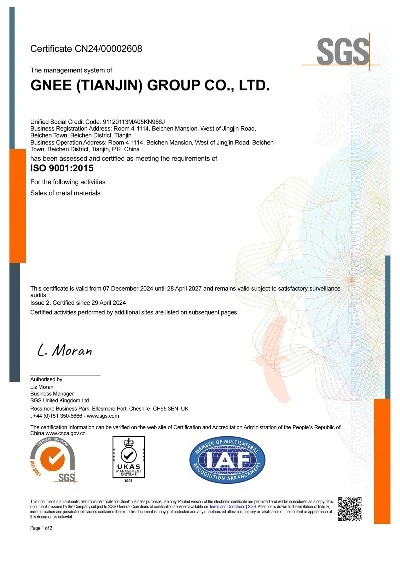
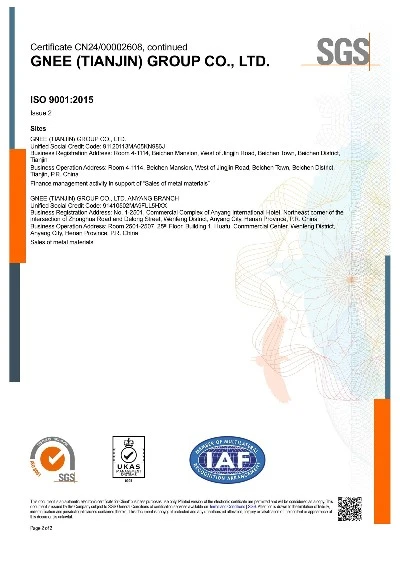
GNEE has 16 years of experience in copper and titanium products and exports. The company is headquartered in Henan Province, China. The company is adjacent to the Beijing-Hong Kong-Macao Expressway and has more than 200 employees who are dedicated to the company. The company has a registered capital of 10 million RMB and covers an area of more than 350,000 square meters. The company has passed SGS certification.

productcate-702-527

35000+

Square Meters Built

500+

Cooperating Partner

200+

Enterprise Employees

16+

Years Experience


productcate-753-502


Why Choose Our Copper Tubes

High-quality basic
We choose high-quality raw materials.


Quality inspection
Strict quality inspection standards are implemented, and the products comply with ISO and SGS international standards to ensure100% compliance with customer requirements.


Fast delivery
Advanced production management process, from production to delivery, efficient and fast.

  • C11000 T2 Copper Pipe

    C11000 T2 Copper Pipe

    C11000 is a general-purpose, corrosion-resistant copper alloy that contains only trace elements in

    Add to Inquiry
  • C12000 Copper Pipe

    C12000 Copper Pipe

    C12000 copper pipes are known for their excellent thermal conductivity and corrosion resistance,

    Add to Inquiry
  • C12200 TP2 Copper Pipe

    C12200 TP2 Copper Pipe

    C12200 is a heat treatable copper alloy with high electrical conductivity and stress resistance

    Add to Inquiry
  • Cutting TP1 TP2 Copper Tube Soldering

    Cutting TP1 TP2 Copper Tube Soldering

    After-sales Service:7 Days. Warranty:30 Days. Type:Straight Copper Pipe. Shape:Round.

    Add to Inquiry
  • T1 T2 T3 Soft Copper Water Pipe

    T1 T2 T3 Soft Copper Water Pipe

    Seamless copper tubing is a piping material used to transport fluids or conduct electricity. It is

    Add to Inquiry
  • Brass Round Tube

    Brass Round Tube

    Brass round tube is a type of tubing made from brass, which is an alloy of copper and zinc. It is

    Add to Inquiry
  • C10700 Copper Tube

    C10700 Copper Tube

    This is a high conductivity copper which has, in the annealed condition a minimum conductivity of

    Add to Inquiry
  • C12300 Copper Tube

    C12300 Copper Tube

    “Great country attaches importance to heavy industry and bridge the world” are our lofty mission.

    Add to Inquiry
  • C26000 H70 Brass Tube

    C26000 H70 Brass Tube

    H70 is a kind of industrial brass used for heat exchangers, tubes for paper making, machinery,

    Add to Inquiry
  • Seamless Inner Grooved Copper Tube

    Seamless Inner Grooved Copper Tube

    Copper is a metal element, is also a transition element, chemical symbol Cu, English copper, atomic

    Add to Inquiry
  • TP1 TP2 Seamless Copper Pipe For Aircon

    TP1 TP2 Seamless Copper Pipe For Aircon

    After-sales Service:Available. Type:Straight Copper Pipe or Customized. Shape:Round Oval

    Add to Inquiry
  • TP1 TP2 Air Conditioning Copper Pipe

    TP1 TP2 Air Conditioning Copper Pipe

    Type:Copper Pipe. Application:Air Condition or Refrigerator, Water Tube copper, Water Heater, Oil

    Add to Inquiry
First 1234567 Last 1/94
What is copper tubing?


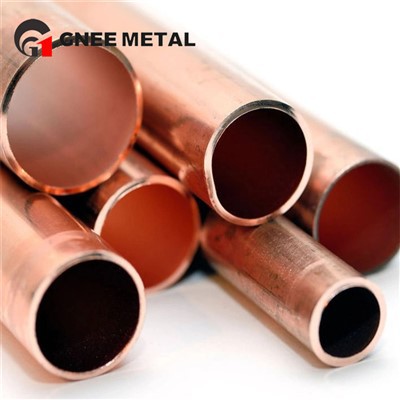
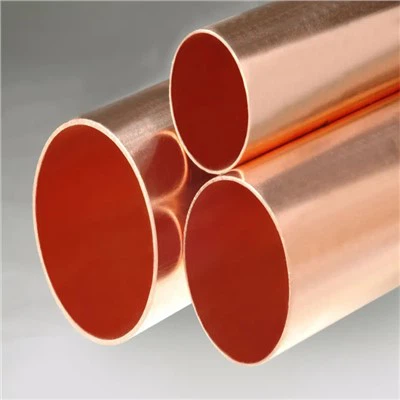
Copper tube, also known as copper tube, is a seamlessly pressed and drawn non-ferrous metal tube. Copper pipes have the characteristics of good electrical and thermal conductivity. They are the main material for conductive accessories and heat dissipation accessories of electronic products. They have become the first choice for installing water pipes, heating and refrigeration pipes in all modern residential buildings. Copper pipes are corrosion-resistant, not easily oxidized, not prone to chemical reactions with certain liquid substances, and are easy to bend into concave shapes.


Types of Copper Tubes
 
productcate-700-558

Soft Copper Tubing

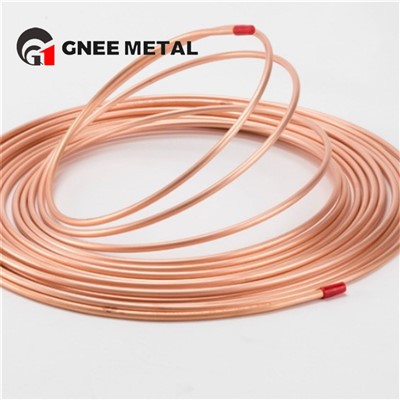
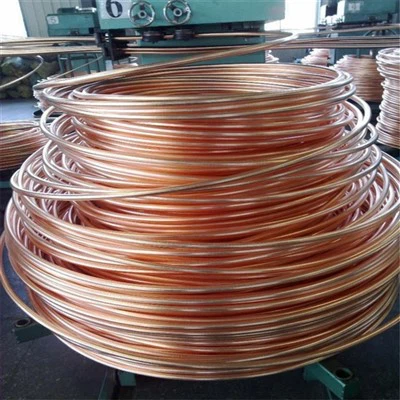
Soft copper tubing is easy to bend around obstacles in the piping. Although work-hardening during drawing hardens the copper tube, it softens again after careful annealing; therefore, soft copper tubing is more expensive to produce than unannealed hard copper tubing. Soft copper tubing can be connected by any of the three methods used for hard copper tubing, and is the only type of copper tubing suitable for flared connections. Soft copper tubing is the most commonly used tubing for refrigerant lines in split air conditioners and heat pumps.

Rigid copper

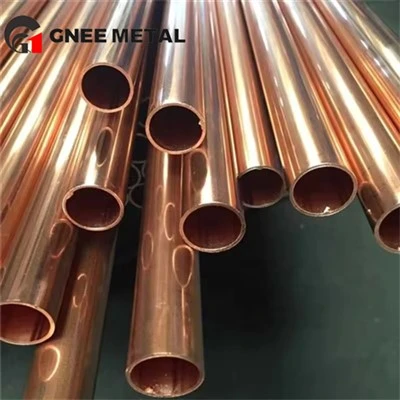
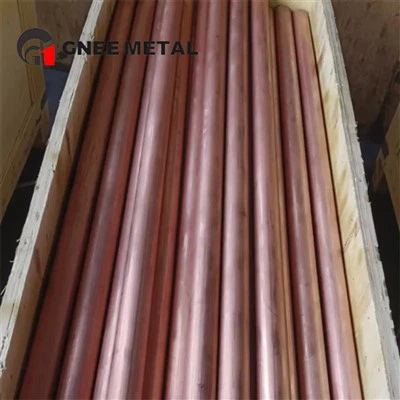
Hard copper is a popular choice for water pipes. Rigid or "hard" copper tubing is often called "ducting." Copper "pipe" refers to the nominal size or inside diameter of the pipe. It joins using solder/solder, roll groove, compression or crimp/pressed connections. Hard copper becomes hard due to work hardening during the drawing process and cannot be bent, and elbow fittings must be used to get around corners or obstacles. If heated and cooled during the annealing process, the rigid copper will soften and can be bent/shaped without cracking.

productcate-700-558


Advantages of Copper Tubes
productcate-150-100

Good heat transfer

Copper tubes allow heat to be transferred from one medium to another very quickly, making them very useful in applications that require heat transfer, such as heating, cooling, and temperature control.

productcate-150-100

Good strength and moldability

Copper pipes have good strength and ductility and can be made into different shapes such as round, square, hexagonal, etc., so copper pipes are suitable for manufacturing various types of products.

productcate-150-100

Good corrosion resistance

Copper tubes have good corrosion resistance and can be used in many special environments.

productcate-150-100

Good reproducibility and renewability

Copper pipes can be recycled and remanufactured into other copper pipes, with good repeatability and reproducibility.

Copper Tube Applications
productcate-800-450
01

Construction

Copper pipes are most widely used in the construction field. Copper pipes can be used in water supply lines, HVAC systems, natural gas lines, and more. Copper pipes have good corrosion resistance and antibacterial properties, which can ensure the health and safety of the water supply. They can also effectively conduct heat and improve the efficiency of the HVAC system.

02

Electrical and Electronic Fields

Copper is an excellent conductive material, so copper tubes are widely used in electrical and electronic fields. It can be used to manufacture electrical equipment such as wires, cables, transformers, and inductors. The electrical conductivity of copper tubes is stable and reliable, ensuring the efficiency of current transmission. It can also effectively dissipate heat and ensure the normal operation of electrical equipment.


productcate-800-450
productcate-800-450
03

Industrial field

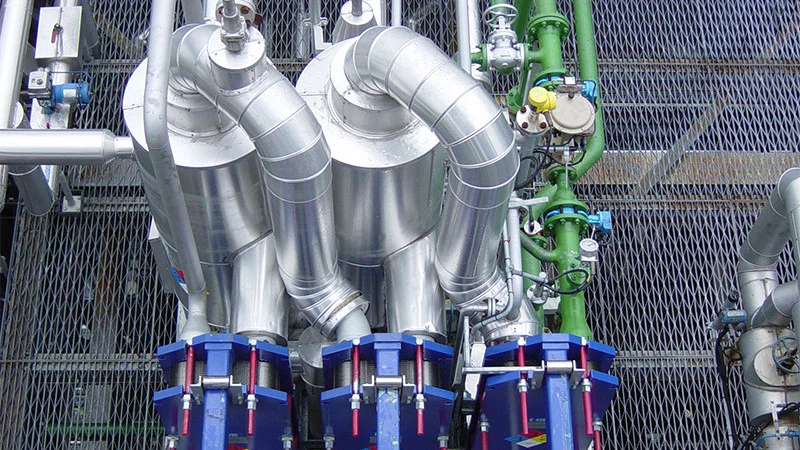
Copper pipes also have important applications in industry. It can be used to manufacture heat exchangers, condensers, evaporators and other thermal equipment. Copper tubes have good thermal conductivity and can quickly conduct heat and improve the efficiency of thermal equipment. At the same time, the corrosion resistance of copper pipes can also ensure the service life of the equipment.

04

Automobile Manufacturing

Copper tubes are also widely used in automobile manufacturing. It can be used to manufacture automobile radiators, air conditioning systems, braking systems, etc. Copper tubes have good thermal conductivity and corrosion resistance, which can effectively dissipate heat and improve the performance and safety of cars.

productcate-800-450
 
 
Copper Tube Size

Common copper pipe wall thicknesses are "Type K", "Type L", "Type M" and "Type DWV":
Type K copper pipe is the thickest walled of the three pressure rated copper pipe types and is typically used deep underground, such as under sidewalks and streets, and is coated with an appropriate corrosion resistant coating or continuous polyethylene casing as required by plumbing codes.
Type L pipe has a thinner wall and is used for residential and commercial water supply and pressure applications.
Model M has a thinner wall and is used in residential and commercial low-pressure heating applications.
The DWV model has the thinnest wall cross-section and is typically used only in non-pressurized applications such as drain, sewer, and vent (DWV) piping.

Copper Tubing Sizes (CTS) for Plumbing
Nominal
size
Outside diameter
(OD)
[in (mm)]
Inside diameter (ID)
[in (mm)]
Type K Type L Type M
1⁄4 3⁄8 (9.5) 0.305 (7.747) 0.315 (8.001)  
3⁄8 1⁄2 (12.7) 0.402 (10.211) 0.430 (10.922) 0.450 (11.430)
1⁄2 5⁄8 (15.875) 0.528 (13.411) 0.545 (13.843) 0.569 (14.453)
5⁄8 3⁄4 (19.05) 0.652 (16.561) 0.668 (16.967) 0.690 (17.526)
3⁄4 7⁄8 (22.225) 0.745 (18.923) 0.785 (19.939) 0.811 (20.599)
1 1+1⁄8 (28.575) 0.995 (25.273) 1.025 (26.035) 1.055 (26.797)
11⁄4 1+3⁄8 (34.925) 1.245 (31.623) 1.265 (32.131) 1.291 (32.791)
11⁄2 1+5⁄8 (41.275) 1.481 (37.617) 1.505 (38.227) 1.527 (38.786)
2 2+1⁄8 (53.975) 1.959 (49.759) 1.985 (50.419) 2.009 (51.029)
21⁄2 2+5⁄8 (66.675) 2.435 (61.849) 2.465 (62.611) 2.495 (63.373)
3 3+1⁄8 (79.375) 2.907 (73.838) 2.945 (74.803) 2.981 (75.717)

Copper tube production process 

 
Smelting Raw Copper

The first step in the manufacturing process of copper pipes involves smelting raw copper. Raw copper is placed inside a large furnace where it’s heated to temperatures in excess of 2,400 degrees Fahrenheit. As the raw copper heats up, it turns from a solid state to a liquid state.

 
Forming the Pipes

The next step in the manufacturing process of copper pipes is formation. After the raw copper has been smelted, as well as purified through the removal of impurities, it’s transferred into a pipe-shaped casting. The casting is essentially a shell in the shape of a pipe. A worker pours the molten copper into the casting, after which he or she waits for it to cool.

 
Finishing the Pipes

The final step in the manufacturing process of copper pipes involves resizing and cleaning. The newly created copper pipe is fed through a series of dies where it’s cut into one or more specific sizes. Next, the copper pipe is cleaned using water and/or solvents.


Large-scale factory production of copper coils


Advanced production technology

Our factory adopts advanced production technology and techniques to ensure product quality. We use advanced equipment and tools to produce high-precision products that meet industry standards.

Automatic Production Line

Our factory utilizes an automated production line to ensure high efficiency and consistency in product quality. This system allows us to produce large quantities of products without compromising product quality.

productcate-738-415

Precision Machining

Our production facility includes precision machining tools and equipment to ensure the accuracy of product dimensions and tolerances. This precision machining capability allows us to produce customized products that meet specific customer requirements.

Quality Control System

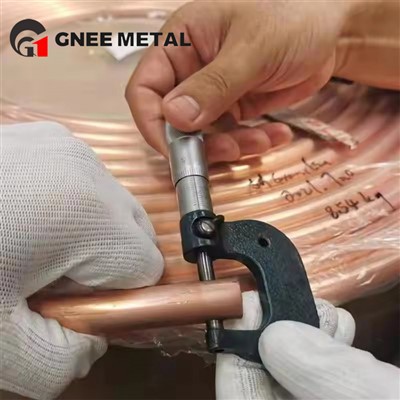
We have a strong quality control system in place to ensure that our products meet industry standards and specifications. Our quality control team utilizes state-of-the-art equipment and inspection tools to check the quality of each product.


Our Services

Technical Support and Consultation

Provide professional technical guidance and advice on copper pipe applications, and help customers choose the most suitable copper pipe products for their application scenarios.
Answer customers' questions about copper pipe performance, installation, maintenance and other aspects.
Provide the latest news, standards, specifications and other information in the copper tube industry.

After-sales guarantee

Provide product quality assurance, to ensure that the copper pipe sold meets the relevant standards and customer requirements.
Provide return and exchange services, and give appropriate treatment to the copper pipes with quality problems or not in line with customers' requirements.
Provide after-sales service hotline and technical support to respond to customers' questions and needs in time.

Logistics and distribution services

Provide timely logistics and distribution services to ensure that copper tube products are delivered to customers on time.
We can provide customized logistics solutions according to customers' needs, including special transportation and expedited delivery.

Customized solutions

Provide customized copper tube solutions according to customers' specific application scenarios and needs.
Work closely with customers to track and support the whole process from design, production to installation.

FAQ

Q: What is the most commonly used copper tube?

A: Type L is considered the most common type of copper piping, as it can be used in many more applications than Type K. Flexible Type L copper can be used to repair or replace old water lines, although rigid tubing is more durable. Type L also can be used outside the home where it will be directly exposed.

Q: What is the purpose of copper tubing?

A: Copper tubing is commonly found in use for heating systems and in hot and cold water transportation. Copper used to be really popular for hot and cold water supply. You can also find copper pipes as a refrigerant line in HVAC systems.

Q: Which types of fittings are commonly used with copper tubing?

A: While copper tube is usually joined by soldering or brazing, there are times when a mechanical joint may be required or preferred. Flared fittings are an alternative when the use of an open flame is either not desired or impractical.

Q: What tool is used to prepare copper tubing?

A: The most popular flaring tool for copper tubing is the bar-type tool. It has include multiple bits to accommodate different pipe or tube sizes. Tubing and piping flares are not interchangeable. Tubing flares have a 45-degree angle while piping flares have a 37-degree angle.

Q: What type of copper tubing is the thickest?

A: Type K copper pipe has the thickest wall of all the common types. It is used for water distribution, fire protection, oil, HVAC, and many other applications in the construction industry. Type K pipe is available in rigid and flexible forms.

Q: Why is copper tubing so expensive?

A: Copper is sort of the gold standard in pipes. Known for its durability, it can last aslong as 100 years. Copper pipes are naturally resistant to bacteria and are less likely tobreak down if exposed to UV rays. As a result, the cost of copper pipe per foot exceeds a lotof other piping options.

Q: What are the three techniques for joining copper tubing?

A: These joining methods include soldering, brazing and electric resistance. Soldered jointswith capillary fittings, are used in plumbing for water lines and for sanitary drainage.

Q: What are two methods for cutting copper tubing?

A: Most of the tools are power saws, but there are two notable manual tools. the hacksaw andthe auto cut tool. No matter which tool cuts through the copper pipe, remember to deburrand smooth the end of the cut pipe after cutting. Hacksaw: When using a hacksaw to cutcopper pipe, choose a 32TP|(teeth-per-inch)blade.

Q: How to measure copper tubing size?

A: Take a string or flexible tape and wrap it around the pipe. Make a mark and then measurehow long the string or tape is. Once you have the string's length you'll need to divide thatmeasurement by pi (pi= 3.1415) to find the pipe's diameter.

Q: How should copper tubing be stored safely?

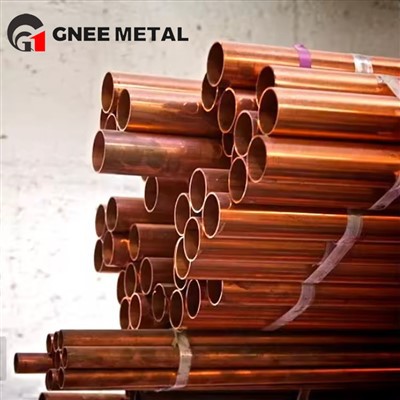
A: Copper Pipe is generally stored on Cantilever Racking but can also be stored in VerticalRacks /A-Frame Racking or in a Pigeon Hole format dependent upon individual customerrequirements.

We're professional copper pipe/tube manufacturers and suppliers in China, specialized in providing high quality customized service. We warmly welcome you to buy cheap copper pipe/tube in stock here and get free sample from our factory. Good service and low price are available.

annealed seamless copper tube, copper tubing, housing water piping
goTop

(0/10)

clearall