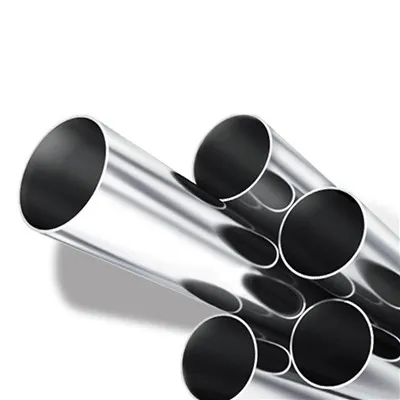
C3604 and C3602 are two widely used free-cutting brass grades specified in JIS H3250. Both contain lead to improve machinability and are commonly supplied as brass round bars for automatic lathes, CNC machining, and precision component manufacturing.
Although their chemical compositions are similar, C3602 has a higher specified copper content than C3604. This difference is worth considering when selecting raw material for machined components, especially when the material grade is specified on an engineering drawing or purchase order.
C3604 vs. C3602 Brass: Key Differences at a Glance
Both grades belong to the free-cutting brass family. Their main difference under JIS H3250 is the specified copper content range.
| Comparison | C3604 Brass | C3602 Brass |
|---|---|---|
| Japanese Standard | JIS H3250 | JIS H3250 |
| Material Type | Leaded free-cutting brass | Leaded free-cutting brass |
| Copper (Cu) | 57.0–61.0% | 59.0–63.0% |
| Lead (Pb) | 1.8–3.7% | 1.8–3.7% |
| Iron (Fe) | ≤0.50% | ≤0.50% |
| Iron + Tin (Fe + Sn) | ≤1.0% | ≤1.0% |
| Zinc (Zn) | Balance | Balance |
| Main Processing | Turning, drilling, threading, milling | Turning, drilling, threading, milling |
| Typical Products | Screws, nuts, shafts, gears, valves | Bolts, nuts, shafts, gears, precision components |
| Common Product Forms | Extruded, drawn, forged bars | Extruded, drawn, forged bars |
The most important difference is the copper range: C3602 contains 59–63% copper, while C3604 contains 57–61%. Their lead ranges are the same, so both grades benefit from lead-assisted chip breaking during machining.
The two grades also share a broad range of applications. JIS H3250 identifies C3602 and C3604 as free-cutting brass grades and lists products such as bolts, nuts, shafts, gears, lighters, watches, and cameras among typical applications.
Chemical Composition of C3604 and C3602
| Chemical Element | C3604 (%) | C3602 (%) | Function in Brass |
|---|---|---|---|
| Copper (Cu) | 57.0–61.0 | 59.0–63.0 | Influences the alloy's overall mechanical and physical properties |
| Lead (Pb) | 1.8–3.7 | 1.8–3.7 | Improves machinability and chip breaking |
| Iron (Fe) | ≤0.50 | ≤0.50 | Controlled impurity |
| Iron + Tin (Fe + Sn) | ≤1.0 | ≤1.0 | Combined composition limit |
| Zinc (Zn) | Balance | Balance | Main alloying element with copper |
Lead Content and Machinability
Both grades have a specified lead range of 1.8–3.7%.
Lead improves the cutting behavior of brass by helping chips break during machining. This is particularly useful for automatic lathes and CNC turning operations, where long continuous chips can interrupt production.
C3604 is generally regarded as the better cutting grade. C3602 is also a free-cutting brass, but its advantage is its better cold-forming behavior.
An important purchasing point is that ordinary C3602 and C3604 are leaded materials. If the finished component is intended for drinking-water systems, food-contact equipment, or other regulated applications, check the applicable lead-content requirements before ordering.
Mechanical Properties of C3604 vs. C3602
|
Mechanical Property |
C3602 Brass |
C3604 Brass |
|---|---|---|
|
Material Condition |
F – As Manufactured |
F – As Manufactured |
|
Minimum Tensile Strength |
315 MPa |
335 MPa |
|
Minimum Vickers Hardness |
75 HV |
80 HV |
|
Product Forms Covered |
Extruded, drawn and forged bars |
Extruded, drawn and forged bars |
Important: These are JIS H3250:2015 standard requirements, not guaranteed test results for every individual bar. The applicable product designation and dimensional range must also be considered.
Which Grade Is Stronger?
Based on the minimum tensile-strength requirements above, C3604 has the higher specified minimum tensile strength.
This does not mean C3604 is automatically suitable for every load-bearing component. The finished part's design, dimensions, working temperature, and loading conditions must also be considered.
Machinability: Which Grade Is Better for CNC Machining?
C3604 is generally the better choice for CNC turning, automatic screw machines, and mass production of precision turned parts. C3602 is also machinable, but its stronger advantage is cold-forming performance.
Both grades contain 1.8–3.7% lead. However, Japanese machining-industry comparisons identify C3604 as having better cutting performance than C3602, while C3602 has better cold-forging characteristics.
Machining Performance Comparison
| Machining Operation | C3604 | C3602 | Preferred Grade |
|---|---|---|---|
| CNC Turning | Excellent | Very Good | C3604 |
| Automatic Lathe Machining | Excellent | Very Good | C3604 |
| External Thread Cutting | Excellent | Very Good | C3604 |
| Internal Thread Cutting | Excellent | Very Good | C3604 |
| Drilling | Excellent | Very Good | C3604 |
| Grooving | Excellent | Very Good | C3604 |
| Precision Turning | Excellent | Very Good | C3604 |
| Cold Forging | More Limited | Better | C3602 |
| Crimping and Caulking | Application-dependent | Better suited | C3602 |
These are qualitative material-selection comparisons, not guaranteed machining speeds or tool-life percentages. Actual cutting results depend on the particular material composition, bar condition, tool geometry, and machining parameters.
Why Is C3604 Preferred for CNC Turning?
C3604 is commonly used for high-volume cutting operations because of its free-machining characteristics.
Its practical advantages include:
Shorter, more manageable chips: Lead helps chips break instead of forming long continuous strands.
Efficient automatic machining: Short chips are easier to remove from the cutting area.
Good thread-cutting performance: Suitable for producing external and internal threads.
Good turned surface quality: Suitable cutting conditions can produce smooth machined surfaces.
Suitable for complex turned profiles: Commonly used for components with grooves, shoulders, holes, and multiple diameters.
For example, a brass connector may require external turning, drilling, internal threading, and grooving. C3604 is a suitable starting material for this type of production.
When Should You Choose C3602?
C3602 is worth choosing when the manufacturing process includes cold forming after machining.
Its higher copper composition range is associated with better cold-forging characteristics compared with C3604.
For example, if a brass component is turned to size and then undergoes a forming or caulking operation, C3602 may be more suitable than C3604.
CNC Machining Grade Selection
| Finished Part or Production Process | Recommended Grade |
|---|---|
| High-volume CNC-turned screws | C3604 |
| Automatic-lathe brass nuts | C3604 |
| Threaded brass connectors | C3604 |
| Precision turned shafts | C3604 |
| Valve stems and fittings | C3604 |
| Machined parts requiring caulking | C3602 |
| Components requiring cold forging | C3602 |
| Parts requiring machining and subsequent forming | Evaluate C3602 first |
If cutting is the main manufacturing process, choose C3604. If cold forming is a major secondary operation, evaluate C3602.
Applications of C3604 Brass
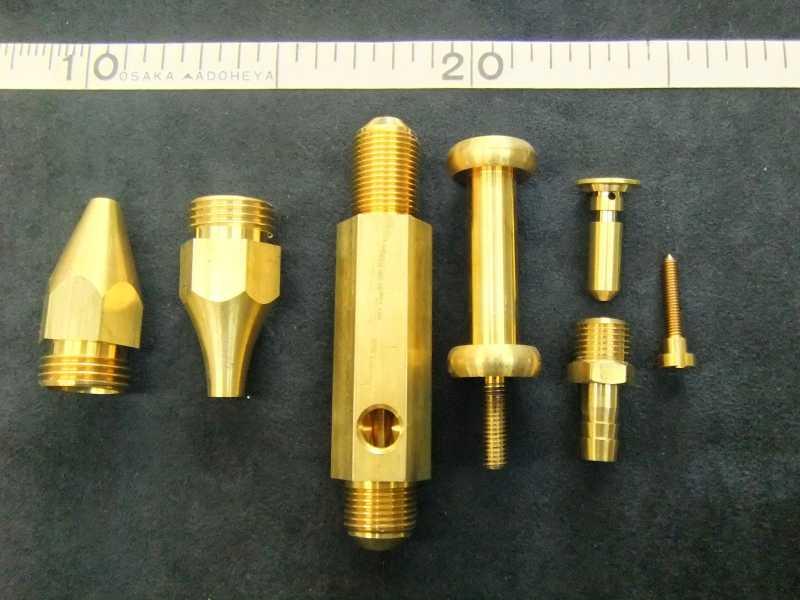
C3604 is commonly selected for components manufactured mainly through turning, drilling, threading, and milling.
C3604 Brass Precision CNC Machined Components
Typical C3604 Applications
| Industry | Components | Manufacturing Process |
|---|---|---|
| Fluid Control | Valve stems, valve fittings, adapters | Turning, drilling, threading |
| Pneumatic Equipment | Air connectors, threaded fittings | CNC turning, drilling |
| Automotive | Small fittings, sensor housings, threaded parts | Turning, drilling, milling |
| Electrical Equipment | Terminals, connectors, contact components | Turning, milling, drilling |
| Mechanical Equipment | Shafts, pins, bushings, gears | Turning, grooving, drilling |
| Fastener Manufacturing | Screws, nuts, bolts | Automatic lathe machining, thread cutting |
C3604 for Precision Threaded Components
C3604 is suitable for manufacturing threaded brass components because it can be efficiently machined into external and internal thread profiles.
Common examples include:
Brass male and female connectors
Threaded adapters
Brass nuts and screws
Valve stems
Pneumatic fittings
When ordering C3604 round bars for threaded components, specify the finished thread standard, such as BSP, NPT, metric, or UNF, if relevant to the part. The thread standard applies to the finished component, not the raw brass bar.
C3604 for Automatic Lathe Production
C3604 is a practical material choice for automatic lathe production of small components in large quantities.
Typical products include:
Precision pins
Small shafts
Threaded inserts
Brass spacers
Electrical terminals
Small valve components
For automatic feeding, bar diameter consistency and straightness are important. A nominal diameter alone is not enough to determine whether the material is suitable for the machine's bar feeder.
Applications of C3602 Brass
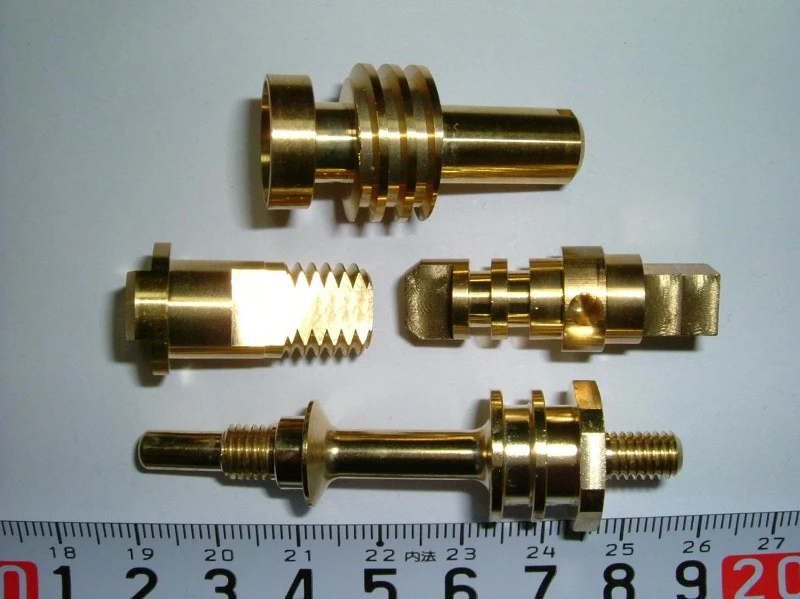
C3602 is used for free-cutting brass components and is particularly worth evaluating when cold-forming performance is important.
C3602 Brass Machined and Cold-Formed Components
Typical C3602 Applications
| Industry | Components | Manufacturing Process |
|---|---|---|
| Fastener Manufacturing | Bolts, nuts, screws | Machining and forming |
| Mechanical Equipment | Shafts, pins, gears | Turning, drilling, machining |
| Electrical Equipment | Terminals and connectors | Machining, crimping |
| Automotive Components | Small precision fittings | Turning and secondary processing |
| Industrial Hardware | Machined brass parts | Turning, drilling, caulking |
C3602 for Cold-Forged Components
C3602 has better cold-forging characteristics than C3604 according to Japanese machining-industry material comparisons.
It is therefore worth considering for components that require deformation during manufacturing rather than relying entirely on cutting.
Examples include:
Fasteners with formed sections
Machined components requiring caulking
Parts requiring limited cold deformation
Components involving machining followed by forming
The amount of deformation matters. A small crimping operation and a substantial cold-forging operation impose very different requirements on the material.
For demanding forming processes, evaluate the actual bar condition and perform a production trial before approving the grade.
C3604 vs. C3602: Which Grade Should You Buy?
The correct choice depends on the material designation on the drawing and the manufacturing process used to make the finished part.
Grade Selection by Manufacturing Requirement
| Your Requirement | Recommended Grade | Reason |
|---|---|---|
| High-speed CNC turning | C3604 | Better cutting performance |
| Automatic screw machine production | C3604 | Excellent free-machining characteristics |
| Large batches of threaded parts | C3604 | Suitable for repeated turning and threading |
| Precision turned fittings | C3604 | Suitable for complex cutting operations |
| Cold-forged components | C3602 | Better cold-forging characteristics |
| Machining followed by caulking | C3602 | Better suited to secondary forming |
| Machining followed by crimping | C3602 | Worth evaluating for forming |
| Drawing specifies C3604 | C3604 | Meets the specified grade |
| Drawing specifies C3602 | C3602 | Meets the specified grade |
Can C3604 Replace C3602?
C3604 should not automatically replace C3602.
The two grades have different specified copper ranges and different manufacturing characteristics.
For example:
If the drawing specifies C3602 with a minimum copper content of 59%, C3604 material containing 58% copper does not meet that requirement.
If the component requires cold forging, changing from C3602 to C3604 may affect forming performance.
If the drawing specifies C3604 for CNC turning, changing to C3602 may affect cutting performance and production settings.
Can C3602 Replace C3604?
C3602 can be considered as an alternative only after checking the drawing and manufacturing process.
If the part is produced mainly by CNC turning, C3604 remains the preferred starting choice. If the component also requires cold forming, C3602 may be worth testing.
Do not approve a substitution based only on the fact that both materials are free-cutting brass.
C3604 and C3602 Brass Round Bar: Sizes and Specifications
C3604 and C3602 Brass Round Bars in Different Diameters

Supply Dimensions
| Product Form | Diameter Range | Common Length |
|---|---|---|
| Drawn Round Bar | 2–75 mm | 2,000–4,000 mm |
| Extruded Round Bar | 25–95 mm | 2,000–4,000 mm |
| Large-Diameter Bars | 95–120 mm | 3,000–4,000 mm, depending on product route |
Drawn vs. Extruded Brass Round Bars
| Item | Drawn Brass Bar | Extruded Brass Bar |
|---|---|---|
| Typical Diameter Range | 2–75 mm | 25–95 mm |
| Surface | Generally smoother | Mill finish |
| Diameter Accuracy | Tighter | Wider tolerance |
| Typical Application | Precision CNC machining | General machining and larger components |
| Common Length | 2,000–4,000 mm | 2,000–4,000 mm |
| Machining Allowance | Usually smaller | Usually larger |
For automatic lathes and precision CNC turning, drawn brass bars are generally the better choice. Extruded bars are commonly used for larger diameters and components that require more machining allowance.
Diameter Tolerances for Brass Round Bars
JIS H3250 provides different diameter tolerance requirements for drawn and extruded bars.
Drawn Round Bar – Ordinary Class
| Nominal Diameter | Diameter Tolerance |
|---|---|
| 1–3 mm | ±0.03 mm |
| Over 3–6 mm | ±0.04 mm |
| Over 6–10 mm | ±0.04 mm |
| Over 10–20 mm | ±0.06 mm |
| Over 20–35 mm | ±0.08 mm |
| Over 35–50 mm | ±0.10 mm |
For diameters above 50 mm, the applicable standard tolerance is expressed as a percentage of the nominal diameter.
Extruded and Forged Round Bar – C3602 and C3604
| Nominal Diameter | Diameter Tolerance |
|---|---|
| 6–25 mm | ±0.30 mm |
| Over 25–30 mm | ±1.2% |
| Over 30 mm | ±1.0% |
Examples of the standard tolerance calculation:
| Nominal Diameter | Tolerance | Permitted Diameter Range |
|---|---|---|
| 20 mm | ±0.30 mm | 19.70–20.30 mm |
| 25 mm | ±0.30 mm | 24.70–25.30 mm |
| 28 mm | ±0.336 mm | 27.664–28.336 mm |
| 30 mm | ±0.36 mm | 29.64–30.36 mm |
| 40 mm | ±0.40 mm | 39.60–40.40 mm |
| 50 mm | ±0.50 mm | 49.50–50.50 mm |
These are standard tolerance references for the stated manufacturing routes. Drawn-bar tolerances and extruded-bar tolerances must not be mixed.
For precision automatic feeding, a tighter tolerance may be required than the ordinary extruded-bar tolerance.
Production Lead Time and Export Packing
Production Lead Time
The following are reasonable commercial planning periods for brass round bar orders:
| Order Type | Typical Lead Time |
|---|---|
| Standard sizes in stock | 3–7 working days |
| Regular production orders | 15–25 working days |
| Large diameters and larger production quantities | 20–30 working days |
| Cutting, inspection, and export packing | Included in the order preparation period |
For a regular production order, 15–25 working days is a practical planning reference. Large-diameter bars and higher-volume orders generally require a longer production window.
Sea freight and air freight transit times are additional to the production lead time.
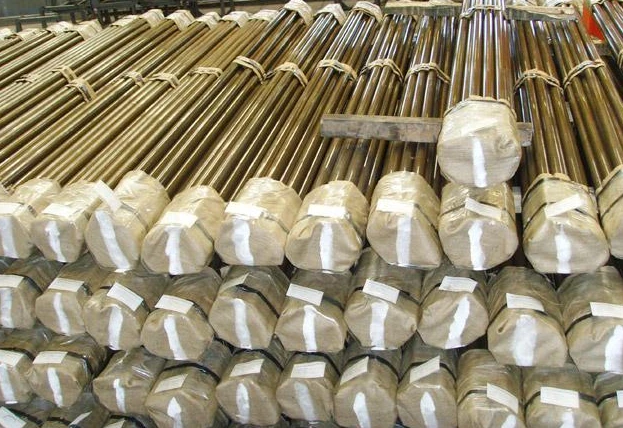
C3604 and C3602 Brass Round Bars Packed for Export
Export Packing
Common export packing methods include:
Bundles secured with steel or plastic straps.
Protective wrapping to reduce scratches and surface contamination.
Wooden crates for suitable shipment sizes.
Bundle labels showing grade, diameter, length, quantity, and batch number.
For mixed-grade or multi-diameter shipments, separate bundle identification is important to prevent C3602 and C3604 material from being mixed during storage and production.
FAQ
What Is the Main Difference Between C3604 and C3602?
C3604 has better cutting performance and is generally preferred for CNC turning and automatic lathe production. C3602 has better cold-forging characteristics and is worth considering for components requiring secondary forming.
C3602 contains 59–63% copper, while C3604 contains 57–61%. Both contain 1.8–3.7% lead.
Is C3604 Better Than C3602 for CNC Machining?
Yes, C3604 is generally the preferred grade for cutting-focused production. It is commonly used for automatic lathes, precision turning, drilling, and thread machining.
C3602 is also machinable but offers better cold-forming characteristics.
Can C3602 Be Used for CNC Turning?
Yes. C3602 is a free-cutting brass grade and can be used for CNC turning, drilling, and threading.
However, for production focused mainly on high-efficiency cutting, C3604 is generally the preferred choice.
Which Grade Is Better for Cold Forging?
C3602 has better cold-forging characteristics than C3604.
It is worth evaluating for parts that require machining followed by caulking, crimping, or limited cold deformation. The forming operation should still be tested before mass production.
What Is the Minimum Tensile Strength of C3604 and C3602?
For applicable F-condition products under JIS H3250:
C3602: 315 MPa minimum tensile strength.
C3604: 335 MPa minimum tensile strength.
The values apply to the relevant standard product designation and diameter range, not every possible bar condition.
What Diameters Are Available for C3604 and C3602 Brass Round Bars?
Common commercial production ranges include:
Drawn round bars: 2–75 mm.
Extruded round bars: 25–95 mm.
Larger bars: 95–120 mm and above through suitable production routes.
For C3604, large-diameter options include 114.3 mm and 115 mm round bars.
What Is the Standard Length of Brass Round Bars?
Common commercial lengths are 2,000 mm, 2,500 mm, 3,000 mm, and 4,000 mm.
For cut-to-length supply, common processing lengths include 100–2,000 mm.
How Long Does Production Take?
Standard production orders generally require 15–25 working days. Stock sizes can usually be prepared for shipment within 3–7 working days. Large-diameter or high-volume orders generally require 20–30 working days.
Can You Provide a Material Test Certificate?
Yes. A typical brass round bar export order can include an MTC showing the supplied material grade, chemical composition, batch identification, and applicable test results.
What Information Is Needed for a Brass Bar Quotation?
Provide the following purchasing information:
| Item | Example |
|---|---|
| Material Grade | C3604 or C3602 |
| Diameter | 20 mm, 30 mm, 50 mm, 114.3 mm |
| Length | 3,000 mm |
| Quantity | 1,000 kg |
| Product Form | Drawn or extruded |
| Tolerance | JIS standard or specified tolerance |
| Certificate | MTC |
| Destination | Country and port |
Order C3604 or C3602 Brass Round Bars
Selecting the correct brass grade is important for machining efficiency, component quality, and production consistency.
Choose C3604 for CNC turning, automatic lathe production, threaded fittings, and precision machined parts. Choose C3602 when better cold-forming characteristics are important.
We welcome inquiries for C3604 and C3602 brass round bars for industrial machining and component manufacturing.
Send your required grade, diameter, length, and quantity to request a quotation.