


Customers often have such questions: the copper tube product attributes are marked with "soft state", "hard state" and "semi-hard state". Is there any difference when using it?
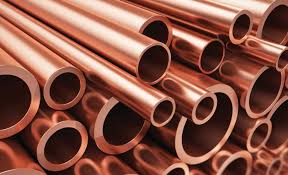
What does the copper tube state mean? What is the difference between the different states of copper tubes? Today we will introduce this issue in detail.
What is a "hard" copper tube?
The tensile strength of hard copper tubes is between 320Mpa and 460Mpa, the elongation is less than 5%, the hardness value is high, the Vickers hardness HV5 is above 100, there is internal stress, strong elasticity, and it is not suitable for large bending. Hard copper tubes are generally produced in the form of straight tubes.
What is a "soft" copper tube?
Compared with hard copper tubes, the processing method of soft copper tubes adds an annealing process. Through annealing, the copper tube grains are further refined and the internal stress is eliminated. The tensile strength of soft copper tubes is between 235Mpa and 255Mpa, and the elongation is about 50%. Soft copper tubes have strong flexibility, low hardness, and strong plasticity, which are suitable for reprocessing operations such as bending.
The hardness of semi-rigid copper tubes is between hard and soft.
Differences in application
Different packaging methods
Hard copper tubes are generally packaged in the form of straight tubes; while soft copper tubes are packaged in a variety of forms, including straight tubes and coils. Hongtai soft copper tubes have a variety of packaging forms, including straight tubes, mosquito coils, large coils, and small coils, which can be flexibly selected by customers according to different needs.
Different uses
The difference between soft and hard states not only makes the application direction of copper tubes different, but also has a great impact on construction.
Soft copper tubes have low hardness, good tensile properties, and strong cutting processability. They are more used in places where bending is required, such as air conditioners, refrigerators, and mechanical oil pipes, which are convenient for expansion, flaring, and bending operations. In addition, since the entire coil length is longer, when the pipe connection points are far apart, the copper tube can be freely cut according to needs, thereby avoiding the appearance of leaks when welding air conditioner copper tubes.
However, hard copper tubes are not suitable for bending due to their own limitations. They are suitable for places where the connection distance is long and bending is not required.


