


The oldest element: copper


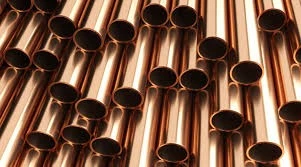
Copper (Cuprum) is a metal element, chemical symbol Cu, English copper, atomic number 29, relative atomic mass 63.546. Common valence states of copper are +1 and +2.
Copper can be recycled many times without damaging its mechanical properties. It is one of the earliest metals discovered and used by humans. It has been with us for so long that it has continued to this day.
Physical properties:
Pure copper is a soft metal. The surface is red-orange with metallic luster when it is just cut, and the single substance is purple-red. The melting point of copper is about 1083.4℃, and the boiling point is about 2567℃. It can also maintain stability in high temperature environment. The density is about 8.92~8.96 g/cubic centimeter, which is a relatively heavy metal. It has high electrical conductivity, second only to silver. It has good thermal conductivity, third only to silver and gold. It has good ductility and can be stretched into very thin foil or filaments without breaking. It is easy to weld and has antimagnetic and antibacterial properties.
Chemical properties:
Copper is a heavy metal that is not very active. It does not react with oxygen in dry air at room temperature. When heated, it can produce black copper oxide. If it continues to burn at a very high temperature, it will produce red Cu2O. After being placed in humid air for a long time, a layer of verdigris (basic copper carbonate) will slowly form on the surface of copper. Verdigris can prevent further corrosion of the metal, and its composition is variable. The reaction of iron with copper sulfate can replace copper. Copper is insoluble in non-oxidizing acids. Copper can react with chlorine under ignition conditions. Copper and sulfur directly react under heating conditions to form cuprous sulfide (Cu2S). In the electronics industry, FeCl3 solution is often used to etch copper to make printed circuits. In the order of metal activity, copper group elements are all after hydrogen, so they cannot replace hydrogen in dilute acid. But when there is air, copper can first be oxidized to copper oxide, and then react with acid and slowly dissolve in these dilute acids. Copper will be oxidized and dissolved by oxidizing acids such as nitric acid and concentrated sulfuric acid (heating is required). Copper can act as a catalyst for some organic reactions, such as the catalytic oxidation of alcohol.
Copper compounds:
Copper (I) is usually called cuprous. Cuprous chloride (CuCl), cuprous oxide (Cu2O), and cuprous sulfide (Cu2S) are all common monovalent copper compounds. [Cu(NH3)2]2- is a complex ion of cuprous and ammonia. It is colorless and easily oxidized. It self-disproportionates in acidic solutions to form Cu(II) and Cu.
Copper (II) is the most common valence state of copper. It can form salts with most common anions, such as the well-known copper sulfate, which exists as a white anhydrous substance and a blue pentahydrate. Basic copper carbonate, also known as copper green, has several composition forms. Copper chloride and copper nitrate are also important copper salts.
Copper (II) can form a series of complex ions, such as Cu(H2O)4 (blue), CuCl4 (yellow-green), Cu(NH3)4 (dark blue), etc., and their colors are also different.
Common copper compounds
Copper sulfate (CuSO4), copper acetate ((CH3COO)2Cu), copper oxide (CuO) and cuprous oxide (Cu2O), copper chloride (CuCl2) and cuprous chloride (CuCl), copper nitrate (Cu(NO3)2), copper cyanide (Cu(CN)2), fatty acid copper, copper naphthenate (C22H14CuO4), etc.


