


What Is C12200 Copper Tube?

C12200, widely known as DHP (Deoxidized High Phosphorus) Copper, is a high-purity copper alloy containing a minimum of 99.90% copper and silver with phosphorus content between 0.015% and 0.040%. The phosphorus acts as a deoxidizer - it reacts with dissolved oxygen in the molten copper, preventing the gas porosity and hydrogen embrittlement that plague oxygen-bearing C11000 (ETP copper) during brazing.
This deoxidized structure is precisely why C12200 has become the most widely specified copper tube grade for plumbing, HVAC, refrigeration, and industrial fluid systems worldwide. When brazed in a reducing atmosphere such as a gas flame, C12200 maintains joint integrity where C11000 would crack. For any application involving soldered or brazed tube connections, C12200 is the industry standard.
Request C12200 Copper Tube Quote
Chemical Composition of C12200 copper pipe
The defining characteristic of C12200 is its controlled phosphorus addition. The composition per UNS C12200 and ASTM B75 is:
|
Element |
Specification |
|
Copper + Silver (Cu + Ag) |
≥ 99.90% |
|
Phosphorus (P) |
0.015% – 0.040% |
|
Other elements (each) |
≤ 0.05% |
The phosphorus range is not arbitrary. Below 0.015%, deoxidation is incomplete and the tube remains vulnerable to hydrogen embrittlement. Above 0.040%, excess phosphorus segregates at grain boundaries, reducing ductility and formability. When reviewing a Mill Test Certificate (MTC), always confirm the phosphorus value falls within this window - it is the single most important compositional parameter for DHP copper.
C12200-DHP Copper Physical & Mechanical Properties
C12200 delivers an excellent balance of thermal performance, mechanical strength, and workability:
|
Property |
Value |
|
Density |
8.94 g/cm³ |
|
Melting point |
1,083 °C |
|
Thermal conductivity |
~330 W/(m·K) |
|
Electrical conductivity |
~85% IACS |
|
Tensile strength (soft temper) |
220 – 260 MPa |
|
Elongation (soft temper) |
≥ 40% |
|
Tensile strength (hard temper) |
290 – 380 MPa |
|
Elongation (hard temper) |
≥ 5% |
|
Hardness (soft / hard) |
40–55 / 90–105 HV |
UNS C12200 Copper Standards & Specifications
|
Standard |
Scope |
Region |
|
ASTM B75 |
Seamless copper tube, general |
USA |
|
ASTM B280 |
ACR tube (air conditioning & refrigeration) |
USA |
|
ASTM B88 |
Seamless copper water tube |
USA |
|
EN 12449 |
Copper tube - general purpose |
EU |
|
EN 1057 |
Copper tube for water & sanitary |
EU |
|
JIS H3300 |
Copper & copper alloy seamless tubes |
Japan |
|
GB/T 18033 |
Seamless copper tube |
China |
Seamless C12200 copper tube vs Other Copper Alloys
|
Grade |
Common Name |
P Content |
Key Characteristics |
|
C11000 |
ETP Copper |
~0% |
Highest conductivity (100% IACS); prone to hydrogen embrittlement when brazed |
|
C12000 |
DLP Copper |
0.005–0.015% |
Improved brazeability over C11000, but less deoxidized than C12200 |
|
C12200 |
DHP Copper |
0.015–0.040% |
Optimal brazeability, corrosion resistance, and mechanical balance |
|
C26000 |
Cartridge Brass |
N/A (Cu-Zn alloy) |
Different alloy system; not for plumbing pressure systems |
C12200 occupies the sweet spot: enough phosphorus for complete deoxidation and reliable brazing, but not so much that ductility or thermal performance suffers. If C12200 is temporarily unavailable, C12000 (DLP) can serve as a substitute in many non-critical applications - however, always confirm compatibility with your engineering requirements before substituting.
Types, Forms & Dimensions
C12200 copper tubes are available in two primary forms and three standard tempers:
Seamless tube - produced by extrusion and cold drawing with no weld seam. The standard choice for pressure-bearing and brazed systems.
Welded tube - roll-formed from strip and longitudinally welded. More economical; suitable for low-pressure and decorative applications.
Tempers:
Soft (annealed) - fully annealed for maximum ductility; ideal for bending and coil forms.
Half-hard - balanced strength and formability; the most common temper for straight plumbing tube.
Hard - maximum tensile strength; used where no bending is required.
|
Dimension |
Typical Range |
|
Outer diameter (OD) |
3 mm – 219 mm |
|
Wall thickness (WT) |
0.3 mm – 10 mm |
|
Straight length |
3 m – 5 m |
|
Coil length |
15 m – 30 m |
|
OD tolerance |
±0.05 – 0.15 mm (by size class) |
ACR tubes per ASTM B280 range from 1/4" to 4-1/8" OD. Plumbing tubes per EN 1057 range from 6 mm to 54 mm OD. Specify your size, temper, and tolerance class clearly when requesting quotes.
Manufacturing Process
The production of seamless C12200 copper tubes involves these key stages:

Applications & Use Cases


C12200 copper tubes serve a diverse range of industries and applications:
Plumbing & water supply - the most common use: drinking water lines, sanitary systems, and building water distribution. Standards: EN 1057, ASTM B88.
HVAC & refrigeration - air conditioning line sets, refrigerant piping, and condenser/evaporator tubes. Standard: ASTM B280.
Heat exchangers - condensers, evaporators, and boiler tubes in power generation and marine applications.
Medical gas systems - oxygen, nitrogen, and medical air lines requiring ultra-clean, reliably brazed joints.
Industrial piping - compressed air, fuel gas, and process fluid conveyance across heavy industries.
Core Production Equipment


Extrusion presses (1,500 – 3,500 ton) - the heart of seamless tube production. Larger presses accommodate bigger billets, enabling a wider diameter range and higher throughput. Multiple presses indicate robust production capacity.
Cold drawing benches (chain-type or hydraulic) - precision drawing equipment ensures tight dimensional tolerances and consistent wall thickness across batches. The number of drawing lines directly correlates with volume and lead-time capability.
Bright annealing furnaces (controlled-atmosphere) - hydrogen-nitrogen atmosphere furnaces prevent surface oxidation during annealing, producing the bright, clean tube surface that distinguishes quality product from commodity-grade.
Straightening & cutting machines - multi-roll straighteners and precision saws ensure straightness and length accuracy per standard tolerances.
Quality Control & Testing

Dimensional Inspection

Eddy Current Testing

Hydrostatic Pressure Test
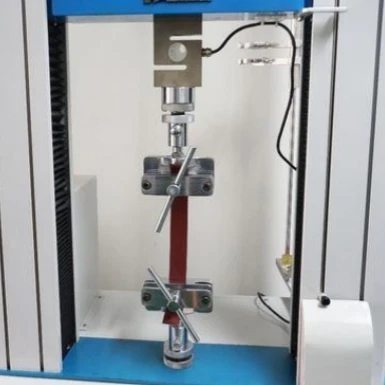
Mechanical Property Testing
Chemical analysis (OES / EDX) - verifies Cu+Ag and phosphorus content on every batch.
Mechanical testing - tensile strength, yield strength, and elongation per temper specification.
Eddy current testing - detects surface and sub-surface defects along the entire tube length.
Hydrostatic testing - pressure-tests each tube to verify leak integrity.
Dimensional inspection - OD, wall thickness, and straightness per tolerance class.
Every shipment should include a Mill Test Certificate (MTC) per EN 10204 3.1, listing actual measured values for each test. For first-time orders, third-party inspection by SGS, BV, or TÜV is strongly recommended to verify compliance before shipment.
Pricing & Market Factors
C12200 copper tube pricing follows a transparent formula:
Price = LME Copper Settlement Price + Processing Premium
Factors affecting the premium:
Size & wall thickness - smaller or thinner tubes require more drawing passes, raising the premium.
Temper - soft temper requires annealing, slightly higher cost than hard.
Quantity - higher volumes reduce per-unit processing cost.
Surface finish - bright annealed or coated surfaces add cost.
Packaging & destination - export packaging and freight to your port.
How to Source C12200 Copper Tube
Step 1: Define your requirements. Specify grade, standard, size, temper, quantity, destination port, and packaging requirements.
Step 2: Evaluate suppliers. Check for ISO 9001 certification, factory production capacity, export experience, and customer references. Request an equipment list and MTC samples.
Step 3: Request quotes. Provide a detailed spec sheet to multiple suppliers. Compare not just price, but premium structure, lead time, and payment terms.
Step 4: Verify quality. Require MTC (EN 10204 3.1) with every shipment. For first orders, arrange third-party pre-shipment inspection (SGS / BV / TÜV).
FAQ
Q: Can C12200 be used for drinking water?
Yes. C12200 meets EN 1057 and ASTM B88 for potable water applications and is approved for drinking water systems worldwide.
Q: What is the difference between C12200 and C11000?
C11000 (ETP) has virtually no phosphorus and higher electrical conductivity, but is prone to hydrogen embrittlement during brazing. C12200 (DHP) contains 0.015–0.040% phosphorus, making it fully brazeable and ideal for tube systems.
Q: What is the MOQ for C12200 copper tubes?
Typically 1–2,000 kg, depending on size and supplier. Custom dimensions may require a higher MOQ.
Q: How is pricing calculated?
LME copper settlement price + processing premium. The premium varies with size, temper, quantity, and surface finish.
Q: Can you distinguish C12200 from C11000 visually?
No - they look identical. Chemical analysis (OES) is required to confirm phosphorus content.


