


Oxygen‑free copper, often called OFC or OFHC, refers to highly purified, electrolytically refined copper with extremely low oxygen content (≤ 0.001–0.003%). This type of copper achieves 99.95–99.99% purity and offers superior electrical and thermal performance, which making it essential in high-end electrical, vacuum, and aerospace applications.
Common Oxygen-free Copper Grades
C10200: 99.95% copper, ≤0.001% oxygen, applied for general-purpose high-conductivity uses such as electrical components, audio cables, plumbing
C10100: 99.99% copper, certified oxygen-free, applied for high-end, sensitive uses such as aerospace, vacuum environments, medical imaging equipment
OFC vs. ETP Copper
C10200/C10100 oxygen-free copper: Purity ≥ 99.95%, oxygen ≤ 0.001%, conductivity ≥ 100% IACS
C10100 OFE: Ultra-pure, 99.99% copper and oxygen ≤ 0.0005%, conductivity up to 101% IACS
C11000 ETP: Standard copper with higher oxygen (~0.02–0.04%), conductivity ~100–101% IACS
Key Features of Oxygen‑Free Copper
Enhanced Conductivity & Signal Integrity
Lower oxygen and impurity levels minimize scattering of electrons, boosting both electrical and thermal conductivity-ideal for precision electronics, high-frequency circuits, and audio applications
Hydrogen Embrittlement Resistance
Oxygen-free copper avoids hydrogen-related embrittlement, ensuring material integrity during brazing, welding, or in vacuum environments
Vacuum & High-Temperature Suitability
Used in vacuum tubes, electron devices, superconductors, and aerospace components, its low gas emission and stability under 900 °C brazing enhance reliability in challenging conditions

How to Choose the Righ Oxygen‑Free Copper Product?
For high-current electrical needs, choose TU2 or C10200 bars-excellent conductivity and mechanical strength;
For precision tubing (medical, HVAC, electronics), select oxygen-free seamless tubes in R300–R420 grades;
For ultra-high purity and vacuum use, opt for OFE copper (C10100) tubes and bars.
FAQs of Oxygen‑Free Copper
Does oxygen‑free copper make a difference?
Yes, lower oxygen improves conductivity, reduces gas evolution in vacuum, and prevents hydrogen embrittlement, benefiting high-end electronic and vacuum applications.
Where is it used?
Used in busbars, vacuum tubes, superconducting magnet parts, MRI coils, high-frequency components, aerospace ducts, and advanced audio cables.
Is it better than CCA or silver‑plated copper?
OFC oxygen-free copper outperforms CCA copper-clad aluminum and silver-plated copper in conductivity, mechanical strength, and long-term stability.
What is oxygen free copper wire?
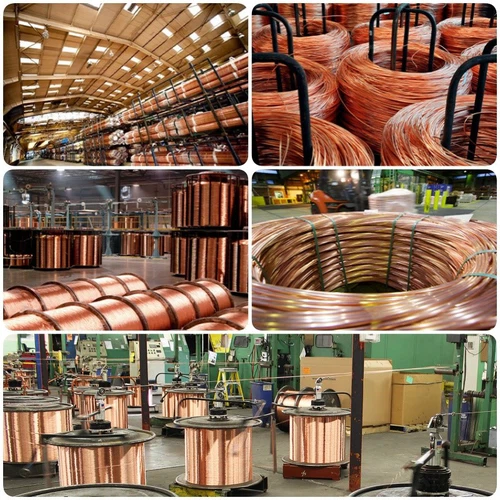
Oxygen-free copper wire is manufactured from electrolytically refined copper (usually grades like C10200 or C10100) with a purity level of 99.95% to 99.99%. Unlike standard copper wire, OFC wire has virtually no oxygen, which can interfere with conductivity and durability in certain applications.
Why do cable materials prefer high-purity oxygen-free copper?
Scientific experiments have shown that high-purity oxygen-free copper enables smoother electron flow. This means that cables of the same thickness, when made with high-purity oxygen-free copper, can carry larger power while reducing energy loss. Therefore, using cables made of high-quality materials not only ensures durability and reliability but also saves energy costs.
What's the role of oxygen-free copper bars in subway systems?
Important parts of subway vehicles, such as motors, cables, and contact rails, all benefit from the superior electrical and mechanical properties of oxygen-free copper bars, ensuring the reliability and safety of train operations. Furthermore, the corrosion resistance of oxygen-free copper bars allows them to operate stably for long periods in humid and dusty subway environments.
why choose us

why choose our products
We are a leading manufacturer and exporter specializing in a comprehensive range of high-quality copper products, including copper tubes, copper plates/sheets, copper bars, copper rods, copper wires, and copper strips. Our advanced manufacturing facilities are equipped with state-of-the-art continuous casting lines, extrusion presses, cold rolling mills, and drawing machines to ensure precision and consistency. Rigorous quality control is integral to our process, conducted through spectrometers for material verification, tensile testers, eddy current testers, and hydrostatic pressure testers, guaranteeing that all our products meet international standards for performance and durability.
E-mail: sales@gneesteel.com


