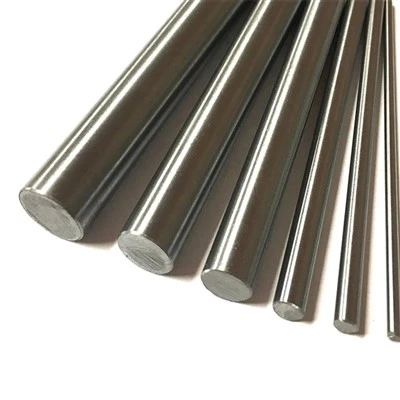


In the medical field, the use of metal materials must be absolutely harmless to the human body. When the metal is corroded, metal ions can be dissolved, which affects the cellular organization of the organism (human body), so it is necessary to use metal materials that are not easily corroded and highly corrosion-resistant, and titanium is a kind of highly corrosion-resistant material. Medical metal materials from stainless steel series to cobalt-based and titanium-based alloy series, titanium and titanium alloy ratio is increasing. The amount of titanium used in the medical industry worldwide is about 1,000 tons a year.
The American ASTM standard (F-code) for medical use is equivalent to the world standard, and in Europe, the ISO standard and the ASTM standard have been consolidated and merged into the European standard. In Japan, we are in the process of organizing our domestic standards, and have started to organize the standards corresponding to ASTM and ISO, and to establish standards based on the ISO standards.
The titanium materials specified in the ASTM standard for implants and attachments such as artificial knee joints and hip joints (including femoral heads) are listed according to their shapes. For a long time, pure titanium and Ti-6AI-4V alloys, including powdered materials, have been used to make various shapes of components and parts.


Titanium is used in a large number of parts, such as artificial femoral joints, artificial knee joints, and splints, and is also used in orthopedic surgery. Patients suffering from Rheumatism [pronounced as "Reumatism", which means severe pain in the joints, tendons, and muscles, and also an allergic disease], which causes severe pain and difficulty in walking, are treated with artificial femoral joints, artificial knee joints, and artificial knee joints. Patients suffering from this condition are given artificial femoral joints and artificial knee replacements, which can completely eliminate the pain and allow them to walk. In Japan, 80,000 femoral joint replacements and 40,000 knee replacements are performed in a single year (2005 statistics). In the future, with the aging of society, it is expected that the demand for this will increase by a large percentage.
Titanium is not suitable for all artificial joint parts. In the joint part, titanium is not suitable for the part that oscillates a lot because it wears out easily (ceramic and cobalt alloys are preferred), and titanium alloy is used for the implanted part. The surface of the titanium alloy is unevened and coated with a bone-sensitive material such as apatite or bioglass in order to make it bond with the biological bone at an early stage. In addition, for fracture fixation, titanium intramedullary nails and titanium plates are used.
There is also an increasing trend in the field of dentistry, where implants and attachments are being used. Titanium is used in smaller quantities, but there are titanium alloys and pure titanium alloys in the form of plates, threads, sockets, and baskets as shown in the figure. These parts are driven directly into the jawbone and coated with apatite, which is representative of the composition of the bone, to be fixed in the gingival portion of the tooth. Titanium is suitable for metal implants in general dentistry. There are two methods, the precision casting method and the superplastic molding method, and it is lighter in weight and does not taste acidic food compared to the previous cobalt and chromium alloys, but the price is more expensive because the use of titanium belongs to the outside of the health insurance diagnosis and treatment.
As an implantable accessory for internal medicine, a pacemaker can be implanted when a patient suffers from a low heart rate. An electrode wire is inserted from the subclavian vein to the heart, and this electrode inputs an electronic signal to the pacemaker, making it a pacemaker. Recently, pacemakers have been developed with a mass of 20g and a thickness of 6mm, so they are small enough to be connected with an electrode wire and buried under the skin. Batteries and control circuits are contained in a small container (locket) made of pure titanium, which is non-invasive to living organisms. The battery has to last at least 6 years, so the container (locket) is required to be stable and safe for a long time. Currently, nearly 5,000 people in Japan have been benefited.
Titanium has also been used in surgical instruments. Especially in the case of a long brain neurosurgery of more than 10 hours, a forceps is required to be lightweight, and titanium products are used for hemostatic forceps. Titanium is also used in many dental treatment instruments such as implants, surgical instruments for attachments, and vibrators for removing tartar. In addition to implantation (embedding) and attachment, such as auxiliary equipment and wheelchairs, titanium is also being used. When a part of a limb is missing due to illness or an accident, a prosthesis is made to restore function, and since the main part is made of metal, it is being used for lightweighting, durability (mainly corrosion and fatigue resistance), and compatibility with living organisms (Ni, Cr, etc.). In the case of wheelchairs, the main goal is to lighten the entire wheelchair, so in some cases titanium is used for almost all metal parts in the structure, such as the frame and wheels.