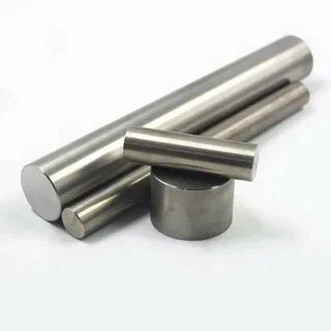
Although laser cutting is widely used in the processing of titanium materials, the heat generated not only leads to oxidization of the cutting surface, but also may cause thermal deformation of the product. To overcome these limitations, titanium companies are turning to waterjet cutting as a more efficient and lower temperature processing method.


I. Overview of waterjet cutting technology
Water cutting process, that is, the use of ultra-high-pressure technology will be pressurized tap water to 250-400Mpa high pressure, and then through the bore diameter of about 0.10-0.35mm gemstone nozzle, the formation of high-speed jet speeds up to 800-1000m / s, this high-speed jet is commonly known as the "waterjet". This type of waterjet is widely used in the cutting of soft base materials due to its high energy characteristics.
In the process of waterjet cutting of titanium materials, an appropriate amount of abrasive material, such as quartz sand, emery, etc., is usually added to the waterjet to enhance its cutting ability. The process of waterjet cutting generally starts with perforation of the titanium material, followed by walking knife cutting at a certain speed, and ends with a collector to contain and eliminate the flow of sand and water generated during cutting.
Second, titanium and titanium alloy water cutting parameters
When water cutting titanium and titanium alloy, water pressure, sand flow and cutting rate are important parameters that affect the cutting quality. Depending on the thickness and hardness of the titanium plate, the operator needs to precisely adjust these parameters to achieve the best cutting results.
Third, the advantages and disadvantages of water cutting technology
Advantage:
1. Low-temperature processing: waterjet cutting is a cold processing method with low workpiece temperature, no heat-affected zone, and no thermal deformation triggered during cutting.
2. Wide range of application: waterjet cutting can not only deal with titanium and titanium alloys, but also applies to a variety of materials cutting.
Disadvantages:
1. High nozzle loss: due to the use of high-pressure water flow, the jeweled nozzles of waterjet equipment wear out faster and need to be replaced periodically.
2. Cutting surface kerf residue: For excessively thick titanium plates (e.g. 10mm or more), waterjet cutting may result in cutting surface kerf residue or beveling.
Overall, waterjet cutting technology offers a new option for machining titanium and titanium alloys, and its low-temperature machining characteristics excel in avoiding thermal deformation and oxidation. However, for specific machining needs, such as the cutting of thick plates, further technical optimization and parameter adjustment is required.