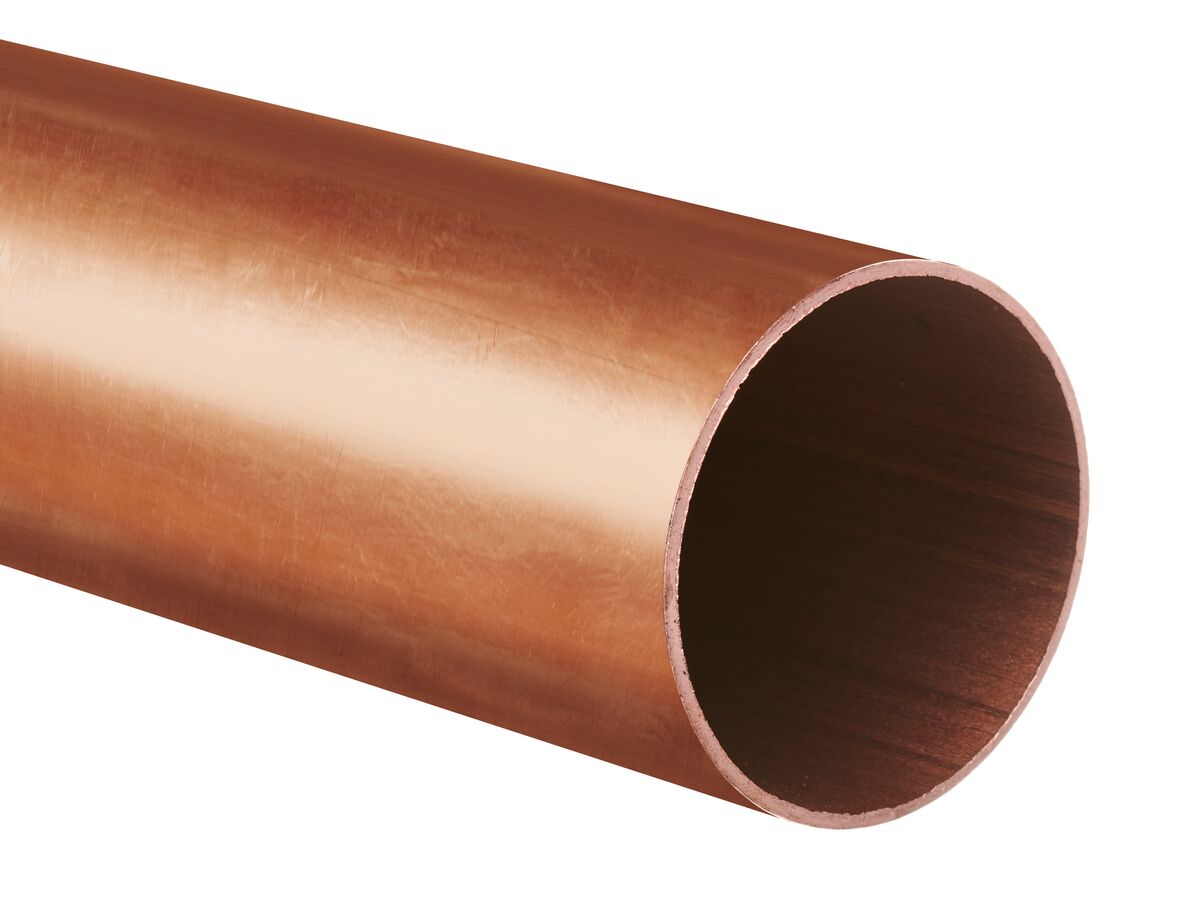


Copper row production process classification and key technology explanation
1. Copper row
Electrical copper bar is a high-current conductive copper material used in high and low-voltage electrical appliances, switch contacts, distribution equipment, bus ducts and other electrical equipment. It is also widely used in metal smelting, electrochemical plating, chemical caustic soda and other ultra-high current smelting or electrolysis. Equipment; the cross-section shape is a rectangular cross-section with 4 rounded corners and technical requirements; it has mechanical properties and electrical conductivity properties.
2. Copper bus production process
The production process of copper bars is mainly divided into two processes: traditional rolling and extrusion. The process flow is long, the process is complex, the energy consumption is high, and the material utilization rate is low.
A. Large ingot hot-rolled coil billet - high-precision cold rolling method: Large ingot hot-rolled coil billet has mature technology. Hot rolling can fully change the casting structure, but the process flow is long and the equipment investment is large.
B. Horizontal continuous casting coil billet - high-precision cold rolling method: Horizontal or upward continuous casting coil billet, short process flow, low equipment investment, residual casting structure after cold rolling, requiring surface milling, resulting in low yield rate.
Continuous extrusion process: The new continuous extrusion process technology can combine the advantages of the above two processes. The product has good grain structure (comparable to hot-rolled structure), short process, high yield, low investment in equipment and plants, and reduces industry entry. threshold.
3. Advantages of continuous extrusion process:
►Using continuous casting and rolling wire rod as raw material, it is convenient to supply, there is no extrusion pressure residue, the material utilization rate is high, generally up to 95%, and the uniformity of structural properties is good.
►Continuous extrusion uses the heat generated by friction to heat up without heating, thus saving energy.
► Fewer processes, high production efficiency and high product yield.
►Can realize continuous production of products without any interval.
►Can produce extra-long products
Traditional processing methods generally do not exceed 30-50m, while using the continuous extrusion method, the length can generally range from several thousand meters to tens of thousands of meters, and are delivered in roll form for easy transportation.
4. Typical applications of continuous extrusion:
►Manufacturing of refrigeration pipes
► Manufacturing of cable TV coaxial cable outer conductors and communication signal cable sheaths
► Aluminum clad steel wire manufacturing
► High-speed railway copper alloy contact wire manufacturing
► Manufacturing of copper flat wires and copper bars
►Oxygen-free copper rod ultra-wide row continuous extrusion production: the continuous extrusion width is limited, mainly because the maximum width range is 300mm.
Key technical issues: how to fill the mold cavity and how to ensure the uniformity of flow speed during the strip extrusion process.
5.Solution:
►Start with exploration from the aspects of billet preheating temperature, setting of mold parameters and reasonable selection of extruder power
►Cavity design
►Mold material and cooling structure and properties after extrusion:
►After continuous extrusion, the material structure is a recrystallized structure, without a streamlined structure of plastic molding;
►The structure is uniform and fine, the surface is smooth and flat without oxidation, no surface treatment is required, and subsequent rolling processing can be directly performed;
►The hardness of red copper after extrusion is about HV60-70, which is soft; suitable for subsequent rolling processing with large deformation.
6. The recommended process flow for producing ultra-thin copper bars for bus ducts:
Leading → extrusion → rolling → annealing → drawing
The rolling amount of the billet is limited, and the thickness of the rolled semi-finished product is generally greater than 2mm, which can be satisfied by using a two-roll mill to avoid wastage of functions.
Continuous extrusion manufacturing of hollow cross-section conductive bars (profiles): Hollow cross-section copper bars (profiles) are widely used in electronics, electricity and other fields. The production of multi-hollow heterogeneous cross-section bars is difficult and expensive, and the market is difficult to see.
Traditional - hollow ingot perforation extrusion method: can only produce simple shapes and large sizes (above 50mm in diameter); it is difficult to produce profiles with thin walls, small holes, and long lengths.
Traditional - stretching method: mainly produces heterosexual pipes with uniform wall thickness. It is difficult to achieve heterogeneous pipes with uneven wall thickness and is not economical.
The world's leading production technology: wide row continuous extrusion - straight row extrusion, bending first and then straightening, and hollow row continuous extrusion.