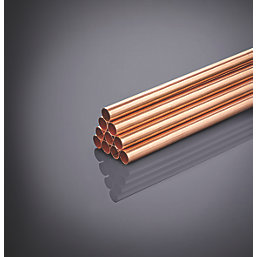


Looking at the improvement of China's copper consumption from copper processing materials
After the LME annual meeting in London, two major views: "China's demand exceeds expectations" and "the peak of global mine production growth has passed" began to spread in the market. Next, the author will focus on copper processing materials, try to sort out the entire downstream consumption structure of copper, and verify the view that China's copper demand is recovering.
As we all know, copper processing materials are divided into copper rods and wires, copper plates and strips, copper rods, copper tubes, copper foil, etc. According to the latest data from SMM, they account for 53%, 13%, 13%, 12%, and 2 of the copper consumption in processing plants respectively. %. The use areas of copper strips and copper rods are extremely scattered, and it is temporarily impossible to track the downstream consumption of copper strips and copper rods. Therefore, the author only analyzes copper rods, wires, copper tubes and copper foil, which account for 67% of the total.
Copper pole wires are mainly processed into power lines, construction wires, automotive electronic wires, communication wires, bare conductors and enameled wires. According to the International Copper Association, the proportions are 38%, 25%, 6%, 2%, 5% and 24 respectively. %. The copper used in communication lines is small and difficult to count, and bare conductors are used less and less in the erection of high-voltage lines in the field, so this category is not tracked.
Contrary to most people's guesses, power lines are actually used more in non-grid parts, with the grid part accounting for only 26%. By tracking the bidding situation of the State Grid, we found that the State Grid centralized bidding at the end of last month, but the delay in delivery did not boost current consumption. Non-grid lines are mainly used in power plants, substations, industrial and mining enterprises and rail transit. In October, the electricity consumption of the mining industry increased by 1.39% year-on-year, and the growth rate turned positive for the first time this year; the electricity consumption of heavy industry increased by 4.4% year-on-year, and the increase rate increased; the increase in electricity consumption has a certain boost to the consumption of power lines. In 2016, the cumulative mileage of China's key railway projects was approximately 14,000 kilometers (some stages of the lines have been completed and opened to traffic), and the estimated total investment was approximately 1.67 trillion yuan. Sustained high investment in railways has greatly promoted copper consumption (Cennel) .
Different building types will lead to different copper density in buildings. Due to the increase in electricity demand, the density of copper in various types of buildings has been rising in the past few years. As of October, the cumulative completed areas of residential buildings, office buildings and commercial buildings were 5.7%, -4.4% and 4.6% respectively year-on-year. Although the copper density of office buildings is higher than that of residential buildings, the overall completion of houses has improved this year and the residential area base is larger, which has increased the demand for building wires and has become a major contributor to copper cable consumption.
Automobile production in October was 2.409 million units, a year-on-year increase of 18% and a month-on-month decrease of 6.5%. There is still one and a half months until the end of the purchase tax halving policy introduced last year. During the National Day holiday, many places saw people rushing to catch the last bus. Sales of small-displacement cars increased significantly, driving the overall growth of the auto market.
Copper consumption in enameled wires accounts for more than 10%, from largest to smallest: transformers (34%), home appliances (25%), motors (18%), and automobiles (10%). In October, the output of air conditioners, refrigerators, washing machines and color TVs increased by 19.2%, 27%, 3.4% and 9% respectively year-on-year.
AC motor output in August was 23.798 million kilowatts, a year-on-year increase of 3.1%. The expected output of distribution transformers this year is higher than the same period last year.
More than 80% of copper pipe consumption comes from air conditioners. The production schedule of air-conditioning plants has exceeded that of the same period last year since July. Domestic sales first declined and then increased, improving year-on-year in September. Channels are trying their best to replenish their inventory. In addition, the Spring Festival is ahead of schedule this year, and air-conditioning factories are performing actively in production and stocking. Although export sales have declined, they are still higher than the same period last year. The outstanding performance of export sales this year has made up for the sluggish domestic sales in the first half of the year.
Copper foil has been a highlight of downstream copper consumption in recent years and is mainly used in lithium battery anodes and printed circuit boards. In October, my country's lithium battery production continued to maintain rapid growth, with a year-on-year increase of 54.6%. Printed circuits have had no growth for two consecutive years.
To sum up, from the perspective of copper processing materials, China's copper consumption has indeed improved. The impact of the New Real Estate Deal on copper consumption is expected to begin to appear in the second quarter of next year. If the consumption growth rate in other areas can continue to be maintained in the first quarter, it is expected that copper prices will still have some support in the first quarter in terms of consumption.