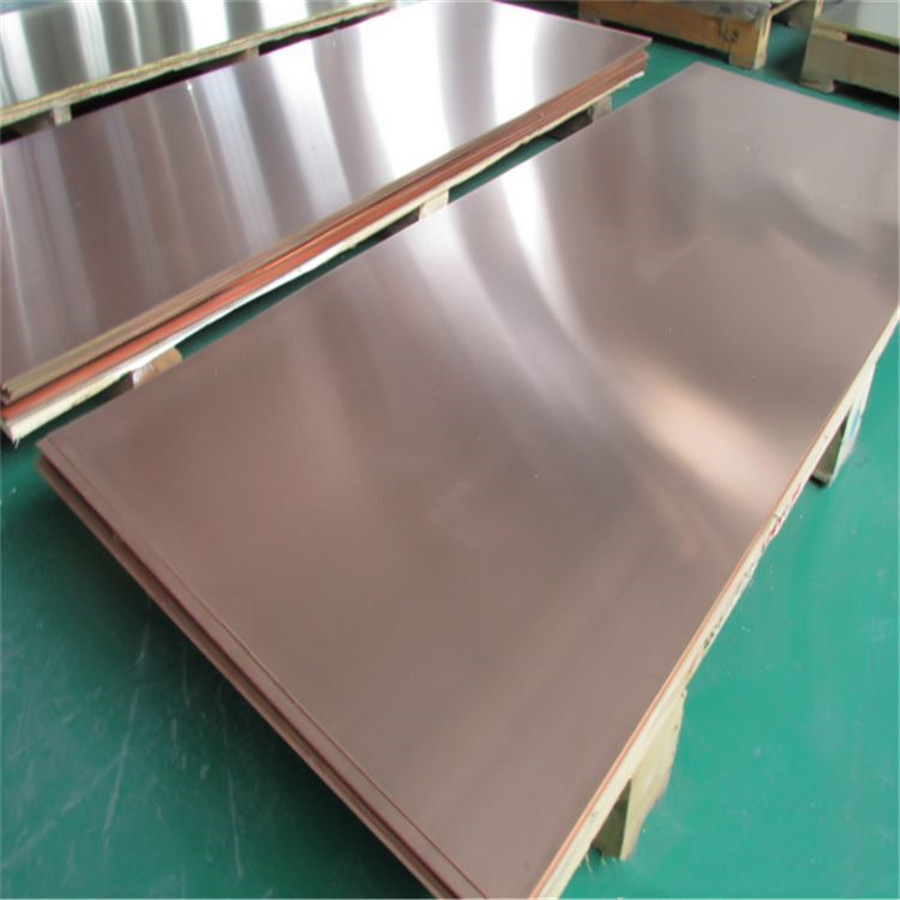


Regarding battery copper foil, we will mainly explain in detail the future development direction and production process of copper foil.
In lithium-ion batteries, the positive and negative active materials are coated on the substrate to form pole pieces, and then wound or stacked to form a battery core. The base materials used here mainly include copper foil and aluminum foil. The current lithium battery cathode is aluminum foil, and the negative electrode is copper foil. This is because copper is easily oxidized in the positive electrode with a higher potential, and the surface of the aluminum foil has a dense layer. The oxide layer protects the aluminum inside at high potentials. This article mainly talks about the commonly used copper foil for negative electrodes.
Copper has high mechanical strength and excellent electrical conductivity. Its content in the earth's crust is about 0.01%. It mostly exists in the form of copper ore in nature. Copper foil can be divided into electrolytic copper and rolled copper according to its different manufacturing methods. Rolled copper has good ductility and high technical difficulty in production. Its preparation requires many processes and the cost is high. There are few domestic enterprises. Companies that use this method to produce well include Olin Brass in the United States, Japan's Nippon Mining and other companies.
At present, most of the copper foil used in battery cell factories is produced by electrolysis. In 1922, Edison invented the method of continuous electrolytic copper foil and applied for a patent. It used a continuously rotating metal roller immersed in copper sulfate electrolyte as the cathode and insoluble metal as the anode. The birth of this method marked the beginning of the electrolytic copper industry. Get started. In 1937, the Anaconde Copper Factory in the United States put Edison's patent into production practice and successfully produced electrolytic copper foil. Throughout the development history of electrolytic copper foil, we can find that it has always followed the trend of printed circuit boards. With the large-scale application of lithium-ion batteries in consumer electronics, electrolytic copper foil has been brought into a new field as anode. Current collectors, with their good electrical conductivity, resistance to crushing and low cost, have been rapidly promoted and applied on a large scale. Now with the large-scale promotion and application of new energy vehicles, 5G and energy storage, the demand for electrolytic copper foil has shown a new explosion.
In order to increase the volumetric energy density of the battery core as much as possible while ensuring safety, cycle performance, etc., the designer of the battery cell needs to pack more active materials into the limited battery core shell. I think as a The negative current collector copper foil may develop in the following directions in the future:
1. Ultra-thin copper foil: This trend is now obvious, from 8um to 6um, and now to 4.5um, which some manufacturers are introducing in small batches. Perhaps copper foil below 4um will be promoted to mass production in the future. This function is also obvious, which is to increase the volume and mass energy density of the battery core as much as possible, but this puts forward higher requirements for the manufacturing of copper foil and the coating control of the battery core. After all, the thinner the copper foil, the The risk of strip breakage during the coating process is also higher.
2. Perforated copper foil: that is, through chemical corrosion, micropores are created on the surface of the copper foil to reduce the weight of the substrate and increase the mass energy density of the battery core. It is necessary to control the pore size and optimize the type of etchant. , one is to prevent the pore diameter from being too large, making it difficult to maintain a single-sided coating slurry, and the other is to evaluate the impact of residual etchant on the performance of the battery core, such as circulation, gas production, etc.
3 Spraying copper foil: This is equivalent to double-sided copper plating on a plastic substrate. This not only retains the function of current collector electronic conduction, but also reduces the weight of the substrate and improves the mass energy density of the battery core. However, during the manufacturing process, you may face process challenges such as cold pressing and tab welding.
As the penetration rate of new energy vehicles continues to increase, the existing copper foil production capacity is becoming increasingly insufficient, and there is a certain gap between supply and demand. It is expected that the copper foil industry will gradually expand production in the future to meet the market demand for power cells.
The preparation of electrolytic copper foil is mainly divided into three steps: copper dissolution, raw foil and surface treatment. The process of dissolving copper is to mix copper material and sulfuric acid in a copper dissolving tank, and react to generate a copper sulfate solution. The chemical reaction formula is as follows:
Cu+O2→CuO
CuO+H2SO4→CuSO4+H2O
During the copper dissolving process, attention should be paid to the control of dust in the environment and foreign matter in the raw material liquid to prevent subsequent staining on the surface of the copper foil, causing uneven spots. This situation may be caught on the die head during coating, causing strip breakage. Therefore, a filtration step should be added in this step to completely filter out the impurities in the solution.
The CuSO4 solution obtained in the copper dissolving process is used as the electrolyte, a large-diameter titanium roller is used as the cathode, and the arc-shaped lead alloy plate is used as the anode. By controlling the electrochemical process parameters, the copper ions in the solution will precipitate at the cathode to form a continuous copper layer. Through the continuous rotation of the cathode roller, the deposited copper foil will be continuously peeled off into rolls to obtain raw foil, as shown in the following figure:
Copper foil has a rough side and a smooth side. The smooth side is in contact with the cathode roller, and the rough side is in direct contact with the electrolyte. The SEM picture is as follows:
Since copper is prone to oxidation, after obtaining the raw foil, it needs to be roughened and plated with a barrier layer and an anti-oxidation layer to facilitate storage and transportation. The specific process diagram is as follows:
Due to the differences in cell models and production processes of different manufacturers, such as winding and lamination, it is difficult for the base material copper and aluminum foil to have one width that is universal for different manufacturers, so it is necessary to cut into enterprises during the slitting process. The specific width required.