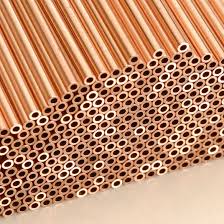


Cathode is not what gets welded, rolled, or drawn. Procurement teams who only watch the LME 3-month copper number - $14,550 per tonne on October 10, up $255.50 (+1.79%) on the day and +2.04% on the week - miss the layer that actually moves their invoice. The layer in question is the fabrication premium: the cost of turning Grade A cathode into wire rod, busbar, tube, sheet, strip, plate, or foil. Across all seven common C11000 product forms, that premium widened between Q3 and Q4 of 2026, but not uniformly. Foil and busbar widened by 21–22%. Plate widened by 17%. The implication for Q4 buyers is that the LME line item is no longer the only thing to negotiate - the conversion premium is now the second moving target on the quote.
Why the Fabrication Premium Matters Now
Through the first three quarters of 2026, the copper story was almost entirely an LME story. The LME 3-month average for 2026 is running at roughly $14,370 per tonne - about 41% above the 2025 full-year average. For procurement teams with a fixed LME-plus-premium contract, the LME line was the volatile one and the fabrication premium was the stable one.
That division is no longer clean. Three pressures have begun moving the conversion line as well:
Energy costs. European mill electricity and natural gas contracts renewed at 2026 Q4 levels are running 10–15% above 2025 Q4. North American mills with grid-purchased power saw similar increases. Asian mills with hydropower exposure are more insulated but still pay more for anode and natural gas.
Scrap recovery economics. Higher LME prices have tightened the floor under No.1 and No.2 copper scrap. Mills that count on internal scrap backfeed to subsidize prime material now have to mark-to-market that scrap at LME-related prices, which compresses the spread and pushes prime-quoted conversion premiums higher.
Mill capacity allocation. Q4 is the seasonal peak for transformer, busbar, and magnet wire demand. Mills in those segments are running extended lead times and prioritizing higher-margin specialty tempers and tolerances, which raises the headline conversion premium even for standard products.
The net result: the fabrication premium for the average C11000 product form widened by roughly $150–$800 per tonne between Q3 and Q4 2026. The chart below quantifies the shift form by form.
October 2026 Market Snapshot
| Indicator | Value (10 Oct 2026) | What it means for C11000 |
|---|---|---|
| LME 3-month copper | $14,550 / tonne | +$255.50 (+1.79%) on the day; +2.04% on the week |
| LME cash vs 3-month | +$10–14 / tonne | Mild backwardation; prompt cathode still tight |
| 2026 LME YTD average | ~$14,370 / tonne | +41% versus 2025 full-year average |
| 2025 LME full-year average | $10,180 / tonne | Reference baseline for YoY comparison |
| Yangshan copper premium | ~$120 / tonne | Off the September peak of $124; Asia physical demand still firm |
| LME warehouse stocks | ~242,975 tonnes | Post-holiday drawdown; tight ex-Asia |
| COMEX copper stocks | ~700,000 tonnes | Down from the 762,000-tonne September peak |
| US Section 232 copper-tariff deadline | Soft no (30 Sep 2026) | No duty imposed; review remains open |
| Chilean copper-gold mine | First-ever strike since 7 Oct | Concentrate supply risk; refined impact within 2–4 weeks |
The takeaway: the LME line is up and tight, but the regional premium is stable and the fabrication premium is what is now widening. The combination means that C11000 invoices in Q4 are being driven by all three layers simultaneously, not just the headline LME number.
C11000 Equivalent Grade Module
C11000 is the workhorse electrolytic tough pitch (ETP) copper grade, specified as 99.90% Cu minimum with oxygen controlled in the 0.02–0.04% tough-pitch range. The same chemistry is referenced under several national standards. For procurement teams that receive drawings specifying one designation and need to source from mills certified to another, the table below maps the equivalents.
| Designation system | Grade code | Other common names | Key notes |
|---|---|---|---|
| UNS (USA) | C11000 | Electrolytic Tough Pitch (ETP) | ASTM B152, B187, B49, B280 base grade |
| EN (Europe) | CW004A | Cu-ETP | EN 1652, EN 12163, EN 12449 |
| GB/T (China) | T2 | - | GB/T 5231, GB/T 1527/1530/2040 |
| JIS (Japan) | C1100 | - | JIS H3100, H3200, H3300 |
| DIN (Germany) | 2.0065 | E-Cu58 | DIN 1787 / EN 13601 |
| BS (UK) | C101 | - | BS EN 1652 |
| ISO | Cu-ETP | - | ISO 1336 |
For brazed or hydrogen-atmosphere applications, specify C12200 (DHP) instead; residual oxygen in C11000 can cause hydrogen embrittlement at the joint. For applications requiring higher electrical conductivity (>101% IACS) or freedom from oxygen, specify C10200 (OFHC) or C10100 (OFE).
Fabrication Premium Ladder by Product Form - Q3 vs Q4 2026
The fabrication premium is the most negotiable line on a C11000 invoice. It is also the most variable. The chart below shows the typical Q3 mid-point and the Q4 indicative mid-point for seven common product forms, sorted by premium magnitude (highest at top).
C11000 fabrication premium by product form: Q3 (Aug-Sep 2026) typical mid-point vs Q4 (Oct 2026) indicative mid-point. Premiums in USD per tonne over LME Cu cash or 3-month settlement. The right-hand column shows the Q3-to-Q4 widening percentage. Foil and busbar widened fastest; plate widened slowest.
| Product form | Q3 typical premium (USD/t over LME Cu) | Q4 indicative premium (USD/t over LME Cu) | Q3→Q4 widening |
|---|---|---|---|
| Foil (rolled, < 0.1 mm) | $3,800 | $4,600 | +21% |
| Tube (drawn, plumbing/ACR) | $2,700 | $3,200 | +19% |
| Strip (precision, < 3 mm) | $1,600 | $1,900 | +19% |
| Sheet (cold-rolled, > 3 mm) | $1,400 | $1,650 | +18% |
| Plate (heavy, > 6 mm) | $1,200 | $1,400 | +17% |
| Busbar (rectangular, rolled) | $900 | $1,100 | +22% |
| Wire rod (8 mm, continuous cast) | $700 | $850 | +21% |
The pattern is informative. The two forms with the largest percentage widening - busbar (+22%) and foil (+21%) - are at opposite ends of the complexity spectrum. Busbar is a simple shape but the surge in transformer and data-center demand has tightened rolling-mill capacity. Foil is the most complex shape and the most energy-intensive to produce. Both widened faster than the average.
Tube and strip widened by 19%. Tube demand is being driven by plumbing retrofits, ACR (air-conditioning and refrigeration) buildouts, and the heat-pump transition. Strip demand is being driven by EV battery connectors, transformer windings, and precision electronics.
Plate and sheet widened the least (17–18%). These are the highest-volume forms, and the mills that produce them have the most stable capacity. They are also the forms where the LME line is the largest share of the final invoice, so the LME move is doing more of the work on the headline price.
For a C11000 wire rod buyer, the headline number matters more than the conversion premium. For a C11000 foil buyer, the conversion premium can be a quarter of the invoice.
Form-by-Form Q4 Procurement Notes
Wire rod (8 mm, continuous cast)
The simplest form to make - a single hot-rolling pass from a continuous-cast bar - and the form with the lowest conversion premium. Q4 widening was driven mainly by scrap-backfeed economics: higher LME prices have raised the floor under No.1 copper scrap, compressing the mill's internal margin and pushing the prime-quoted conversion premium higher. Lead times for standard 8 mm rod are now 6–8 weeks for Q1 2027 delivery slots.
Busbar (rectangular, rolled)
Busbar is geometrically simple but logistically tight. Q4 widening was driven by transformer and data-center demand that has pulled rolling-mill capacity forward. Tin-plated busbar carries an additional $200–$400/t over bare. Silver-plated adds another $1,500–$2,500/t. If your drawing specifies plating, lock the plating premium separately from the copper premium.
Plate (heavy, > 6 mm)
Plate is the form most exposed to the ground bus, switchgear, and large transformer end-markets. Q4 demand is firm but not as tight as the strip and tube segments. Plate buyers have the most leverage to negotiate the conversion premium down in Q4, because the LME line is the largest share of the invoice and mills are willing to discount the conversion to win the volume.
Sheet (cold-rolled, > 3 mm)
Sheet is a workhorse form used in roofing, cladding, busbar jacketing, and general fabrication. Q4 widening is moderate. Buyers should pay attention to temper specification: a drawing that specifies H02 (half-hard) versus H04 (full-hard) versus O60 (soft annealed) changes the conversion cost by 5–15%. If your application allows, specifying by hardness range rather than by name gives the mill flexibility to choose the cheapest compliant route.
Strip (precision, < 3 mm)
Strip is the highest-precision sheet form and the one most exposed to EV battery, transformer winding, and electronics demand. Q4 widening was driven by capacity constraints at the precision cold-rolling mills. Tolerance and surface-finish requirements matter: ±0.02 mm tolerance with mirror finish can add another 15–25% to the conversion premium.
Tube (drawn, plumbing/ACR)
Tube demand in Q4 is being driven by the plumbing retrofit cycle, ACR (air-conditioning and refrigeration) buildout, and the heat-pump transition. Drawn tube requires multiple cold-drawing passes and intermediate anneals, which is why the conversion premium is in the middle of the ladder. Drawn tube lead times are now 10–14 weeks for standard sizes; 14–20 weeks for non-standard or high-pressure ACR specs.
Foil (rolled, < 0.1 mm)
Foil is the most complex form and the one with the largest absolute conversion premium. The Q4 widening was driven by energy costs (foil rolling is among the most energy-intensive copper processes) and by EV battery, lithium-ion current collector, and electronics shielding demand. Foil is also the form most exposed to scrap loss: edge trim from the rolling process returns to the melt shop, and that scrap has to be marked-to-market at LME-related prices, which lifts the headline conversion premium.
Q4 Procurement Strategy by Form
For C11000 buyers managing Q4 spend across multiple product forms, five tactical points stand out:
Negotiate the conversion premium separately from the LME clause. A single LME+premium number is convenient but hides the conversion premium. Ask for the two numbers broken out, and benchmark the conversion premium against the form-specific ranges in this article.
Lock Q1 2027 volume now on the tight forms. Foil, tube, and busbar lead times are extending. A Q1 2027 delivery slot ordered in October secures the production calendar position.
Specify temper by hardness range, not by name. H02 vs H04 vs O60 changes the conversion cost by 5–15%. A drawing that allows "half-hard, 60–75 HV" gives the mill the cheapest compliant route.
Ask about scrap backfeed economics. A mill that runs high internal scrap recovers a margin that the buyer cannot see on the invoice. If the mill's scrap ratio is high, there may be room to negotiate the conversion premium downward.
Separate plating and tolerance from the copper premium. Tin-plating, silver-plating, and tight-tolerance specifications can each add 10–25% to the conversion premium. Negotiate them as separate line items so the copper-and-fabrication portion of the invoice stays visible.
FAQ
Q: Is the fabrication premium the same as the regional premium?
A: No. The regional premium covers freight, insurance, financing, and import duty to get cathode from a warehouse to a fabricator. The fabrication premium is the cost of converting cathode into the finished C11000 product form. Together they make up the "mill delivered" component of a C11000 invoice; the LME line is the third component.
Q: Why is the fabrication premium so different between wire rod and foil?
A: Yield loss, energy intensity, and the number of process steps. Wire rod is a single-pass hot-rolled product with ~98% yield. Foil is a multi-pass cold-rolled product with energy-intensive intermediate anneals and edge-trim scrap at every stand. The yield and energy difference shows up directly in the conversion premium.
Q: Will the fabrication premium keep widening into Q1 2027?
A: It depends on energy costs and the LME level. If LME Cu stays above $14,000/t and energy contracts hold near current levels, the conversion premium is likely to widen another 5–10% in Q1 2027. If LME corrects to $13,000–$13,500/t, conversion premiums will likely hold flat.
Q: Should I lock a 6-month or 12-month fixed-price contract now?
A: A fixed-price contract locks the LME reference and the conversion premium together. In the current environment, the upside is protection against further LME rises. The downside is missing the opportunity if LME corrects. The standard approach is a floating-LME contract with a fixed conversion premium - this captures the LME move in both directions while locking the line you can actually negotiate.
C11000 Product Supply Range
We supply C11000 electrolytic tough pitch copper across all major product forms. Standard production ranges are shown below; non-standard sizes, tempers, and surface finishes are available on request.
| Product form | Size range | Temper / finish | Standards |
|---|---|---|---|
| C11000 wire rod | 8 mm continuous cast | As-drawn | ASTM B49; EN 1977; GB/T 3952 |
| C11000 busbar | Thickness 3–20 mm, width 20–200 mm | H02 (half-hard); tin-plated, silver-plated optional | ASTM B187; EN 13601; GB/T 5585 |
| C11000 sheet and plate | Thickness 0.5–50 mm, width up to 1,500 mm | O60 / H02 / H04 | ASTM B152; EN 1652; GB/T 2040 |
| C11000 strip | Thickness 0.1–3.0 mm, width up to 600 mm | O60 / H02 / H04; precision tolerances available | ASTM B152; EN 1652; JIS H3100 |
| C11000 tube (drawn) | OD 4–100 mm, wall 0.5–5.0 mm | O60 (annealed); H58 for ACR | ASTM B88, B280; EN 1057; GB/T 18033 |
| C11000 foil | Thickness 0.01–0.1 mm | O60 (soft annealed) | ASTM B370; EN 1652 |
All forms ship with full mill test certificates and can be supplied with third-party inspection, dimensional reports, and surface-finish certification on request.
Request a C11000 Quote
Send us your product form, specification, quantity, and delivery window. We will return a formal indicative quote within 48 hours, with the LME reference, regional premium, and fabrication premium broken out as separate line items. Equivalent grades (CW004A, T2, C1100, 2.0065, C101) supplied under the same quality system.