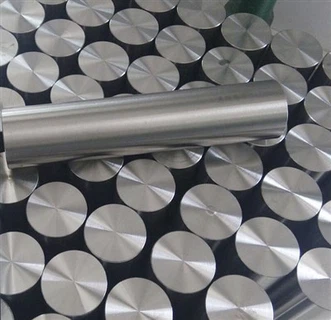


The selection between C26000 (Cartridge Brass) and H62 (Chinese Standard Brass) represents a critical decision point in brass alloy specification for industrial applications. This comprehensive analysis examines the fundamental differences, performance characteristics, and application suitability of these two widely-used brass alloys across global markets.
C26000, governed by ASTM standards, represents the Western approach to brass metallurgy with emphasis on corrosion resistance and formability. H62, following Chinese GB standards, prioritizes mechanical strength and machinability at optimized cost points. Understanding these distinctions is essential for engineers, procurement specialists, and manufacturing professionals operating in today's globalized supply chains.
Chemical Composition Analysis
Detailed Composition Comparison
| Element | C26000 (ASTM B36) | H62 (GB/T 5231) | Impact on Properties |
|---|---|---|---|
| Copper (Cu) | 68.5 – 71.5% | 60.5 – 63.5% | Corrosion resistance, conductivity, ductility |
| Zinc (Zn) | Balance (28.5 – 31.5%) | Balance (36.0 – 39.0%) | Strength, hardness, cost reduction |
| Lead (Pb) | ≤ 0.07% | ≤ 0.08% | Machinability enhancement |
| Iron (Fe) | ≤ 0.05% | ≤ 0.15% | Strength increase, workability reduction |
| Aluminum (Al) | – | ≤ 0.01% | Deoxidation, strength enhancement |
| Tin (Sn) | – | ≤ 0.20% | Corrosion resistance improvement |
| Arsenic (As) | ≤ 0.02% | – | Dezincification resistance |
| Phosphorus (P) | ≤ 0.02% | ≤ 0.01% | Deoxidation agent |
Compositional Impact Analysis
The 8-10% difference in copper content between these alloys creates cascading effects throughout their property profiles:
Higher Copper Content (C26000):
Enhanced corrosion resistance in marine and atmospheric environments
Superior electrical and thermal conductivity
Improved ductility for complex forming operations
Better brazing and welding characteristics
Higher material cost due to copper premium
Higher Zinc Content (H62):
Increased yield and tensile strength
Enhanced machinability due to improved chip formation
Better hot working characteristics
Reduced material cost
Slightly compromised corrosion resistance
Get H62/C26000 Brass Spec Sheet
Mechanical Properties Comparison
Tensile Properties at Room Temperature
| Property | C26000 (Annealed) | C26000 (H04) | H62 (Annealed) | H62 (Hard) | Units |
|---|---|---|---|---|---|
| Tensile Strength | 300-380 | 410-540 | 315-390 | 440-540 | MPa |
| Yield Strength (0.2%) | 75-140 | 275-380 | 105-165 | 285-395 | MPa |
| Elongation | 60-68 | 15-25 | 50-65 | 8-20 | % |
| Hardness (HV) | 60-85 | 115-145 | 70-95 | 125-155 | HV |
| Modulus of Elasticity | 110 | 110 | 105 | 105 | GPa |
| Fatigue Strength (10^7 cycles) | 140 | 180 | 145 | 190 | MPa |
Temperature-Dependent Properties
| Temperature | Property | C26000 | H62 | Units |
|---|---|---|---|---|
| -40°C | Tensile Strength | 420 | 435 | MPa |
| 20°C | Tensile Strength | 340 | 355 | MPa |
| 100°C | Tensile Strength | 315 | 325 | MPa |
| 200°C | Tensile Strength | 280 | 285 | MPa |
| 300°C | Tensile Strength | 245 | 240 | MPa |
Forming Characteristics
| Forming Operation | C26000 Rating | H62 Rating | Comments |
|---|---|---|---|
| Deep Drawing | Excellent (5/5) | Good (4/5) | C26000 superior for complex shapes |
| Bending | Excellent (5/5) | Very Good (4/5) | Both suitable for tight radii |
| Spinning | Excellent (5/5) | Good (4/5) | C26000 preferred for thin-wall parts |
| Cold Heading | Very Good (4/5) | Excellent (5/5) | H62 superior for fasteners |
| Thread Rolling | Good (3/5) | Excellent (5/5) | H62 much better surface finish |
| Stamping | Excellent (5/5) | Very Good (4/5) | Both excellent for fine details |
Physical and Thermal Properties
Physical Properties Comparison
| Property | C26000 | H62 | Units | Significance |
|---|---|---|---|---|
| Density | 8.53 | 8.40 | g/cm³ | Weight considerations |
| Melting Point | 915-940 | 905-925 | °C | Processing temperature |
| Liquidus Temperature | 940 | 925 | °C | Casting parameters |
| Solidus Temperature | 915 | 905 | °C | Heat treatment |
| Electrical Conductivity | 28% IACS | 26% IACS | % | Electrical applications |
| Thermal Conductivity | 120 | 109 | W/m·K | Heat dissipation |
| Coefficient of Thermal Expansion | 20.5 | 20.8 | 10⁻⁶/K | Dimensional stability |
| Magnetic Permeability | 1.0 | 1.0 | μ/μ₀ | Non-magnetic applications |
Thermal Processing Parameters
| Process | Parameter | C26000 | H62 | Units |
|---|---|---|---|---|
| Annealing | Temperature | 425-650 | 450-650 | °C |
| Annealing | Time | 0.5-3 | 0.5-2 | hours |
| Hot Working | Temperature Range | 600-800 | 650-850 | °C |
| Cold Work Reduction | Before Annealing | 85% | 80% | % |
| Grain Size (Annealed) | ASTM | 5-7 | 4-6 | Number |
Corrosion Resistance Analysis
Environmental Performance Comparison
| Environment | C26000 Performance | H62 Performance | Corrosion Rate (μm/year) |
|---|---|---|---|
| Atmospheric (Urban) | Excellent | Good | C26000: 2-5, H62: 5-8 |
| Atmospheric (Marine) | Excellent | Fair-Good | C26000: 5-10, H62: 10-15 |
| Fresh Water | Excellent | Good | C26000: 1-3, H62: 3-6 |
| Seawater | Good | Fair | C26000: 15-25, H62: 25-40 |
| Soil (Average) | Good | Fair | C26000: 5-15, H62: 10-25 |
| Ammonia Solutions | Poor | Poor | Both susceptible to stress cracking |
| Sulfur Compounds | Fair | Fair | Both require protective measures |
Dezincification Resistance
| Test Condition | C26000 Result | H62 Result | Standard |
|---|---|---|---|
| ASTM B858 Method A | Layer <200μm | Layer >200μm | ASTM B858 |
| ISO 6509-1 (24h) | Type 1 (Excellent) | Type 2 (Good) | ISO 6509 |
| Accelerated Test (80°C) | Minimal attack | Moderate attack | Internal |
| Field Exposure (5 years) | Surface only | Subsurface penetration | Comparative |


Inquire about H62/C26000 Brass Pricing & Samples
Manufacturing and Processing Characteristics
Machinability Assessment
| Machining Operation | C26000 Rating | H62 Rating | Cutting Speed (m/min) | Tool Life Comparison |
|---|---|---|---|---|
| Turning | Good (3.5/5) | Excellent (5/5) | C26000: 150-250, H62: 200-350 | H62: 2x longer |
| Drilling | Good (3.5/5) | Excellent (5/5) | C26000: 80-120, H62: 120-180 | H62: 1.8x longer |
| Milling | Good (3/5) | Very Good (4.5/5) | C26000: 100-180, H62: 150-250 | H62: 1.5x longer |
| Threading | Fair (2.5/5) | Excellent (5/5) | C26000: 60-100, H62: 100-150 | H62: 3x longer |
| Surface Finish | Ra 1.6-3.2 | Ra 0.8-1.6 | μm | H62 superior |
Welding and Joining Characteristics
| Joining Method | C26000 Suitability | H62 Suitability | Recommended Parameters |
|---|---|---|---|
| TIG Welding | Excellent | Good | Low current, pure argon |
| MIG Welding | Good | Fair | Deoxidized bronze filler |
| Brazing | Excellent | Very Good | 750-850°C, flux required |
| Soldering | Excellent | Very Good | 185-250°C, rosin flux |
| Resistance Welding | Very Good | Good | High pressure, short time |
| Friction Welding | Good | Very Good | Moderate pressure |
Heat Treatment Response
| Treatment | C26000 Response | H62 Response | Typical Parameters |
|---|---|---|---|
| Stress Relief | Good response | Good response | 250-300°C, 1-2 hours |
| Full Anneal | Excellent | Excellent | 450-650°C, controlled cooling |
| Partial Anneal | Very Good | Very Good | 350-450°C, air cooling |
| Age Hardening | Not applicable | Not applicable | Single-phase alloys |
| Grain Refinement | Possible | Possible | Controlled deformation + anneal |
Application-Specific Performance
Industry Applications Matrix
| Industry Sector | Application | C26000 Preference | H62 Preference | Selection Criteria |
|---|---|---|---|---|
| Architecture | Door hardware | ★★★★★ | ★★★ | Appearance, corrosion resistance |
| Architecture | Window fittings | ★★★★★ | ★★★ | Weather resistance, formability |
| Automotive | Radiator cores | ★★★★ | ★★★★★ | Cost, thermal conductivity |
| Automotive | Fuel system | ★★★★★ | ★★★ | Corrosion resistance |
| Electronics | Connectors | ★★★★★ | ★★★ | Conductivity, reliability |
| Electronics | Heat sinks | ★★★★ | ★★★★★ | Cost-performance ratio |
| Marine | Propeller hardware | ★★★★★ | ★★ | Seawater resistance |
| Marine | Deck fittings | ★★★★★ | ★★★ | Corrosion resistance |
| Plumbing | Valve bodies | ★★★★ | ★★★★★ | Machinability, cost |
| Plumbing | Pipe fittings | ★★★★★ | ★★★ | Dezincification resistance |
Performance in Specific Applications
| Application | Critical Properties | C26000 Advantages | H62 Advantages |
|---|---|---|---|
| Cartridge Cases | Formability, strength | Proven military heritage, deep drawing capability | Cost-effective for sporting ammunition |
| Lamp Components | Conductivity, corrosion resistance | Superior atmospheric resistance | Lower cost for indoor applications |
| Clock Movements | Precision, stability | Dimensional stability, fine machining | Cost-effective for movement gears |
| Musical Instruments | Acoustic properties, workability | Traditional choice, excellent forming | Cost advantage for student instruments |
| Decorative Hardware | Appearance, durability | Superior outdoor performance | Indoor applications, high-volume production |
Conclusion and Recommendations
Choose C26000 when:
Corrosion resistance is paramount
Aesthetic appearance is critical
Deep drawing or complex forming is required
Electrical conductivity is important
Marine or harsh atmospheric exposure is expected
Long-term reliability justifies premium cost
Choose H62 when:
Cost optimization is primary concern
High-volume machining operations are involved
Mechanical strength requirements are moderate
Indoor or controlled environment application
Supply chain flexibility is needed
Processing efficiency impacts total cost
Our factory
Our factory serves as the core base for the precision manufacturing of copper products, integrating advanced equipment, strict quality control, and efficient production capacity. We possess a complete production line covering the entire process from raw material smelting and continuous rolling to precision drawing/cutting, with key equipment including large-tonnage hydraulic stretching machines, high-precision CNC machine tools, and automated surface treatment systems. This enables the large-scale and customized production of a wide range of products such as copper rods, tubes, plates, strips, and wires. The factory strictly adheres to the ISO quality management system and is equipped with testing instruments such as spectrometers and mechanical property testing machines to monitor process parameters and product performance throughout the entire process. Digital production management is achieved through an ERP system and visual dashboards, ensuring timely order delivery. Furthermore, we implement a green manufacturing philosophy, equipped with exhaust gas treatment and scrap recycling systems, committed to providing customers with high-quality and sustainable copper material solutions.

Copper product packaging
We employ professional and reliable packaging solutions to comprehensively protect the integrity of all types of copper products during long-distance transportation and handling. For copper rods and tubes, we use moisture- and rust-proof materials for wrapping, secured with sturdy wooden crates or steel strapping to prevent bending and deformation. Copper plates and strips are sealed with waterproof paper or plastic film, protected with edge guards, and then fixed on customized wooden pallets or metal racks to avoid surface scratches and moisture. Copper wires are neatly wound on specialized reels, wrapped with moisture- and rust-proof film, and reinforced at the edges. All packaging is designed according to export standards, with clear labeling to ensure the safe delivery of goods to our global customers.

Get Fast Quote & Logistics Plan