


Copper, with its excellent electrical and thermal conductivity, corrosion resistance, and ductility, has long been a cornerstone material in various industries. However, not all copper is created equal. When it comes to high-performance applications, the choice of copper alloy can make a significant difference. In this article, we will delve into the differences between copper alloy C10100, C11000, and C101.
What is C10100 Copper Alloy?
C10100 Copper Alloy, also known as Copper 101 or Oxygen-Free Electronic (OFE) Copper, is a high-purity copper alloy with a minimum copper content of 99.99%. It is characterized by extremely low oxygen levels, typically ≤0.0005%, which makes it ideal for sensitive applications where oxygen-induced embrittlement or contamination is a concern. This alloy offers exceptional electrical and thermal conductivity, making it particularly useful in industries like electronics, aerospace, semiconductor manufacturing, and vacuum technology. C10100 is also highly corrosion-resistant, ductile, and easily fabricated, though its machinability can be challenging due to its softness. Because of its purity, it is most commonly used in high-performance electrical components, heat exchangers, RF & microwave systems, and cryogenic applications.
Copper C10100 Properties
High Purity: ≥99.99% copper content and ≤0.0005% oxygen.
Excellent Conductivity: Up to 101% IACS electrical conductivity and high thermal conductivity.
Superior Corrosion Resistance: Due to its ultra-high purity.
Ductility: Easily formed and drawn into various shapes.
Applications: Ideal for high-frequency electronics, aerospace, cryogenics, and high-performance electrical components.
Machinability: Soft and challenging to machine, requiring special techniques.
What is C11000 Copper Alloy?
C11000 Copper Alloy, also known as Copper 110 or Electrolytic Tough Pitch (ETP) Copper, is a high-conductivity copper alloy with a minimum copper content of 99.90% and a small amount of oxygen (approximately 0.02–0.04%). This alloy is renowned for its excellent electrical conductivity, typically around 100% IACS, making it ideal for electrical wiring, busbars, motors, and other applications where efficient conductivity is crucial. Copper 110 also offers good thermal conductivity, formability, and corrosion resistance, but it is less suitable for environments where oxygen could cause issues, such as in vacuum or high-temperature applications. C11000 is widely used in general-purpose electrical applications due to its balance of performance and cost-effectiveness.
Copper C11000 Properties
High Purity: Contains at least 99.90% copper with a small amount of oxygen (approximately 0.02–0.04%) .
Excellent Electrical Conductivity: Around 100% IACS (International Annealed Copper Standard), making it ideal for electrical applications .
Good Thermal Conductivity: Approximately 390 W/m-K, suitable for heat transfer applications .
Mechanical Properties:
Tensile Strength: 220 to 410 MPa (32 to 60 ksi)
Yield Strength: 69 to 390 MPa (10 to 56 ksi)
Elongation at Break: 1.5 to 50%
Hardness: 37 to 94 Rockwell F .
Formability and Ductility: Highly ductile and easily formed into various shapes, making it suitable for both hot and cold working processes .
Corrosion Resistance: Exhibits good resistance to corrosion, making it reliable for long-term use in various environments.
What's C101 Copper Alloy?
C101 Copper Alloy, also known as Copper 101 or Oxygen-Free Electronic (OFE) Copper, is a high-purity copper alloy that contains a minimum of 99.99% copper and is virtually free of oxygen, with levels typically less than 0.0005%. This ultra-high purity makes it highly resistant to hydrogen embrittlement and ideal for electronic and aerospace applications where excellent electrical and thermal conductivity is essential. Copper 101 offers superior performance in environments such as vacuum systems, cryogenics, and high-frequency electronics due to its exceptional conductivity and corrosion resistance. However, it has poor machinability due to its softness and is typically used in precision applications where electrical reliability and high-performance are paramount.
Copper C101 Properties
High Purity: Contains at least 99.99% copper with extremely low oxygen content (typically less than 0.001%) .
Excellent Electrical Conductivity: Achieves up to 100% IACS (International Annealed Copper Standard), making it ideal for high-performance electrical applications .
Superior Thermal Conductivity: Around 391.1 W/m·K, ensuring efficient heat transfer .
Corrosion Resistance: Forms a protective patina in marine and industrial environments, providing excellent resistance to corrosion .
Ductility and Formability: Highly ductile and easily formed into various shapes, making it suitable for both cold and hot working processes .
Mechanical Properties:
Tensile Strength: 200-360 MPa
Proof Stress: 50-340 MPa
Elongation: 15-50%
Hardness: 40-110 HV (Vickers)
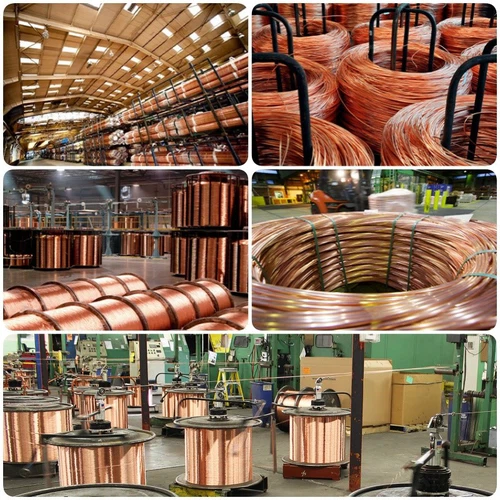

Mechanical, Thermal & Electrical Properties of Copper 10100, 11000 & 101
1. Mechanical Properties
| Property | C10100 (C101) | C11000 (C110) | C101 Copper (Equivalent to C10100) |
|---|---|---|---|
| Tensile Strength | 200–250 MPa (Annealed) | 210–250 MPa (Annealed) | 200–250 MPa (Annealed) |
| Yield Strength | 33–69 MPa (Annealed) | 69 MPa (Annealed) | 33–69 MPa (Annealed) |
| Elongation | ~45% | ~45% | ~45% |
| Hardness (Brinell) | 50–60 HB | 45–55 HB | 50–60 HB |
| Modulus of Elasticity | 110 GPa | 110 GPa | 110 GPa |
| Machinability | Poor to Fair | Fair | Poor to Fair |
2. Thermal Properties
| Property | C10100 (C101) | C11000 (C110) | C101 Copper (Equivalent to C10100) |
|---|---|---|---|
| Thermal Conductivity | 391–400 W/m·K at 20°C | 385–390 W/m·K at 20°C | 391–400 W/m·K at 20°C |
| Specific Heat Capacity | ~0.385 J/g·K | ~0.385 J/g·K | ~0.385 J/g·K |
| Melting Point | 1,083°C (1,981°F) | 1,083°C (1,981°F) | 1,083°C (1,981°F) |
| Coefficient of Thermal Expansion | ~16.5 µm/m·°C | ~16.5 µm/m·°C | ~16.5 µm/m·°C |
3. Electrical Properties
| Property | C10100 (C101) | C11000 (C110) | C101 Copper (Equivalent to C10100) |
|---|---|---|---|
| Electrical Conductivity | Up to 101% IACS | ~100% IACS | Up to 101% IACS |
| Resistivity | ~0.00000000175 ohm·m (at 20°C) | ~0.00000000178 ohm·m (at 20°C) | ~0.00000000175 ohm·m (at 20°C) |
| Voltage Rating | High | High | High |
| Current Carrying Capacity | Excellent for high current applications | Good for general electrical applications | Excellent for high current applications |
Copper C10100, C11000 & C101 Equivalent
Copper C10100 Equivalent
C10100 (Oxygen-Free Electronic Copper – OFE) is a high-purity copper grade containing a minimum of 99.99% copper with extremely low oxygen content (typically less than 5 ppm). It offers exceptional electrical and thermal conductivity (approximately 101% IACS) and is ideal for critical applications requiring high reliability in vacuum, cryogenic, and electronic systems. C10100 is equivalent to CW009A (EN/DIN), C101 (BS), C1020 (JIS), and Cu-OF (ISO), and complies with several ASTM standards such as B170 and B152. Its purity and conductivity make it the preferred choice for high-end electrical and electronic components.
Copper C11000 Equivalent
C11000 (Electrolytic Tough Pitch Copper – ETP) is the most widely used commercial copper, featuring a copper content of 99.90% with a small amount of oxygen (~0.02–0.04%). It delivers excellent electrical conductivity (~100% IACS) and is widely used for wiring, busbars, motors, plumbing, and architectural elements. C11000 is the equivalent of CW004A (EN), C1100 (JIS), and Cu-ETP (ISO). In British Standards, C101 may also refer to this grade depending on context, although it more commonly aligns with oxygen-free variants. Its balance of performance, workability, and cost makes it ideal for general electrical applications.
Copper C101 Equivalent
C101 (British Standard) refers to high-conductivity copper under UK specifications and typically aligns with oxygen-free grades like C10100 (UNS) or CW009A (EN). It's often used in situations that require superior electrical performance and ductility, such as electrical conductors, waveguides, or vacuum components.
Copper C10100, C11000 & C101 Material Properties
Copper C10100 Properties
UNS Designation: C10100
Purity: 99.99% Cu (minimum)
Oxygen Content: < 0.0005%
Electrical Conductivity: ~101% IACS
Thermal Conductivity: ~391 W/m·K
Tensile Strength: ~220–360 MPa (annealed to hard drawn)
Yield Strength: ~60–290 MPa
Elongation: ~30–3%
Hardness (HV): ~40–110
Density: 8.94 g/cm³
Applications: High-vacuum devices, superconductors, semiconductors, radio frequency applications
Copper C11000 Properties
UNS Designation: C11000
Purity: 99.90% Cu (minimum)
Oxygen Content: ~0.02–0.04%
Electrical Conductivity: ~100% IACS
Thermal Conductivity: ~390 W/m·K
Tensile Strength: ~210–360 MPa
Yield Strength: ~60–300 MPa
Elongation: ~30–5%
Hardness (HV): ~45–110
Density: 8.94 g/cm³
Applications: Electrical wiring, power distribution, busbars, plumbing, roofing
Compositions of C10100, C11000 & C101 Copper
1. C10100 (C101) Copper Composition:
Copper (Cu): 99.99% (min)
Oxygen (O): 0.0005% (max)
Other elements: Trace amounts of impurities (e.g., Fe, Pb, Zn, Ag, etc.), typically <0.001% each.
C10100 (C101) is essentially oxygen-free copper with an ultra-high purity. The oxygen content is extremely low, making it suitable for applications where electrical conductivity and corrosion resistance are critical.
2. C11000 (C110) Copper Composition:
Copper (Cu): 99.90% (min)
Oxygen (O): 0.02–0.04%
Other elements: Trace impurities (e.g., Fe, Pb, Zn, Ag, etc.), typically <0.05% each.
C11000 (C110) contains a small amount of oxygen (around 0.02–0.04%), which is added during the manufacturing process. This is what distinguishes C11000 from the oxygen-free copper alloys like C10100. The presence of oxygen enhances certain properties, like workability and cost, but may also reduce its performance in certain sensitive applications.
3. C101 Copper (Equivalent to C10100):
Copper (Cu): 99.99% (min)
Oxygen (O): 0.0005% (max)
Other elements: Trace impurities (e.g., Fe, Pb, Zn, Ag, etc.), typically <0.001% each.
C101 Copper is functionally equivalent to C10100 and has the same composition with high purity and virtually no oxygen. This composition is crucial for electrical and thermal conductivity and resistance to corrosion.
Copper 101 vs 110 Electrical Conductivity
| Property | C101 (Oxygen-Free Copper / OFE / C10100) | C110 (ETP Copper / C11000) |
|---|---|---|
| Purity | ≥ 99.99 % Cu (essentially oxygen-free, ≤ 0.0005 %) | ~ 99.90 % Cu (contains 0.02–0.04 % oxygen) |
| IACS Rating (International Annealed Copper Standard) | 101 % IACS (≈ 58.0 MS/m) | 100 % IACS (≈ 57.5 MS/m) |
| Resistivity (20 °C) | 1.68 × 10⁻⁸ Ω·m | 1.72 × 10⁻⁸ Ω·m |
| Comments | Ultra-pure, highest conductivity available for industrial copper; used in high-frequency, vacuum, or cryogenic systems. | Slightly lower due to trace oxygen, but still the standard for electrical wiring and conductors. |
Copper 101 vs 110 Thermal Conductivity
| Property | C101 (Oxygen-Free Copper / OFE / C10100) | C110 (ETP Copper / C11000) |
|---|---|---|
| Purity | ≥ 99.99 % Cu (essentially oxygen-free, ≤ 0.0005 %) | ~ 99.90 % Cu (contains 0.02–0.04 % oxygen) |
| IACS Rating (International Annealed Copper Standard) | 101 % IACS (≈ 58.0 MS/m) | 100 % IACS (≈ 57.5 MS/m) |
| Resistivity (20 °C) | 1.68 × 10⁻⁸ Ω·m | 1.72 × 10⁻⁸ Ω·m |
| Comments | Ultra-pure, highest conductivity available for industrial copper; used in high-frequency, vacuum, or cryogenic systems. | Slightly lower due to trace oxygen, but still the standard for electrical wiring and conductors. |
Copper C10100 vs C11000, Which is Better?
Copper C10100 (C101) – Oxygen-Free Electronic Copper:
Purity: ≥99.99% copper, with extremely low oxygen content (≤0.0005%), making it ideal for sensitive applications.
Electrical Conductivity: Slightly better than C11000, up to 101% IACS, making it highly effective in high-performance electronic and vacuum environments.
Applications: Primarily used in aerospace, semiconductor manufacturing, high-frequency systems, and cryogenic systems where purity and conductivity are critical.
Advantages: Superior in environments where oxygen could cause embrittlement, such as vacuum tubes and electronics.
Disadvantages: Higher cost and poor machinability, making it less suitable for large-scale, cost-sensitive projects.
Copper C11000 (C110) – Electrolytic Tough Pitch Copper:
Purity: ~99.90% copper, with small amounts of oxygen (~0.02–0.04%).
Electrical Conductivity: Around 100% IACS, slightly lower than C101, but still excellent for most general electrical applications.
Applications: Widely used in electrical wiring, busbars, motors, plumbing, and industrial applications where cost-effectiveness is important but high purity is not as critical.
Advantages: More affordable and widely available, making it a popular choice for general-purpose electrical applications.
Disadvantages: The oxygen content may limit its use in certain environments, such as vacuum systems or areas where high purity is essential.
Copper C10100 vs C101, Which is Better?
Copper C10100 and Copper C101 are essentially the same material; C10100 is the official UNS (Unified Numbering System) designation for Copper 101, also known as Oxygen-Free Electronic Copper (OFE). The terms C10100 and C101 both refer to the same high-purity copper alloy with a minimum purity of 99.99% copper and very low oxygen content (typically less than 0.0005%).
Therefore, there is no difference in quality, performance, or suitability between the two. The designation C10100 is simply a more formal or specific way to reference this particular alloy, often used in official standards or specifications.
C101 vs C110, What's the Difference?
What is the difference between copper 110 and 101? If your application demands extremely high purity, minimal contamination (e.g. vacuum tubes, high-frequency signal lines, cryogenic systems), C101 is often preferred despite higher cost and more challenging machining. If you need a balance of excellent conductivity, easier fabrication, lower cost, and less sensitivity to process conditions, C110 is usually the go-to in "everyday" high-conductivity copper uses.
In many real-world electrical applications, the slight conductivity advantage of C101 may not justify its higher cost and lower machinability, so C110 is often "good enough."
Copper C11000 vs C101, Which is Better?
Copper C11000 (C110) – Electrolytic Tough Pitch Copper:
Purity: ~99.90% copper, with 0.02–0.04% oxygen.
Electrical Conductivity: Around 100% IACS (International Annealed Copper Standard), making it ideal for general electrical applications.
Applications: Widely used in electrical wiring, busbars, motors, plumbing, and general industrial applications.
Advantages: More cost-effective and easily available. Great for general-purpose electrical conductors where extremely high purity is not required.
Disadvantages: The presence of oxygen can cause issues in specific applications like high-vacuum systems, high-frequency electronics, or environments where hydrogen embrittlement is a concern.
Copper C10100 (C101) – Oxygen-Free Electronic Copper:
Purity: ≥99.99% copper, with ≤0.0005% oxygen (virtually oxygen-free).
Electrical Conductivity: Slightly better than C110, up to 101% IACS, ideal for high-performance applications.
Applications: Used in high-frequency electronics, vacuum tubes, semiconductor equipment, cryogenic systems, and aerospace industries where pure copper is required to avoid embrittlement caused by oxygen.
Advantages: Superior conductivity and corrosion resistance due to ultra-high purity. Ideal for critical applications where high electrical or thermal performance is essential.
Disadvantages: Higher cost and poor machinability due to its softness and the absence of additives that would improve its machinability.
The Differences Between C10100, C11000 & C101 Copper
| Property | C10100 (C101) | C11000 (C110) | C101 Copper (Equivalent to C10100) |
|---|---|---|---|
| UNS Designation | C10100 | C11000 | C10100 (Oxygen-Free Electronic Copper) |
| Purity | ≥99.99% Copper | ~99.90% Copper | ≥99.99% Copper |
| Oxygen Content | ≤0.0005% (Oxygen-free) | ~0.02–0.04% | ≤0.0005% (Oxygen-free) |
| Electrical Conductivity | Up to 101% IACS | ~100% IACS | Up to 101% IACS |
| Thermal Conductivity | 391–400 W/m·K | 385–390 W/m·K | 391–400 W/m·K |
| Applications | Electronics, aerospace, cryogenics, high-frequency systems, vacuum tubes, semiconductors | Electrical wiring, busbars, motors, plumbing, general electrical applications | Same as C10100 |
| Machinability | Poor to fair | Fair | Poor to fair |
| Corrosion Resistance | Excellent | Good | Excellent |
| Weldability | Not recommended (can lose oxygen-free quality) | Good | Not recommended (can lose oxygen-free quality) |
| Cost | Higher | Lower | Higher |
| Primary Advantage | Superior conductivity and purity for sensitive applications | Cost-effective with good conductivity for general-purpose use | Superior conductivity and purity for sensitive applications |
why choose us

why choose our products
We are a leading manufacturer and exporter specializing in a comprehensive range of high-quality copper products, including copper tubes, copper plates/sheets, copper bars, copper rods, copper wires, and copper strips. Our advanced manufacturing facilities are equipped with state-of-the-art continuous casting lines, extrusion presses, cold rolling mills, and drawing machines to ensure precision and consistency. Rigorous quality control is integral to our process, conducted through spectrometers for material verification, tensile testers, eddy current testers, and hydrostatic pressure testers, guaranteeing that all our products meet international standards for performance and durability.
E-mail: sales@gneesteel.com


