


Copper industry knowledge: Performance comparison of copper tubes and stainless steel heat exchange tubes

Stainless steel heat exchange tube: a device made of stainless steel, one of the components of the heat exchanger, placed inside the cylinder, used for heat exchange between two media.
2
Stainless steel heat exchange tubes have the following advantages:
1. The heat exchange tube uses 0.5-0.8mm thin-walled tubes to improve the overall heat exchange performance. Under the same heat exchange area, the overall heat transfer coefficient is 2.121-8.408% higher than that of copper tubes.
2. Because the material is SUS304 high-quality stainless alloy steel, it has a higher hardness and the steel degree of the tube is significantly improved. Therefore, it has strong impact resistance and vibration resistance.
3. Because the inner wall of the tube is smooth, the thickness of the boundary layer flow bottom layer is thinned, which not only strengthens the heat exchange, but also improves the anti-scaling performance. In order to eliminate welding stress, heat treatment is carried out at a high temperature of 1050℃ in a protective gas. ??? Steel pipes are leak-checked by differential pressure, and the air pressure test is up to 10MPa, with no pressure drop for 5 minutes.
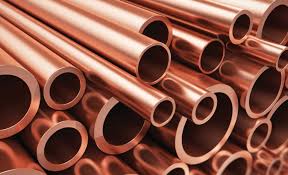
Copper tube: also known as red copper tube, a kind of non-ferrous metal tube, is a pressed and drawn seamless tube. Copper tube has the characteristics of being strong and corrosion-resistant, and has become the first choice for modern contractors to install water pipes, heating and cooling pipes in all residential commercial houses. Copper tube is the best water supply pipe.
1
Advantages of copper tube:
1. Light weight, good thermal conductivity, and high low-temperature strength. Commonly used in the manufacture of heat exchange equipment (such as condensers, etc.). Also used to assemble low-temperature pipelines in oxygen production equipment. Copper tubes with small diameters are often used to transport pressurized liquids (such as lubrication systems, oil pressure systems, etc.) and as pressure measuring tubes for instruments.
2. Copper tubes have the characteristics of being strong and corrosion-resistant, and have become the first choice for modern contractors to install water pipes, heating and cooling pipes in all residential commercial houses.
3. Copper pipes have many advantages: they are strong and have the high strength of general metals; at the same time, they are easier to bend, twist, crack, and break than general metals, and have certain resistance to frost heave and impact. Therefore, once copper pipes are installed in the water supply system of the building, they are safe and reliable to use, and even do not require maintenance. Disadvantages of copper pipes: As far as copper pipes are concerned, the high price is its biggest disadvantage. It is currently the most high-end water pipe. It is usually installed by welding technology and will not leak for life. The connection at the interface of copper pipes mainly depends on the construction process level, and the construction quality requirements are relatively high.


