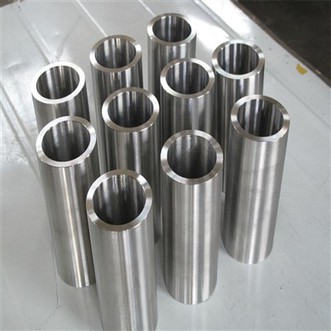


What is H68 brass?
H68 brass plate is a metal sheet primarily composed of copper-zinc alloy, with a copper content ranging from 67.0% to 70.0%. Zinc serves as the main alloying element, and the total impurities are controlled to ≤0.3%. This material offers good plasticity (δ10 ≥13%) and relatively high strength (tensile strength ≥392 MPa). It exhibits excellent plastic working properties in the hot state and possesses machinability and weldability in the cold state. Compliant with the Chinese National Standard GB/T 2041-1989, it is widely used in manufacturing deep-drawn parts such as bellows, electromechanical housings, and rivets. It should be noted that this material has a tendency for "season cracking" during cold working; controlling the annealing temperature between 520–650°C can improve its working characteristics.
Material Characteristics
Good plastic working properties. The hot working temperature range is 750–830°C; internal stresses can be eliminated through annealing (520–650°C) after cooling.
Maintains machinability in the cold state; surface precision after machining can reach a level of 0.001.
Good weldability, but care must be taken to avoid corrosion cracking induced during the welding process.
Good corrosion resistance at room temperature, but it has a tendency for stress corrosion cracking in specific environments.
Chemical Composition
| Main Component | Range / Limit |
|---|---|
| Copper (Cu) | 67.0–70.0% |
| Zinc (Zn) | Balance |
| Impurity Control Standards | |
| Lead (Pb) | ≤ 0.03% |
| Phosphorus (P) | ≤ 0.01% |
| Iron (Fe) | ≤ 0.10% |
| Antimony (Sb) | ≤ 0.005% |
| Bismuth (Bi) | ≤ 0.002% |
| Sum of Other Impurities | ≤ 0.3% |


Density: 8500 kg/m³ (at 20°C)
Coefficient of Linear Expansion: 20.0 × 10⁻⁶/°C (20-100°C)
Electrical Conductivity: 30% IACS (hard state, plate thickness ≥0.5mm)
Softening Temperature: 520–650°C (annealed state)
Conventional Hardness: 50 HRB (cold-rolled state)
Processing Technology
Hot Rolling Processing: Uses billets with thicknesses of 0.3-3000 mm, processed to target dimensions through multiple rolling passes.
Cold Rolling Forming: Suitable for plates with thicknesses <6 mm, producing finished products of 0.3-6 mm thickness via continuous rolling.
Surface Treatment: Supports secondary processing methods such as forging and turning.
Heat Treatment System: After hot working, air cooling to room temperature is required; for cold-worked plates, the annealing temperature is recommended to be controlled between 520–650°C.
Application Fields
Electronics Industry: Used in manufacturing deep-drawn and bent parts such as electromechanical housings, pins, rivets, and washers.
Machinery Manufacturing: Produces deep-drawn parts such as bellows.
Architectural Decoration: Processes decorative materials such as copper door trim panels.
Instrument Components: Bellows, complex cold-stamped parts, and deep-drawn parts.
Applicable Standards
Chinese Standard: GB/T 2041-1989 (Copper and Copper Alloy Plates)
International Equivalents: U.S. C26000 (UNS designation), Japan C2600 (JIS standard), ISO CuZn32 (International Organization for Standardization)
Special Specifications: GB/T 2040-2008 (Technical requirements for plates for specific uses)
Key Process Control Points
The rolling process should maintain a pass deformation of ≤30% to avoid excessive grain coarsening.
Cold-rolled finished products are recommended to undergo stress relief annealing at 520–650°C.
Storage environment humidity should be <60% to prevent the tendency for "season cracking" in cold-worked material.
Special specifications (width 600-3000 mm) require the use of multi-roll mills for forming processing.
Get Dedicated Engineer Support
Our factory
Our factory is equipped with an advanced full-process copper processing production line, specializing in the manufacturing of high-precision copper plates, copper tubes, copper rods, copper wires, and copper strips. The core of our production includes continuous casting and rolling units, precision extrusion lines, high-speed cold rolling equipment, multi-roll precision rolling mills, tube drawing systems, and intelligent stretching production lines. We are also outfitted with comprehensive inspection equipment such as spectrometers and online eddy current flaw detectors, ensuring full-process control from smelting and casting, hot processing, to cold finishing. Our products achieve an accuracy of up to ±0.01mm, with an annual production capacity exceeding 50,000 tons. They are widely used in power, electronics, transportation, and high-end manufacturing sectors. Certified with international standards such as ISO9001 and IATF16949, we are capable of providing global customers with one-stop copper material solutions.

Brass product packaging
We implement a graded and customized packaging system: copper plates are double-wrapped with moisture-proof paper and vapor corrosion inhibitor film before being placed in reinforced wooden crates, which are filled with cushioning materials and equipped with impact-resistant corner protectors; copper tubes and rods are sealed with plastic end caps, wrapped with PE protective film, and then layered into steel-frame logistics containers, with EPE pearl cotton separating each layer; copper wires are automatically wound onto spools, vacuum-sealed, covered with waterproof film, and secured on customized iron-wood pallets; copper strips are wrapped with non-woven fabric, coiled onto high-strength steel cores, and placed into waterproof composite material coils with desiccants inside. All packaging passes ISTA-3A transport testing, and the outer boxes are labeled with international hazardous material identifiers, moisture warnings, and scannable logistics codes, ensuring the cargo withstands moisture, impact, and chemical erosion during global transportation.

Get Fast Quote & Logistics Plan