

Specifications
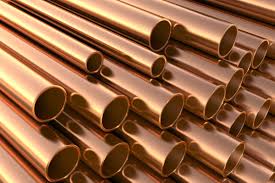
Nominal diameter of copper tube (mm) 8, 10, 15, 20, 25, 32, 40, 50, 65, 80, 100, 125, 150, in 1/4 3/8 1/2 5/8 3/4 1 1 1/4 1 1/2 2 2 1/2 3 3 1/2 4 5 6
Average outer diameter (mm) 9.52, 12.7, 15.88, 19.05, 22.22, 28.58, 34.92, 41.28, 53.98, 66.68, 79.38, 92.08, 104.78, 130.18, 155.58 K-grade 0.89, 1.24, 1.24, 1.24, 1.65, 1.65, 1.65, 1.83, 2.11, 2.41, 2.77, 3.05, 3.40, 4.06, 4.78
Wall thickness (mm) L-grade 0.76, 0.89, 1.02, 1.07, 1.14, 1.27, 1.40, 1.52, 1.78, 2.03, 2.29, 2.54, 2.79, 3.18, 3.56 M-grade 0.64,0.71,0.81,0.89,1.07,1.24,1.47,1.65,1.83,2.11,2.41,2.77,3.10
Environmental advantages
Compared with ordinary plastic pipes, copper pipes contain chemical additives such as plasticizers in the main materials of plastic pipes, which are easy to cause escape or hardening and embrittlement of plastics with changes in time and temperature. Copper pipes do not have various chemical components such as modifiers, additives, and additives of plastic pipes, and their properties are very stable. Moreover, E. coli in the water supply can no longer continue to reproduce in copper pipes, and more than 99% of the bacteria in the water are completely killed after entering the copper pipes for 5 hours. Moreover, the copper pipe has an extremely dense structure and is impermeable. No matter whether it is grease, bacteria, viruses, oxygen, ultraviolet rays and other harmful substances, they cannot pass through it and pollute the water quality. In addition, copper pipes do not contain chemical additives and will not burn to release toxic gases that suffocate people. Moreover, the recycling of copper is beneficial to environmental protection and is a green building material for sustainable development.