


Three common casting processes for copper sleeve casting

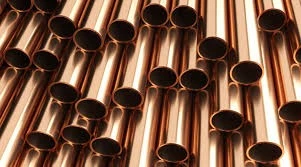

Copper sleeve casting is a process of melting copper alloy into a liquid that meets certain requirements and pouring it into a mold, and then cooling, solidifying, and cleaning to obtain a casting with a predetermined shape, size, and performance.
According to the characteristics of the copper sleeve casting process and the degree of development of its use, the casting method can generally be divided into two types: sand casting copper sleeves and special casting copper sleeves. Common casting methods in the field of copper sleeve casting include centrifugal casting, continuous casting, and sand casting.
1. Centrifugal casting of copper sleeves: It is a method of casting special castings such as rings, tubes, cylinders, and sleeves by changing the filling and solidification conditions of the liquid alloy and using the action of centrifugal force. The characteristics of centrifugal casting are that the metal liquid fills and solidifies under the action of centrifugal force, the metal shrinkage compensation effect is good, the outer layer of the casting is dense, there are few non-metallic inclusions, and the mechanical properties are good; no molding or core making is required, which saves the investment in related materials and equipment. Centrifugal casting is the main casting method for Jiaxing Gurun to produce medium-sized copper sleeve products.
Casting hollow castings does not require pouring risers, and the metal utilization rate can be greatly improved. Therefore, for certain specific shapes of castings, centrifugal casting is a material-saving, energy-saving and high-efficiency process, but special attention must be paid to taking effective safety measures.
2. Continuous casting: It is an efficient production method for casting tubes and ingots under the conditions of continuous pouring, solidification and cooling through a fast-cooling crystallizer. Continuous casting is particularly suitable for mass production of pipes, bars, plates and profiles. The disadvantage is that it is generally not possible to manufacture extra-large parts. Continuously cast products have the advantages of good mechanical properties, dense structure and few casting defects. The continuous casting process also has the advantages of high material utilization, low casting cost, low labor intensity, high degree of automation and high production efficiency. Continuous casting is the main casting method for Jiaxing Gurun to produce small and medium-sized batch products.
3. Sand casting: It is the most commonly used method in copper sleeve production. It has the advantages of wide adaptability and relatively simple production preparation. However, the dimensional accuracy, surface quality and internal quality of castings produced by this method are far from meeting the requirements of mechanical parts. In addition, the production process is relatively complicated, and the investment required to achieve mechanized and automated production is huge. When producing some special parts and castings with special technical requirements, the technical and economic indicators are relatively low. Therefore, the application of sand casting in casting production is subject to certain restrictions. Sand casting is the main casting method for Jiaxing Gurun to produce special-shaped non-standard copper alloy products.


