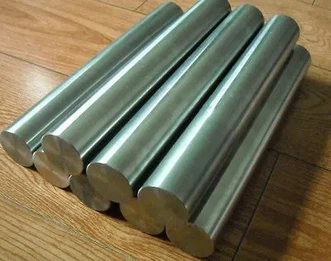


When titanium alloy forging, due to improper process specification, raw material quality control is not strict and other reasons, the forging may have various defects. The common defects are as follows:
1, β brittleness
β embrittlement is caused by overheating of the forging. α and (α + β) titanium alloys, especially (α + β) titanium alloys, if the forging heating temperature is too high, exceeding its β transition temperature, resulting in the forging of low times the organization of the grain is large, isometric; microstructure of α-phase precipitation along the grain boundaries of the coarse original β grains and the intracrystalline is striated. The result is that the plasticity of the forging at room temperature is reduced, this phenomenon is called β embrittlement.
The overheating defects of titanium alloy forgings cannot be repaired by heat treatment, but must be repaired by reheating to below the β-transition temperature (if the forging allows) for plastic deformation.
In order to prevent overheating from occurring, titanium alloy heating, the furnace temperature should be strictly controlled, the regular determination of the temperature of the qualified area of the furnace chamber, the reasonable arrangement of the charging position and the amount of charging can not be mostly. When resistance heating is used, the furnace chamber should be set on both sides of the baffle, so as to avoid overheating caused by the billet too close to the silicon carbide rod. Detecting the actual β-transition temperature of each furnace alloy is also an effective measure to prevent overheating.
2, localized coarse crystal
In the hammer or press die forging, due to the poor thermal conductivity of titanium alloys, billet surface and mold contact process temperature is reduced a lot, coupled with the surface of the billet and mold friction between the upper and lower molds, the billet middle part of the billet is subjected to strong deformation, the surface of the deformation of the degree of small, so that the raw material of the organization is retained, the formation of a new localized rough crystals.
In order to avoid titanium alloy local coarse crystal defects, the following measures can be taken: the use of pre-forging process, so that the final forging deformation uniformity; strengthen the lubrication, improve the friction between the billet and the mold; fully preheat the mold to reduce the billet in the forging process of the temperature drop.


3,Crack
Titanium alloy forging surface cracks are mainly produced when the final forging temperature is lower than the full recrystallization temperature of titanium alloy. In the die forging process, the billet and mold contact time is too long, due to the poor thermal conductivity of titanium alloy, it is easy to cause the surface of the billet cooled below the permissible final forging temperature, which will also cause surface cracks in the forging. In order to control the occurrence of cracks, when die forging on the press, glass lubricant can be used, or when forging on the hammer, try to shorten the contact time between the billet and the lower die.
4, residual casting organization
Forging of titanium alloy ingots, if the forging ratio is not large enough or improper forging methods, forgings will be left under the casting organization. The solution to this defect is to increase the forging ratio and the use of repeated upsetting.
5,Bright strip
The so-called titanium alloy forgings in the bright strip, is present in the low-fold organization of a strip with a different brightness visible to the naked eye band. Due to the difference in the angle of illumination, the bright strip can be brighter than the base metal, also can be darker than the base metal. In cross-section, it is in the form of dots or flakes; in longitudinal section, it is a long smooth strip with a length ranging from more than ten millimeters to several meters. There are two main reasons for the bright bars: one is the chemical composition of titanium alloy segregation, and the second is the deformation of the forging process thermal effects.
Bright bars have a certain impact on the performance of titanium alloy, especially on the plasticity and high temperature performance. Measures to prevent the emergence of bright bars is to strictly control the smelting of the chemical composition of the segregation; the correct choice of forging thermal specifications (heating temperature, degree of deformation, deformation speed, etc.), in order to avoid the temperature of the forging pieces everywhere due to deformation of the thermal effect of the difference is too large.
6, α embrittlement layer
α embrittlement layer is mainly titanium alloy at high temperature oxygen and nitrogen through the loose oxide skin, to the internal diffusion of the metal, so that the oxygen and nitrogen content of the surface metal increases, thus increasing the number of α-phase in the surface organization. When the oxygen and nitrogen content of the surface metal reaches a certain value, the surface organization may be completely composed of α phase. In this way, the surface of the titanium alloy forms a surface layer with more α or completely α phase. This surface layer composed of α phase is usually called α embrittlement layer. An excessively thick α embrittlement layer on the surface of a titanium alloy billet may lead to cracking of the billet during forging.
The thickness of the α embrittlement layer is closely related to the type of heating furnace used for forging or heat treatment, the nature of the gas in the furnace, the heating temperature of the billet or part, and the holding time. With the increase in heating temperature, holding time increases the thickness; with the increase in oxygen and nitrogen content in the furnace gas and thickening. Therefore, in order to avoid this embrittlement layer is too thick, forging or heat treatment of the heating temperature, holding time and the nature of the furnace gas, etc., must be properly controlled.
α, β and (α + β) titanium alloys may form α embrittlement layer. However, α titanium alloys are particularly sensitive to the formation of α embrittlement layer, while β titanium alloys will not form an α embrittlement layer until they are heated to above 980°C.
7,Hydrogen embrittlement
There are two types of hydrogen embrittlement: strain time type and hydride type. Hydrogen atoms in the lattice gap in the stress, after a certain period of time diffusion gathered to the stress concentration of the gap. Due to the interaction of hydrogen atoms and dislocations so that the dislocations are pinned, can not move freely, thus making the matrix brittle phenomenon is called strain-ageing type hydrogen embrittlement. High-temperature dissolved into solid solution of hydrogen, with the temperature drop in the form of hydride precipitation, and make titanium alloy becomes brittle phenomenon is called hydride-type hydrogen embrittlement. Both types of hydrogen embrittlement may occur in titanium and titanium alloys.
The problem of hydrogen embrittlement is caused by excessive hydrogen content in titanium alloys. Therefore, the hydrogen content of industrial titanium alloys must be controlled within 0.015%.
In order to prevent or reduce hydrogen embrittlement, the furnace should be made slightly oxidizing atmosphere during forging or heat treatment, and vacuum annealing can be carried out to eliminate hydrogen embrittlement for titanium alloys with hydrogen content exceeding the regulations as well as important titanium alloy parts.