


Copper pipes are commonly used for residential water supply lines and plumbing systems, known for their corrosion resistance, reliable connections, and a lifespan of up to 70 years. There are three common copper pipe types you might see in your home or when purchasing for DIY materials- Type K, Type L and Type M, and this guide will help you learn to tell the difference and determine which type is most suitable for your needs.
Type K Copper Pipe
Ideal for: Primary water lines and underground installations
Type K copper pipe boasts the thickest walls among the common varieties. This makes it suitable for water distribution, fire protection, oil, HVAC systems, and various other construction projects. Available in both hard (type k hard copper pipe) and flexible (type k flexible copper pipe) forms, Type K is particularly recommended for main water lines and underground installations due to its thick wall thickness, which enables it to endure the pressure from backfilled soil in trenches.
Typically marked with a green marking, Type K copper pipe is more expensive compared to other types and is therefore less commonly used for interior water supply systems.
Type L Copper Pipe
Ideal for: Interior branch water supply lines.
Type L copper pipe is commonly used for indoor hot and cold water plumbing, fire protection, and certain HVAC applications. Available in both hard and flexible forms, Type L is the most widely used type of copper piping due to its versatility, making it suitable for a broader range of applications compared to Type K. Additionally, Type L can be used in outdoor environments where it is directly exposed. It has a wall thickness which is thinner than Type K but thicker than Type M.
Typically marked with a blue marking, Type L hard copper is the preferred choice for professional plumbers when installing most indoor residential water supply lines.

Type M Copper Pipe
Ideal for: Branch plumbing lines.
Type M copper pipe has a thinner wall compared to both Type K and Type L pipes. It is commonly used for repairs, replacements, and extensions of interior water supply lines. However, it is essential to check with local building authorities, as Type M copper is not always compliant with hot and cold water plumbing codes. When allowed, it is often preferred for residential projects due to its relatively low cost-its thinner walls require less copper, making it more economical. DIY enthusiasts also favor Type M copper pipe because it is easy to cut and install, although it is not as flexible as Type L.
Type M copper pipe is typically marked with red marking.
Type K vs Type L vs Type M Copper Pipe: Which is Better
Pressure Ratings of Copper Tubing
Type K Copper Pipe
Known for its thick walls, Type K copper pipe is suitable for deep burial under streets and sidewalks. It is available in both hard and flexible forms and is identified by green markings to distinguish it from other types of copper tube.
Type L Copper Pipe
Primarily used for various pressure applications in residential and commercial hot and cold water plumbing systems, Type L copper pipe has a wall thickness that is thinner than Type K but thicker than Type M. It is available in both hard and flexible forms and is marked with blue marking to differentiate it from other types of copper tube.
Type M Copper Pipe
With the thinnest wall among the three types, Type M copper pipe is used for hot and cold water plumbing and pressure applications in residential and commercial environments. It is only available in hard form and is identified by red markings to set it apart from it from other types of copper tube.
why choose us

why choose our products
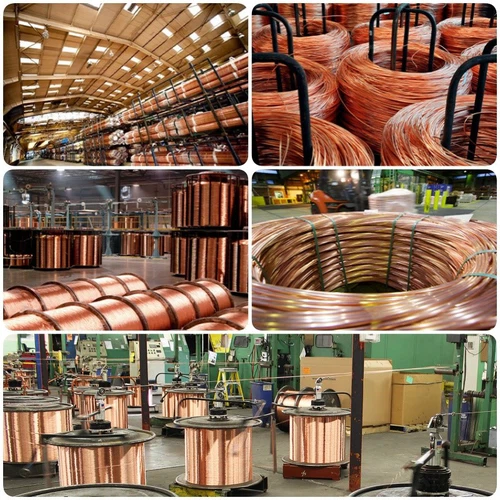
We are a leading manufacturer and exporter specializing in a comprehensive range of high-quality copper products, including copper tubes, copper plates/sheets, copper bars, copper rods, copper wires, and copper strips. Our advanced manufacturing facilities are equipped with state-of-the-art continuous casting lines, extrusion presses, cold rolling mills, and drawing machines to ensure precision and consistency. Rigorous quality control is integral to our process, conducted through spectrometers for material verification, tensile testers, eddy current testers, and hydrostatic pressure testers, guaranteeing that all our products meet international standards for performance and durability.
E-mail: sales@gneesteel.com


