


Is the copper in all cables the same? What kind of copper is good? An article explains clearly

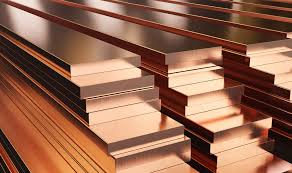

Introduction: Due to the different processes for producing copper rods, the oxygen content and appearance of the copper rods produced are different. The copper rods produced by Shangying are called oxygen-free copper rods if the oxygen content is below 10ppm with proper technology; the copper rods produced by continuous casting are hot rolled under protective conditions, and the oxygen content is in the range of 200-500ppm, but sometimes Up to more than 700ppm. Generally, the copper produced by this method has a bright appearance. Low-oxygen copper rods are sometimes called polished rods.
Oxygen-free copper rod
Copper rod is the main raw material in the cable industry. There are two main production methods - continuous casting and rolling and upward continuous casting. There are many production methods for continuous casting and rolling of low-oxygen copper rods. The characteristic is that after the metal is melted in the shaft furnace, the copper liquid passes through the holding furnace, chute, tundish, and enters the closed mold cavity from the pouring pipe. The cooling intensity is used to cool down to form a cast slab, which is then rolled in multiple passes. The produced low-oxygen copper rod has a hot-processed structure. The original casting structure has been broken, and the oxygen content is generally between 200 and 400 ppm. Oxygen-free copper rods are basically produced in China using the upward continuous casting method. After the metal is melted in an induction furnace, it is continuously cast through graphite molds, and then cold rolled or cold worked. The oxygen-free copper rods produced have a cast structure and contain oxygen. The amount is generally below 20ppm. Due to different manufacturing processes, there are great differences in many aspects such as organizational structure, oxygen content distribution, impurity form and distribution, etc.
1. Drawing performance
The drawing performance of copper rods is related to many factors, such as the content of impurities, oxygen content and distribution, process control, etc. The following is an analysis of the drawing performance of copper rods from the above aspects.
1. The influence of melting method on impurities such as S
Continuous casting and rolling to produce copper rods mainly melts the copper rods through the combustion of gas. During the combustion process, through oxidation and volatilization, some impurities can be reduced from entering the copper liquid to a certain extent. Therefore, the continuous casting and rolling method has relatively high raw material requirements. Lower. The upper continuous casting produces oxygen-free copper rods. Since the induction furnace is used for melting, the "patina" and "copper beans" on the surface of the electrolytic copper are basically melted into the liquid copper. The melted S has a great influence on the plasticity of the oxygen-free copper rod and will increase the wire drawing breakage rate.
2. The entry of impurities during the casting process
During the production process, the continuous casting and rolling process requires the transfer of molten copper through holding furnaces, chutes, and tundishes, which is relatively easy to cause the refractory material to peel off. During the rolling process, it needs to pass through the rollers, causing the iron to fall off and causing damage to the copper rods. Cause external inclusions. The rolling in of oxides on and under the skin during hot rolling will have an adverse effect on the drawing of hypoxic rods. The production process of the upward continuous casting method is short. The copper liquid is completed through the submersible flow in the combined furnace, which has little impact on the refractory materials. The crystallization is carried out in the graphite mold, so there are fewer pollution sources and impurities that may be generated in the process. There is less chance of entry.
O, S, and P are elements that produce compounds with copper. In molten copper, oxygen can partially dissolve, but when copper condenses, oxygen hardly dissolves in copper. The dissolved oxygen in the molten state precipitates as copper = cuprous oxide eutectic and is distributed at the grain boundaries. The emergence of copper-cuprous oxide eutectic significantly reduces the plasticity of copper.
Sulfur can be dissolved in molten copper, but at room temperature, its solubility is reduced to almost zero. It appears at grain boundaries in the form of cuprous sulfide, which will significantly reduce the plasticity of copper.
3. Oxygen distribution patterns and effects in low-oxygen copper rods and oxygen-free copper rods
The oxygen content has a significant impact on the wire drawing performance of low-oxygen copper rods. When the oxygen content increases to the optimal value, the copper rod has the lowest breakage rate. This is because oxygen acts as a scavenger in its reaction with most impurities. Moderate oxygen is also conducive to removing hydrogen from the copper liquid, generating water vapor to overflow, and reducing the formation of pores. The optimal oxygen content provides the best conditions for the wire drawing process.
Distribution of low-oxygen copper rod oxides: In the initial stage of solidification in continuous casting, the heat dissipation rate and uniform cooling are the main factors that determine the copper rod oxide distribution. Uneven cooling will cause essential differences in the internal structure of the copper rod, but in subsequent thermal processing, the columnar crystals will usually be destroyed, resulting in the refinement and uniform distribution of cuprous oxide particles. A typical situation resulting from the aggregation of oxide particles is central bursting. In addition to the influence of oxide particle distribution, copper rods with smaller oxide particles show better wire drawing characteristics, and larger Cu2O particles easily cause stress concentration points and break.
The oxygen content of oxygen-free copper exceeds the standard, the copper rod becomes brittle, the elongation decreases, the stretched port appears dark red, and the crystal structure is loose. When the oxygen content exceeds 8ppm, the process performance deteriorates, which is manifested in an extremely high rate of rod breakage and wire breakage during casting and drawing. This is because oxygen can form a brittle phase of cuprous oxide with copper, forming a copper-cuprous oxide eutectic, which is distributed on the boundary in a network structure. This brittle phase has high hardness and will separate from the copper body during cold deformation, resulting in a decrease in the mechanical properties of the copper rod and easy fracture in subsequent processing. High oxygen content can also cause the conductivity of oxygen-free copper rods to decrease. Therefore, the upward continuous casting process and product quality must be strictly controlled.
4. The influence of hydrogen
In upward continuous casting, the oxygen content is controlled low and the side effects of oxides are greatly reduced, but the influence of hydrogen becomes a more significant problem. There is an equilibrium reaction in the melt after inhalation: H2O(g)=[O]+2[H];
Gas and porosity are formed during the crystallization process when hydrogen precipitates and accumulates from the supersaturated solution. The hydrogen precipitated before crystallization can reduce cuprous oxide to generate water bubbles. Since the characteristic of upward casting is the crystallization of molten copper from top to bottom, the shape of the liquid formed is approximately conical. The gas precipitated before the copper liquid crystallizes is blocked in the solidification structure during the floating process, and pores are formed in the casting rod during crystallization. When the upward gas content is small, the precipitated hydrogen exists at the grain boundaries and forms porosity; when the gas content is high, it gathers into pores. Therefore, pores and porosity are formed by both hydrogen and water vapor.
Hydrogen comes from various process links in the upstream production process, such as the "patina" of the raw material electrolytic copper, the auxiliary material charcoal**, the climate environment**, and the graphite crystallizer is not dry, etc. Therefore, the surface of the copper liquid in the melting furnace should be covered with baked charcoal, and the electrolytic copper should try to remove "patina", "copper beans" and "ears", which is very important to improve the quality of oxygen-free copper rods.
In the continuous casting and rolling process, hydrogen is often controlled by moderately controlling the oxygen content. Cu2O+ H2= 2Cu+ H2O
Since the molten copper crystallizes from the bottom up during the casting process, the water vapor generated by the oxygen and hydrogen in the molten copper can easily float up and escape. Most of the hydrogen in the molten copper can be effectively removed, thus affecting the copper rod. smaller.
2. Surface quality
In the process of producing products such as electromagnetic wires, requirements are also required for the surface quality of copper rods. The surface of the drawn copper wire needs to be free of burrs, less copper powder, and free of oil stains. The quality of the copper powder on the surface is measured through a torsion test and the recovery of the copper rod after torsion is observed to determine its quality.
During the continuous casting and rolling process, from casting to rolling, the temperature is high and completely exposed to the air, causing a thick oxide layer to form on the surface of the cast slab. During the rolling process, as the rollers rotate, the oxide particles Rolled into the surface of the copper wire. Since cuprous oxide is a brittle compound with a high melting point, when the strip-shaped aggregates of cuprous oxide rolled deeply are stretched by the mold, burrs will be generated on the outer surface of the copper rod, causing trouble for subsequent painting.
The oxygen-free copper rod manufactured by the upward continuous casting process is completely isolated from oxygen due to casting and cooling, and there is no subsequent hot rolling process. There is no oxide rolled into the surface of the copper rod, and the quality is better. There is less copper powder after drawing. , the above problems are less likely to exist.
Oxygen-free copper rods are also made with imported equipment and domestic equipment. However, imported products have no obvious advantages at present. After the copper rod products are released, the difference is not very big. As long as the copper plate is well selected and the production control is relatively stable, domestic equipment can also be used. The output is copper rods with a stretchability of 0.05. Imported equipment is generally equipment from Finland's Outokumpu. The best domestic equipment should be from the Shanghai Navy Factory. It has the longest production time and is a military industry enterprise with reliable quality.
There are two main types of imported low-oxygen copper rod equipment in the world. One is the American South Line equipment, which is SOUTHWIRE in English. The domestic manufacturers are Nanjing Huaxin and Jiangxi Copper. The other is the German CONTIROD equipment. The domestic manufacturers are Changzhou Jinyuan and Tianjin. Great seamless.
It is easy to distinguish between anaerobic and hypoxic rods in terms of oxygen content. Oxygen-free copper has an oxygen content of less than 10-20 PPM, but currently some manufacturers can only achieve less than 50 PPM. Low-oxygen copper rods have an oxygen content of less than 200-20 PPM. 400 PPM. The oxygen content of good poles is generally controlled at around 250 PPM. Oxygen-free poles generally use the upward drawing method. Hypoxic poles are continuous casting and rolling. The two products are relatively good at enameled wire performance. It is more adaptable, such as softness, rebound angle, and winding performance. However, hypoxic rods are relatively harsh on drawing conditions. Similarly, 0.2 filaments can be stretched. If the drawing conditions are not good, ordinary anaerobic rods can be drawn. A good hypoxic pole will break the line, but if placed in good stretching conditions, the same pole may be able to be stretched to double 0.5 with a hypoxic pole, while an ordinary anaerobic pole can only be stretched to 0.1 at most. , of course, the thinnest ones, such as the Double Zero Two, have to rely on imported oxygen-free copper rods. Currently, some companies are trying to use peeling methods to process low-oxygen rods to stretch 0.03 wires. But I am not very familiar with this aspect. clear.
Low oxygen copper rod
Audio cables generally prefer to use oxygen-free rods. This is related to the fact that the oxygen-free rods are single crystal copper and the hypoxic rods are polycrystalline copper.
Low-oxygen copper rods and oxygen-free copper rods are different due to different manufacturing methods and have their own characteristics.
1. About the inhalation and removal of oxygen and its existence state
The oxygen content of cathode copper used in the production of copper rods is generally 10-50ppm, and the solid solubility of oxygen in copper at room temperature is about 2ppm. The oxygen content of low-oxygen copper rods is generally 200 (175) - 400 (450) ppm, so the oxygen is inhaled under the liquid copper state, while the upward-drawing oxygen-free copper rod is on the contrary, the oxygen is inhaled under the liquid copper After being kept for a long time, it is reduced and removed. Usually the oxygen content of this kind of rod is below 10-50ppm, and the lowest can be 1-2ppm. From a tissue point of view, the oxygen in low-oxygen copper is in the form of copper oxide. Exists near grain boundaries, which is common for low-oxygen copper rods but rare for oxygen-free copper rods. The presence of copper oxide in the form of inclusions at grain boundaries has a negative impact on the toughness of the material. The oxygen in oxygen-free copper is very low, so the structure of this copper is a uniform single-phase structure, which is beneficial to toughness. Porosity is uncommon in oxygen-free copper rods and is a common defect in low-oxygen copper rods.
2. The difference between hot rolled structure and cast structure
Since the low-oxygen copper rod has been hot-rolled, its structure is a hot-processed structure. The original casting structure has been broken, and recrystallization has appeared in the 8mm rod. The oxygen-free copper rod has a cast structure with coarse grains. This is the inherent reason why oxygen-free copper has a higher recrystallization temperature and requires a higher annealing temperature. This is because recrystallization occurs near the grain boundaries. The oxygen-free copper rod structure has coarse grains, and the grain size can even reach several millimeters. Therefore, there are few grain boundaries. Even if it is deformed by drawing, the grain boundaries are relatively low. There are still fewer oxygen copper rods, so higher annealing power is required. The requirements for successful annealing of oxygen-free copper are: the first annealing when the wire is drawn from the rod but has not yet been cast. The annealing power should be 10-15% higher than that of low-oxygen copper in the same situation. After continuous drawing, sufficient margin should be left for the annealing power in subsequent stages and different annealing processes should be performed on low-oxygen copper and oxygen-free copper to ensure the flexibility of the in-process and finished wires.
3. Differences in inclusions, oxygen content fluctuations, surface oxides and possible hot rolling defects
The drawability of oxygen-free copper rods is superior to that of low-oxygen copper rods in all wire diameters. In addition to the above-mentioned structural reasons, oxygen-free copper rods have fewer inclusions, stable oxygen content, and no defects that may arise from hot rolling. , the thickness of the rod surface oxide can reach ≤15A. During the continuous casting and rolling production process, if the process is unstable and the oxygen monitoring is not strict, the unstable oxygen content will directly affect the performance of the rod. If the surface oxide of the rod can be compensated for in the continuous cleaning in the post-process, the more troublesome thing is that a considerable amount of oxide exists "under the skin", which has a more direct impact on wire breakage. Therefore, when drawing fine wires, When working with ultra-fine wires, in order to reduce breakage, sometimes the copper rod has to be peeled or even peeled twice as a last resort to remove the subcutaneous oxide.
4. There is a difference in toughness between low-oxygen copper rods and oxygen-free copper rods
Both can be stretched to 0.015mm, but in the low-temperature grade oxygen-free copper in the low-temperature superconducting wire, the spacing between the filaments is only 0.001mm.
5. There are differences in the economics from the raw materials of rod making to the thread making.
Manufacturing oxygen-free copper rods requires higher quality raw materials. Generally, when drawing copper wires with diameters >1mm, the advantages of low-oxygen copper rods are more obvious, while oxygen-free copper rods are even more superior when drawing copper wires with diameters <0.5mm.
6. The wire-making process of low-oxygen copper rods is different from that of oxygen-free copper rods.
The wire-making process of low-oxygen copper rods cannot be copied to the wire-making process of oxygen-free copper rods. At least the annealing processes of the two are different. Because the softness of the wire is deeply affected by the material composition and rod making, wire making and annealing processes, we cannot simply say who is softer or harder, low-oxygen copper or oxygen-free copper.
Introduction to low-oxygen copper rods and oxygen-free copper rods
1. Low oxygen copper rod
What kind of copper rod is low oxygen copper rod? What is the production process of low oxygen copper rods? What is the introduction to low-oxygen copper rods? First, let's look at the definition of low-oxygen copper rods: copper rods with an oxygen content between 200 (175) and 400 (450) ppm are produced through continuous casting and rolling.
Introduction to low oxygen copper rod-low oxygen copper rod process flow:
Low-oxygen copper rods are produced using the continuous casting and rolling process. The process flow is: electrolytic copper → shaft furnace → holding furnace → casting machine → continuous rolling mill → cleaning → rod closing machine → finished product (ф8mm) electrolytic copper is continuously fed and passed through the vertical After continuous melting in the furnace, molten copper is released, which is cast into large-section trapezoidal ingots by the casting machine, and then enters the rolling mill for hot rolling to form ф8 copper rod blanks.
▍Workmanship defects
(1) Shaft furnace: A. Due to the small size of the shaft furnace, electrolytic copper is melted while being added, and the molten copper water has no conditions for full reduction. .B. The entire melting process and copper water production process cannot isolate oxygen, so the oxygen content is very high. .C. The fuel for molten copper is generally gas. During the gas combustion process, it will directly affect the chemical composition of the copper liquid, with greater impacts such as sulfur and hydrogen.
(2) Casting machine: When the crystallizing wheel of the casting machine turns the molten copper into a solid, oxygen cannot be isolated, so a large amount of oxygen is absorbed for the second time during the casting process.
(3) Temperature control: A. The temperature of molten copper is not easy to control due to the large rolling volume and constraints from various factors. B. The temperature of the ingot entering the rolling mill is required to be controlled at 850°C. The greater the upper and lower deviation, the greater the impact on the quality of the copper rod, and this temperature is difficult to control. C. The temperature of the copper rod exiting the rolling mill is required to be controlled at 600°C. The greater the upper and lower deviation, the greater the impact on the quality of the copper rod. Due to the constraints of the previous process, this temperature is also difficult to control. D. There are many links in the whole process, and if there is any problem in one link, it will affect the temperature control.
(4) Others: A. Due to the above defects, the quality of the copper rod will be unstable, so the standard stipulates that the continuous casting and rolling low-oxygen copper rod must be subjected to a torsion test before leaving the factory. However, some manufacturers do not make them at all, or do not make them in batches as specified (each batch should not exceed 60 tons), or they reverse the unqualified batches and still leave the factory. B. High oxygen content will affect the wire drawing process. The copper wire will become harder as it is pulled, and annealing must be added in the middle. Oxygen content


