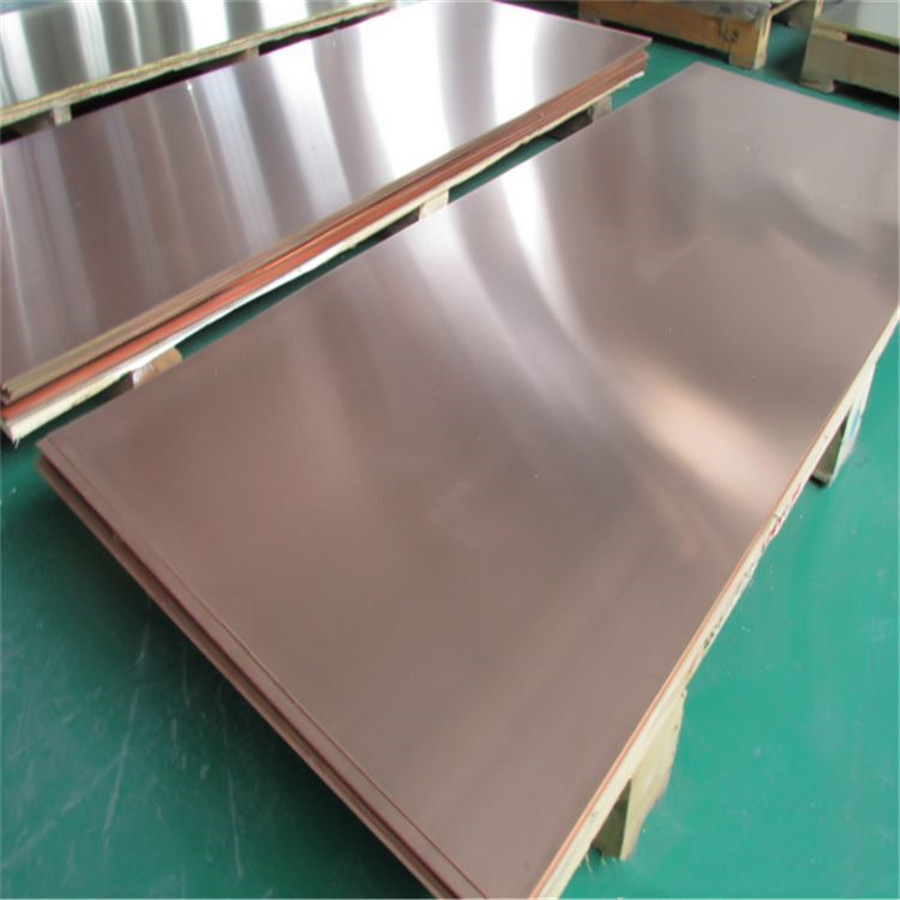


Several methods for removing rust from copper plates
Copper is a non-ferrous metal. Metals will rust under normal circumstances. The most common one is iron. Similarly, copper plates will also rust.
The copper plate reacts with carbon dioxide in a humid environment, so when there is a lot of humid carbon dioxide, the copper plate will also be oxidized and rust, but it will not rust like iron.
Red copper plate has good mechanical properties, good plasticity in hot state, acceptable plasticity in cold state, good machinability, easy fiber welding and welding, corrosion resistance, but prone to corrosion and cracking, in addition, it is cheap and is widely used. of a plain brass variety.
It is easy to oxidize in the air, causing rust. If the rusted parts are not handled properly, it will also affect our processing and use. Therefore, when we use copper, we are always worried. What should we do if the copper rusts soon?
What are the methods for removing rust from copper plates?
① Using copper cleaning agent, you can easily complete the rust removal work, but for rusty and oxidized copper plates, we also need to do copper chemical polishing treatment, because it can not only quickly remove the surface oxide layer, rust, patina, and process Finally, the true color of the copper plate can be restored. And while polishing, it can achieve a flat and smooth effect.
② Copper hydrochloric acid pickling method. However, the corrosion inhibitors used by many power plants in pickling copper plates are not ideal. Boiler pickling corrosion inhibitors (corrosion inhibitors to protect iron and iron-based alloys) are often used directly, or some small screening experiments are conducted, but due to improper experimental methods, they fail to grasp the factors that promote the actual pickling. The main factor in the corrosion of copper plates is that although the selected corrosion inhibitors appear to be more effective in small experiments, their corrosion inhibition efficiency is very low or even ineffective when used in actual pickling. Experimental method In order to simulate the actual situation on site as much as possible, the corrosion inhibitor screening experiments were carried out under the conditions of adding a certain amount of Cu' deca ions (added in the form of copper chloride) and stirring at the same time.
③ Passivation treatment can also be done. After passivation treatment, it can effectively prevent copper from rusting and oxidation. The salt spray resistance test takes a long time and does not affect the conductive performance. It is the final buffer for copper products during the process. The best choice for corrosion and rust prevention.