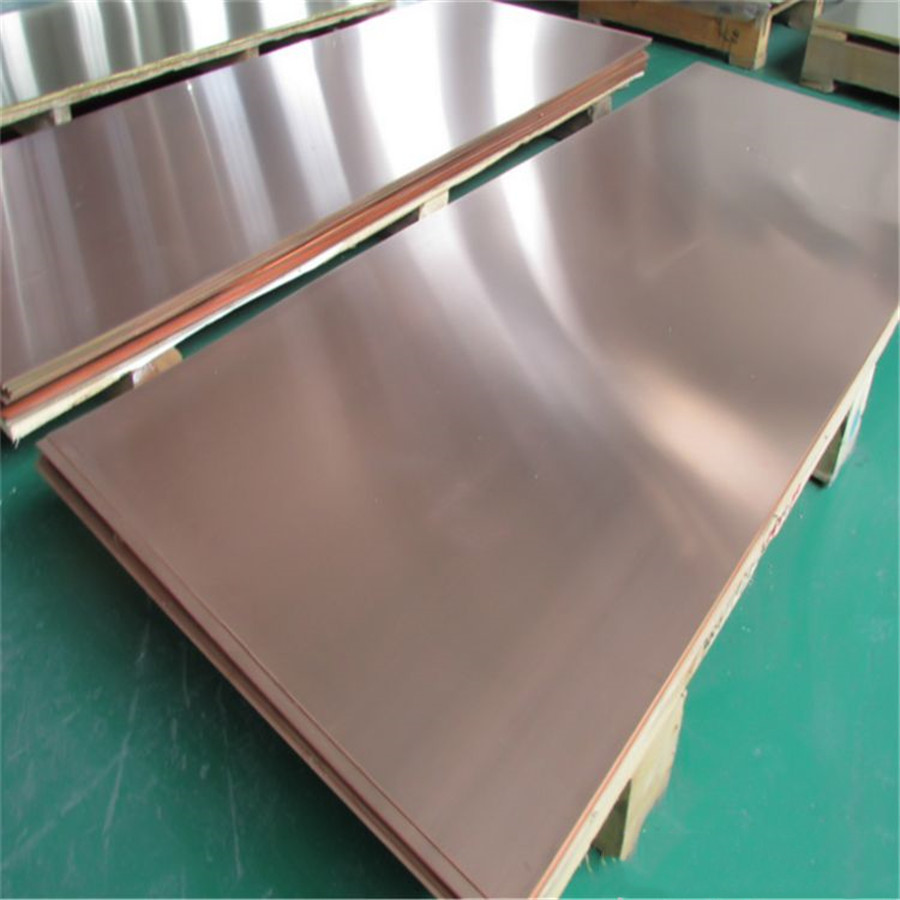


The current situation and development trends of rolled copper foil
Copper foil is an indispensable main raw material for making printed circuit boards (PCB), copper-clad laminates (CCL) and lithium-ion batteries. Industrial copper foil can be divided into two categories: rolled copper foil and electrolytic copper foil according to its manufacturing process.
Electrolytic copper foil is made through copper electrolysis using electrochemical principles. The internal structure of the raw foil is a vertical needle-like crystal structure, and its production cost is relatively low. Rolled copper foil is made by using the principle of plastic processing through repeated rolling and annealing processes of copper ingots. Its internal structure is a flaky crystalline structure, and the rolled copper foil product has good ductility. At this stage, electrolytic copper foil is mainly used in the production of rigid circuit boards, while rolled copper foil is mainly used in flexible and high-frequency circuit boards.
1. Characteristics of rolled copper foil
Compared with electrolytic copper foil, rolled copper foil has the following characteristics.
1.1 The production process is complex and the production cost is high
The production process flow of rolled copper foil (cathode copper smelting - casting - heating - hot rolling - milling - cold rough rolling - annealing - pickling - cold finishing rolling - annealing - shearing - foil rolling - surface treatment - shearing) ratio The production process of electrolytic copper foil (copper melting - electrolytic foil making - surface treatment - shearing) is much more complicated. There are many factors that affect the product quality and yield of rolled copper foil. Therefore, the production of rolled copper foil is difficult and difficult to produce. higher cost.
1.2 The thickness and width of copper foil are subject to restrictions
Rolled copper foil is made by repeatedly rolling copper ingots. Due to its processing method, especially the limitations of copper foil rolling technology, its thickness and width are subject to certain restrictions. The current commercially produced rolled copper foil has a limit thickness of more than 6 μm and a limit width of less than 800 mm. 1.3 High purity, high flexibility and low surface roughness
Due to the different manufacturing methods of rolled copper foil and electrolytic copper foil, the purity of rolled copper foil can reach 99.9%, which is higher than 99.8% of electrolytic copper foil.
Compared with the flaky crystal structure of rolled copper foil and the vertical needle-like crystalline state of electrolytic copper foil, the bending resistance of ordinary rolled copper foil is more than twice that of standard electrolytic copper foil under the same specifications; and due to the There is a big difference between the roughness of the matte surface and the roughness of the smooth surface. The flexural resistance of standard electrolytic copper foil also differs greatly in different bending directions, while the difference in the flexural resistance of rolled copper foil is smaller. The production method of rolled copper foil determines its uniform smoothness on the surface. Generally speaking, the surface roughness (Rz) of rolled copper foil raw foil can reach 1μm, which is one-fifth of the surface roughness of standard electrolytic copper foil raw foil. Due to the skin effect of charges, in the process of high-frequency charge transmission, the electrical properties of rolled copper foil with small roughness are much better than those of electrolytic copper foil with larger roughness. A comparison of the main properties of rolled copper foil and electrolytic copper foil is shown in Table 1. Table 2 shows the measured values of the main characteristics of electrolytic copper foil and rolled copper foil.
image.png
image.png
1.4 Flexible means of improving performance and developing new products
Electrolytic copper foil is produced by copper electrolysis. If you want to improve the performance of electrolytic copper foil or develop new products, you can only achieve it by adjusting the conditions of the electrolytic copper foil electrolysis process. The rolled copper foil is made from the traditional strip through repeated rolling and annealing processes. It can be coordinated by micro-alloying of the strip material, controlling the processing rate of the copper foil, and adjusting the annealing procedures. , to obtain rolled copper foil with different performance requirements such as high strength, high flexibility, high elongation and high softening temperature.
2. Current status and development trends of rolled copper foil
Currently, more than 90% of the global rolled copper foil production capacity is in the hands of Japanese manufacturers, see Table 3; and more than 80% of Japanese manufacturers' production capacity is concentrated in Japan, see Table 4. Because the production capacity of rolled copper foil is too concentrated and the production cost is high, its output and price are highly uncertain. In order to reduce costs and avoid raw material supply risks, most industries such as printed circuit boards and lithium batteries currently have to use electrolytic copper foil to replace rolled copper foil, and this has promoted electrolytic copper foil manufacturers to invest in high-ductility electrolytic copper foil and low-profile electrolytic copper. There is an upsurge in the development of special electrolytic copper foils such as foils. However, due to its manufacturing method, its flexibility, surface roughness and other properties are still not comparable to rolled copper foil.
image.png
Because the cost of rolled copper foil is high, rolled copper foil is currently mainly used in the flexible circuit board industry that requires high foil flexibility and surface roughness, high-performance lithium electronic batteries, and some parts that require high-frequency signal transmission. In the PCB industry, the changes and development of demand for rolled copper foil are closely related to the development of these industries. Flexible circuit board is a printed circuit with high reliability and high flexibility made of polyester film or polyimide as the base material and etched to form lines on copper foil. This kind of circuit board has the characteristics of high wiring density, thin thickness, light weight, minimal wiring space, foldability, high flexibility, and the ability to move and expand in three-dimensional space to achieve the integration of component assembly and wire connection. and other characteristics, which are consistent with the development direction of electronic products toward lightness, thinness, and miniaturization.
With the development of electronic products in the direction of lightness, thinness and miniaturization, electronic equipment is required to become more and more complex, requiring more and more parts. The requirements for the density of interconnection and installation of printed circuit parts are getting higher and higher. On the printed circuit board The contact distance of circuit components is shrinking, which requires the application of high-density wiring and microvia technology to achieve the goal. The thinner the copper foil, the easier it is to avoid short circuits in micro circuits due to "side erosion" and to achieve micro-aperture drilling, thus ensuring the high reliability of printed circuit boards.
Compared with other high-performance batteries, lithium electronic batteries have the advantages of high specific energy, no memory effect, long cycle life, no pollution, small size and light weight, and have become the preferred power source for portable electronic products. The application of rolled copper foil in the high-performance lithium battery industry (especially in rolled batteries) is gradually expanding due to its low surface roughness and good ductility after heat treatment, which is suitable for battery manufacturing processes. In high-frequency signal transmission, due to the "skin effect", the signals on the printed circuit board will accumulate on the surface of the conductor. Therefore, copper foil is an important part of the conductive layer of the printed circuit board substrate, and its surface roughness plays a major role in signal transmission loss. The influence is very important (at high frequencies, the higher the surface roughness, the greater the signal transmission loss). In order to reduce the transmission loss of high-frequency signals, it is necessary to use low profile (Rz: 2.7~3.3μm) or smooth surface copper foil (Rz: ≤1.7μm). In order to adapt to the rapid development of information network technology and the increasingly higher requirements for the speed and efficiency of electronic products processing information, the low profile of the copper foil surface is to increase the signal transmission speed of the printed circuit substrate and reduce the signal loss when transmitting high-speed signals. key means of attenuation.
In recent years, in order to adapt to the development needs of electronic products, the development of new rolled copper foil materials has made certain progress. For example: ultra-low rough surface rolled copper foil is manufactured by changing the rolling processing conditions, with a surface roughness (Rz) of up to 0.4 μm, which is more suitable for the transmission of high-frequency signals; manufactured by combining different rolling processing conditions with annealing A rolled copper foil with a cubic recrystallized structure was produced. After testing, its flexural resistance is more than 4 times that of ordinary rolled copper. The flexible circuit board produced has higher flexural reliability; by micro-alloying the rolled copper foil chemical treatment to improve the mechanical strength and elasticity of the copper foil to adapt to the manufacturing processes and requirements of different flexible copper-clad laminates.
3.Conclusion
(1) High purity, high flexibility, low surface roughness, and flexible means of improving product performance or developing new products are the main characteristics of rolled copper foil.
(2) Complex production processes, high production costs, and excessive concentration of production capacity are the main factors for the development of rolled copper foil; reducing production costs and breaking industrial monopoly are key means to enhance the market competitiveness of rolled copper foil.
(3) The portability of electronic products, the development and widespread application of high-frequency signal transmission, the requirements of high-density interconnection electronic installation technology, and the rapid development of the lithium battery industry determine that rolled copper foil will further become a strong competition for electrolytic copper foil in the future opponent.