


Copper, an ancient metal, has played an indispensable role in toolmaking, architectural decoration, artistic creation, and other fields since the dawn of human civilization.
With the advancement of technology and the development of society, people have not only mastered the extraction of high-purity copper but also learned to improve and expand its properties through alloying. Brass is one of the most well-known copper alloys.
Today, let's discuss the differences between brass and pure copper and their respective applications!
What is pure copper? Pure copper, also commonly called red copper, generally contains over 99% copper. Even purer copper, such as electrolytic copper or oxygen-free copper, contains copper with a copper content of over 99.9%.
Pure copper has excellent electrical and thermal conductivity and is widely used as a core material for wires and cables in electrical engineering. Its excellent ductility and workability make it an ideal choice for manufacturing various precision parts.
Pure copper also offers excellent corrosion resistance, especially in freshwater environments, making it commonly used in piping systems and marine equipment. In artistic creation, pure copper can be forged into exquisite sculptures or cast into large artifacts such as bells and tripods, displaying exceptionally high aesthetic value.
What is brass? Brass is a binary alloy composed of copper and zinc. Depending on the zinc content, brass can be divided into common brasses (such as H62 and H68) and special brasses (such as lead brass and aluminum brass).
Generally speaking, as the zinc content increases, the color of brass gradually becomes lighter and its hardness increases, but its plasticity decreases accordingly. Compared to pure copper, brass possesses greater strength and wear resistance, making it widely used in the machinery manufacturing industry. For example, brass gears, bearings, and other components can withstand high pressure without deformation or wear.
In addition, because brass easily forms a dense oxide film on its surface, it improves corrosion resistance, especially in air. Therefore, it is widely used in decorative items, musical instrument casings, and other applications.


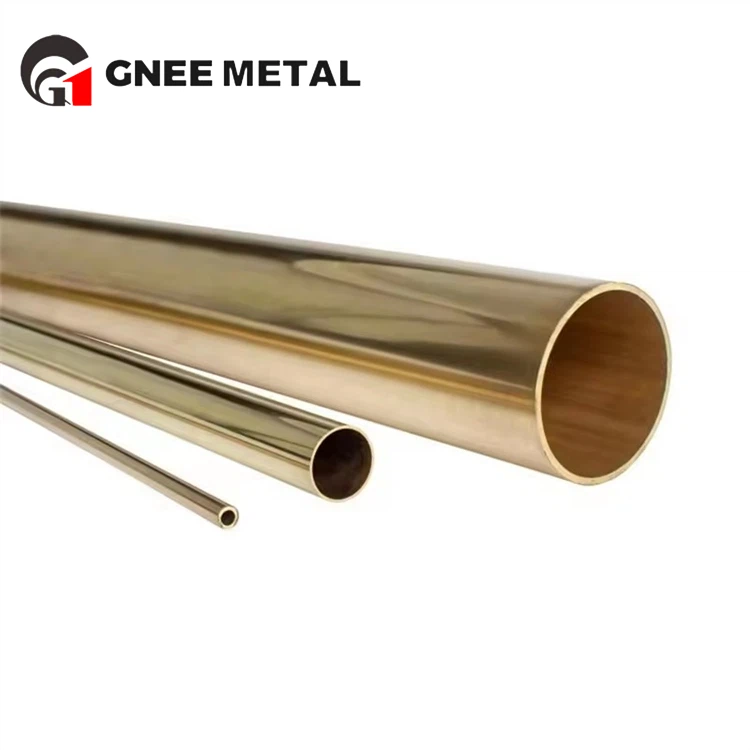
Next, let's discuss the performance comparison and application areas of pure copper and brass!
In terms of physical properties, pure copper has higher electrical and thermal conductivity, while brass exhibits superior mechanical strength and wear resistance.
In terms of chemical stability, while both are highly resistant to most acidic and alkaline solutions, brass may experience stress corrosion cracking under certain conditions (such as seawater and ammonia), while pure copper is relatively more stable. As for price, brass generally costs less than pure copper due to its inclusion of a certain proportion of the relatively inexpensive element zinc.
In the field of power transmission, pure copper is one of the most commonly used materials in power transmission lines due to its excellent electrical conductivity. From overhead wires on high-voltage transmission towers to small electrical wiring in homes, it is almost always made of pure copper.
In architectural decoration, brass, with its unique golden luster and ease of processing, has earned it a prominent place in interior and exterior building decoration. Door handles, handrails, lamps, and other decorative items are often made of brass, which is both aesthetically pleasing and durable.
In mechanical manufacturing, brass is undoubtedly a good choice for components requiring high strength and good machinability. Brass is often used in key components of automobile engines, such as piston pins, connecting rod bushings, and valve bodies in hydraulic systems.
In musical instrument manufacturing, brass is the primary material for many wind instruments in orchestras, such as trumpets and trombones. These instruments leverage brass' unique sound conductivity and aesthetic qualities to imbue music with rich emotional expression.
In the field of daily necessities manufacturing, many common items such as faucets, locks, and zippers are made of brass, owing to its aesthetic appeal and long service life.
In summary, pure copper and brass each have their own strengths, demonstrating their superiority in different applications.
With the rapid advancement of new materials technology, we believe that these two materials will continue to find their place in more emerging fields, making greater contributions to advancing scientific and technological progress and social development. Whether in traditional industrial production or modern art design, pure copper and brass will continue to shine with their unique charm, writing new chapters for themselves...
The company has a cluster of leading copper processing production lines in China, including:
German imported precision copper tube production line (annual output of 30,000 tons)
Japanese technology copper foil rolling line (thinnest up to 6μm)
Fully automatic copper bar continuous extrusion line
Intelligent copper sheet and strip finishing mill unit
Digitalized control and management of the whole production process is realized through MES system, and the dimensional accuracy of the products can reach ±0.01mm.