


Brief Introduction of Japanese Standard Main Brass and High Strength Brass

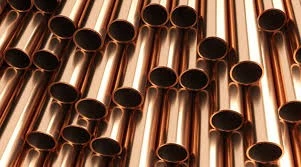

Cast brass is a copper alloy made by adding zinc to copper, also known as brass.
CAC201 (YBsC1) is a Cu-Zn alloy, and CAC202 (YBsC2) and CAC203 (YBsC3) are Cu-Zn-Pb alloys with lead added.
Brass is a widely used copper alloy, but rolled copper products are more commonly used than sand casting products.
Other copper alloys are generally used for mechanical parts, while CAC406 has high resistance to dezincification and has been widely used in water supply and other water-using fields.
Brass is commonly used for accessories, metal accessories, wiring devices, connectors, groceries, etc.
Characteristics and use examples of brass castings
Symbol (old JIS)
CAC201 (YBsC1) is easy to braze. Its mechanical strength is the lowest among brass types. Flanges, electrical parts, decorative parts, etc.
CAC202 (YBsC2) has good casting properties among brass castings. Electrical parts, instrument parts, general machinery parts, etc.
CAC203 (YBsC3) has higher tensile strength than CAC202. It has the best mechanical strength among brass types. Water supply and drainage accessories, building accessories, electrical accessories, instrument accessories, general machinery accessories, etc.
Main components of brass castings (%)
Symbol (old JIS) Copper: ; Zinc: ; Lead:
CAC201 (YBsC1) - Copper: 83.0 ~ 88.0; Zinc: 11.0 ~ 17.0; Lead: - ;
CAC202 (YBsC2) - Copper: 65.0 ~ 70.0; Zinc: 24.0 ~ 34.0; Lead: 0.5 ~ 3.0;
CAC203 (YBsC3) - Copper: 58.0 ~ 64.0; Zinc: 30.0 ~ 41.0; Lead: 0.5 ~ 3.0.
High-strength brass casting
High-strength brass casting is a copper alloy with improved mechanical properties by adding iron, aluminum and manganese to brass.
As the name suggests, it has high mechanical properties, especially CAC304 (HBsC4) has excellent tensile strength, hardness and wear resistance.
Although it has now been replaced by aluminum bronze, it was once used for marine propellers due to its good seawater resistance.
Characteristics and use examples of high-strength brass castings
Symbol (old JIS)
CAC301 (HBsC1) has better mechanical properties and better corrosion resistance than brass. Ship propellers, bearings, valve seats, levers, ship accessories, etc.
CAC302 (HBsC2) Superior tensile strength and wear resistance than CAC301. Ship propellers, bearings, valve seats, levers, ship accessories, general machinery parts, etc.
CAC303 (HBsC3) Superior tensile strength, hardness and wear resistance than CAC302. Sliding parts, large valves, bushings, gears, cams, cylinder parts, ship accessories, general machinery parts, etc.
CAC304 (HBsC4) has the highest tensile strength, hardness and wear resistance among high-strength brasses. Sliding parts, large valves, bushings, gears, cams, cylinder parts, ship accessories, general machinery parts, wear-resistant plates, etc.
Main components of high-strength brass castings (%)
Symbol (old JIS)
CAC301 (HBsC1)- Copper: 55.0-60.0; Zinc: 33.0-42.0; Iron: 0.5-1.5; Aluminum: 0.5-1.5; Manganese: 0.1-1.5;
CAC302 (HBsC2)- Copper: 55.0-60.0; Zinc: 30.0-42.0; Iron: 0.5-2.0; Aluminum: 0.5-2.0; Manganese: 0.1-3.5;
CAC303 (HBsC3)- Copper: 60.0-65.0; Zinc: 22.0-28.0; Iron: 2.0-4.0; Aluminum: 3.0-5.0; Manganese: 2.5-5.0;
CAC304 (HBsC4)- Copper: 60.0~65.0; Zinc: 22.0~28.0; Iron: 2.0~4.0; Aluminum: 5.0~7.5; Manganese: 2.5~5.0.


