


What is a C11000 copper pipe?
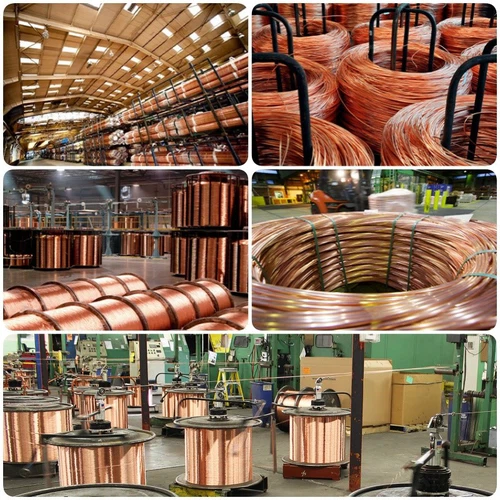
C11000 electrolytic tough copper (ETP copper) is produced by directly converting selected refined cathodes and castings under strictly controlled conditions. C11000 electrolytic copper exhibits excellent machinability, is easy to bend, weld, drill, braze, and form, and can meet virtually any design specification.
ETP copper is the most widely used copper because it is suitable for a wide range of electrical applications. C11000 has a minimum conductivity of 100% and a purity requirement of 99.9%. C11000 copper alloys are widely used and are readily available from several US copper suppliers in plate and bar form.
C11000 copper is primarily used in busbars and as an electrical and electronic conductor. Its chemical composition is 99.9% copper. This electrolytic copper alloy has a density of 8.89 grams per cubic centimeter. The melting point of C11000 is 1065 to 1083 degrees Celsius.
Applications of Electrolytic Copper
Welding fixtures
Anodes
Bus bar in electrical power installations
Ground straps
Automotive rectifiers
Inductors
Glass to metal seals
High resistance ratio cryogenic shunts
Lean-in wire seals
Transistor component bases
Bus conductors
Wave guides
Hollow conductors
Anodes
Fabrication Properties
The fabrication properties of C11000 include:
Machining
The machinability rating of C11000 is 20%.
Welding
Soldering, brazing, gas shielded arc welding, oxyacetylene welding and butt welding are recommended for C11000 copper. Other welding techniques such as coated metal arc welding, spot welding and seam welding are not recommended.
Forging
C11000 copper is forged at hot working temperatures from 760 to 871 degrees Celsius. The hot forgeability rate of this metal is 65%.
Hot working
C11000 copper has excellent hot working property.
Cold working
C11000 copper has excellent cold working property.
Annealing
Annealing C11000 occur at temperatures from 371 to 648 degrees Celsius.

Corrosion Resistance
One of the most unique properties of C11000 copper alloys is its resistance to corrosion.
C11000 has excellent corrosion resistance to weathering and very good resistance to many chemicals. This copper alloy is suitable for use with most waters and can be used underground because it resists soil corrosion. C11000 also resists non-oxidizing mineral and organic acids, caustic solutions and saline solutions.
Copper generally resists:
Mineral acids
Organic acids
Carbolic, citric, Formica, oxalic, tartaric, and fatty acids
Solutions constraint sulfur
Solutions used in pulp mills
Alkaline fused with sodium
Salt solutions
Water, all potable waters
Copper generally does not resist:
Ammonia
Oxidizing acids
Acetic acids
Mercury and mercury salts
why choose us

why choose our products
We are a leading manufacturer and exporter specializing in a comprehensive range of high-quality copper products, including copper tubes, copper plates/sheets, copper bars, copper rods, copper wires, and copper strips. Our advanced manufacturing facilities are equipped with state-of-the-art continuous casting lines, extrusion presses, cold rolling mills, and drawing machines to ensure precision and consistency. Rigorous quality control is integral to our process, conducted through spectrometers for material verification, tensile testers, eddy current testers, and hydrostatic pressure testers, guaranteeing that all our products meet international standards for performance and durability.
E-mail: sales@gneesteel.com


