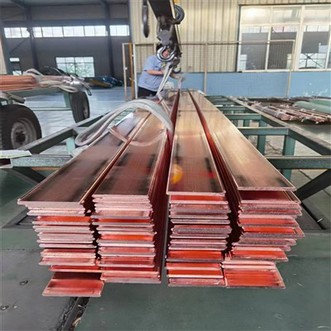
What Are T1, T2, TU1 and TU2 Copper?
T1, T2, TU1, and TU2 are four commonly used wrought copper grades specified in the Chinese GB/T standards. Although all are high-purity copper materials, they differ in oxygen content, electrical conductivity, welding performance, and typical applications.
Among them, TU1 is oxygen-free copper with the highest purity and conductivity, making it suitable for vacuum electronics and semiconductor equipment. TU2 also belongs to oxygen-free copper but contains slightly more oxygen than TU1. T1 and T2 are tough pitch copper grades containing oxygen, with T2 being the most widely used for electrical, industrial, and construction applications due to its excellent balance of performance and cost.
T1 vs T2 vs TU1 vs TU2
| Grade | Cu Min | Oxygen Content | Oxygen-Free? | Best For |
|---|---|---|---|---|
| T1 | 99.97% | <20 ppm | Yes | High-end electrical, welding, cryogenic, vacuum |
| T2 | 99.90% | 200-500 ppm | No | General electrical, busbars, grounding, plumbing |
| TU1 | 99.97% | <10 ppm | Yes | Ultra-high purity, semiconductor, critical vacuum |
| TU2 | 99.95-99.97% | <20 ppm | Yes | Oxygen-free at lower cost than TU1 |
Use T1 for demanding applications that need oxygen-free copper. Use T2 for standard applications where budget matters. Use TU1 for the highest purity requirements. Use TU2 when you need oxygen-free but TU1 is too expensive.

Equivalent Grades
| China | ASTM | UNS | EN | JIS |
|---|---|---|---|---|
| TU1 | C10100 | C10100 | CW009A | C1011 |
| TU2 | C10200 | C10200 | CW008A | C1020 |
| T1 | - | - | - | - |
| T2 | C11000 | C11000 | CW004A | C1100 |
Chemical composition comparison of four copper grades
| Element (max %) | T1 | T2 | TU1 | TU2 |
|---|---|---|---|---|
| Copper (min %) | 99.97 | 99.90 | 99.97 | 99.95 |
| Oxygen | 0.002 (20 ppm) | 0.05 (500 ppm) | 0.001 (10 ppm) | 0.002 (20 ppm) |
| Phosphorus | 0.002 | 0.005 | 0.002 | 0.002 |
| Iron | 0.004 | 0.005 | 0.004 | 0.004 |
| Lead | 0.003 | 0.005 | 0.003 | 0.003 |
| Antimony | 0.002 | 0.002 | 0.002 | 0.002 |
| Arsenic | 0.002 | 0.002 | 0.002 | 0.002 |
| Bismuth | 0.001 | 0.001 | 0.001 | 0.001 |
| Total impurities (excluding oxygen) | 0.03 | 0.10 | 0.03 | 0.05 |
T1 and TU1 have the same copper minimum (99.97%) but TU1 has tighter oxygen control (<10 ppm vs <20 ppm)
TU2 has slightly lower copper minimum (99.95%) than T1 and TU1
T2 has the lowest purity and highest oxygen of the four grades
Oxygen content difference between oxygen-free and standard copper
| Grade | Oxygen Content | Classification |
|---|---|---|
| TU1 | <10 ppm | Oxygen-free (highest grade) |
| TU2 | <20 ppm | Oxygen-free |
| T1 | <20 ppm | Oxygen-free (by standard, but TU designation is stricter) |
| T2 | 200-500 ppm | Not oxygen-free |
Why oxygen content matters:
Welding: Oxygen causes porosity in welds. T2 welds poorly. T1, TU1, and TU2 weld excellently.
Hydrogen embrittlement: Oxygen reacts with hydrogen to form steam, cracking the copper. T2 is vulnerable. T1, TU1, and TU2 are safe.
Vacuum service: Oxygen contributes to outgassing. T2 outgasses more. T1, TU1, TU2 outgas less.
Conductivity: Oxygen slightly reduces conductivity. T1, TU1, TU2 have slightly higher conductivity than T2.
Electrical conductivity comparison T1 vs T2 vs TU1 vs TU2
| Grade | Conductivity (% IACS) | Notes |
|---|---|---|
| TU1 | ≥101% | Highest purity, highest conductivity |
| T1 | ≥101% | Same as TU1 for practical purposes |
| TU2 | ≥100% | Typically 101% in production |
| T2 | ≥100% | Minimum 100%, typical 100-101% |
For a busbar carrying 1000 amps, T1 or TU1 generates about 1% less heat than T2. For most applications, this difference is negligible. For high-current switchgear or efficiency-critical systems, it is a real advantage.
Thermal conductivity comparison of Chinese copper grades
| Grade | Thermal Conductivity (W/(m·K)) | Difference from T2 |
|---|---|---|
| TU1 | ~391 | +1.5% |
| T1 | ~391 | +1.5% |
| TU2 | ~390 | +1.3% |
| T2 | ~385 | Baseline |
A heat exchanger made from T1 or TU1 transfers about 1.5% more heat than one made from T2. For most HVAC applications, this difference is too small to matter. For high-performance thermal systems, the difference can justify the higher cost.
Mechanical properties comparison T1 T2 TU1 TU2
Annealed (soft) condition:
| Property | T1 | T2 | TU1 | TU2 |
|---|---|---|---|---|
| Tensile strength (MPa) | 200-250 | 200-250 | 200-250 | 200-250 |
| Yield strength (MPa) | 40-60 | 40-60 | 40-60 | 40-60 |
| Elongation (%) | ≥30 | ≥30 | ≥30 | ≥30 |
| Hardness (HV) | 40-60 | 40-60 | 40-60 | 40-60 |
Half-hard condition:
| Property | T1 | T2 | TU1 | TU2 |
|---|---|---|---|---|
| Tensile strength (MPa) | 250-300 | 250-300 | 250-300 | 250-300 |
| Yield strength (MPa) | 150-200 | 150-200 | 150-200 | 150-200 |
| Elongation (%) | 10-20 | 10-20 | 10-20 | 10-20 |
Hard condition:
| Property | T1 | T2 | TU1 | TU2 |
|---|---|---|---|---|
| Tensile strength (MPa) | 300-360 | 300-360 | 300-360 | 300-360 |
| Yield strength (MPa) | 250-300 | 250-300 | 250-300 | 250-300 |
| Elongation (%) | 2-6 | 2-6 | 2-6 | 2-6 |
Weldability comparison of four copper grades
| Grade | Oxygen Content | Weldability | Need for Flux | Porosity Risk |
|---|---|---|---|---|
| TU1 | <10 ppm | Excellent | No | None |
| TU2 | <20 ppm | Excellent | No | None |
| T1 | <20 ppm | Excellent | No | None |
| T2 | 200-500 ppm | Poor | Yes | High |
Why T1, TU1, and TU2 weld better: They contain almost no oxygen. During welding, there is no oxygen to react with hydrogen and form water vapor. This means no gas porosity, no embrittlement, and no cracking.
Why T2 welds poorly: T2 contains 200-500 ppm oxygen. When heated, that oxygen reacts with any available hydrogen to form steam inside the weld pool. The result is porous, weak, brittle welds unless special fluxes or shielding gases are used.
Hydrogen embrittlement risk across copper grades
Hydrogen embrittlement occurs when oxygen-containing copper is heated above about 400°C in a hydrogen atmosphere. Hydrogen reacts with oxygen to form water vapor, which cracks the copper from the inside.
| Grade | Oxygen Content | Hydrogen Embrittlement Risk |
|---|---|---|
| TU1 | <10 ppm | None |
| TU2 | <20 ppm | None |
| T1 | <20 ppm | None |
| T2 | 200-500 ppm | High |
Price comparison T1 vs T2 vs TU1 vs TU2
| Grade | Relative Price | Why |
|---|---|---|
| T2 | Lowest (baseline) | Standard copper, most common, lowest production cost |
| T1 | +10-20% vs T2 | Higher purity, oxygen-free |
| TU2 | +15-25% vs T2 | Oxygen-free with dedicated process control |
| TU1 | +25-40% vs T2 | Highest purity, tightest oxygen control, lowest volume |
Is the premium worth it?
| If you need... | Choose... | Justification |
|---|---|---|
| Welding | T1 or TU2 | T2 fails. Premium is mandatory. |
| Hydrogen atmosphere | T1 or TU2 | T2 fails. Premium is mandatory. |
| Vacuum service | TU1, TU2, or T1 | T2 not suitable. |
| Maximum purity | TU1 | Only TU1 meets highest spec. |
| General electrical | T2 | No benefit from higher grades. |
| Cost-sensitive project | T2 | T1, TU1, TU2 are overkill. |
Application
T1 applications (high-purity oxygen-free, best value for most demanding uses):
High-end electrical busbars and switchgear
Welded copper assemblies
Cryogenic transfer lines and equipment
Vacuum brazing components
High-end audio cables
RF and EMI shielding
Heat exchangers requiring welding
T2 applications (standard copper, best for general use):
Standard electrical busbars (bolted connections, no welding)
Grounding strips and rods
Plumbing pipes and fittings
Architectural copper (roofing, flashing)
Heat exchangers (brazed or mechanically assembled, not welded)
Stamped and formed parts with no welding requirement
TU1 applications (ultra-high purity, best for critical applications):
Semiconductor manufacturing equipment
Ultra-high vacuum systems
Aerospace and defense components with strict purity requirements
Medical devices requiring certified purity
Research instruments and particle accelerators
Any application where 99.99% equivalent is specified
TU2 applications (oxygen-free at lower cost than TU1):
Vacuum brazing (when TU1 is too expensive)
Welded assemblies (same performance as T1)
Hydrogen atmosphere applications
Oxygen-free copper requirements without TU1's premium
Substitute for ASTM C10200 when budget matters
TU1 vs T1 which one is purer
TU1 and T1 have the same copper minimum (99.97%), but TU1 has tighter specifications.
| Property | T1 | TU1 | Difference |
|---|---|---|---|
| Copper min (%) | 99.97 | 99.97 | Same |
| Oxygen max (ppm) | 20 | 10 | TU1 is tighter |
| Total impurities max (%) | 0.03 | 0.03 | Same |
| Typical price | Lower | Higher | TU1 costs more |
When to choose TU1 over T1:
Your customer specification explicitly requires TU1
You need oxygen content below 10 ppm
You are working in ultra-high vacuum
You are making semiconductor or aerospace components
Budget is not the primary concern
When T1 is sufficient:
Most welding applications (20 ppm oxygen is fine)
Most vacuum brazing (20 ppm is acceptable)
Cryogenic equipment
High-end electrical
High-end audio
TU2 vs T2 which one should you choose
| Property | TU2 | T2 |
|---|---|---|
| Copper min (%) | 99.95 | 99.90 |
| Oxygen content | <20 ppm (oxygen-free) | 200-500 ppm (not oxygen-free) |
| Weldability | Excellent | Poor |
| Hydrogen embrittlement risk | None | High |
| Vacuum suitability | Yes | No |
| Price | Higher | Lower |
When to choose TU2:
You need oxygen-free copper
You are welding the copper
Your application involves hydrogen atmospheres
You need vacuum service
TU1 is too expensive
When to choose T2:
You do not need oxygen-free properties
Your application involves no welding
Budget is a primary concern
You are making standard busbars or grounding components
Complete cross reference table Chinese copper grades
| Chinese Grade | Description | Cu Min | Oxygen-Free? | Nearest ASTM |
|---|---|---|---|---|
| T1 | High-purity oxygen-free | 99.97% | Yes | C10200 |
| T2 | Standard pure copper | 99.90% | No | C11000 |
| T3 | Low-purity copper | 99.70% | No | None |
| TU1 | Ultra-high purity oxygen-free | 99.97% | Yes (ultra-low O) | C10100 |
| TU2 | Oxygen-free copper | 99.95% | Yes | C10200 |
| TP1 | Phosphorus deoxidized (low P) | 99.90% | No | C12000 |
| TP2 | Phosphorus deoxidized (high P) | 99.90% | No | C12200 |
| If you need... | Choose... |
|---|---|
| Highest purity (99.99% equivalent) | TU1 |
| Oxygen-free at good price | T1 or TU2 |
| C10200 equivalent | T1 or TU2 |
| C11000 equivalent | T2 |
| C12200 equivalent (plumbing) | TP2 |
| Welding | T1, TU1, TU2 |
| Vacuum brazing | TU1, TU2, T1 |
| General busbars | T2 |
Inspection
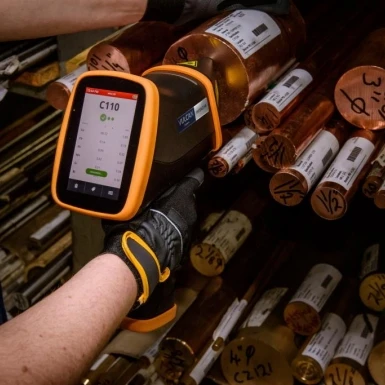
Chemical Composition Analysis
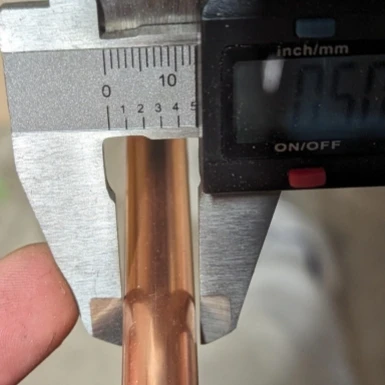
Dimensional Inspection
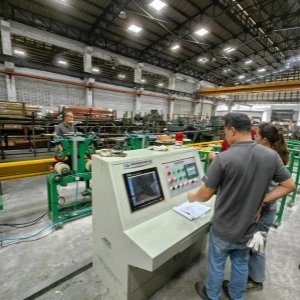
Eddy Current Testing
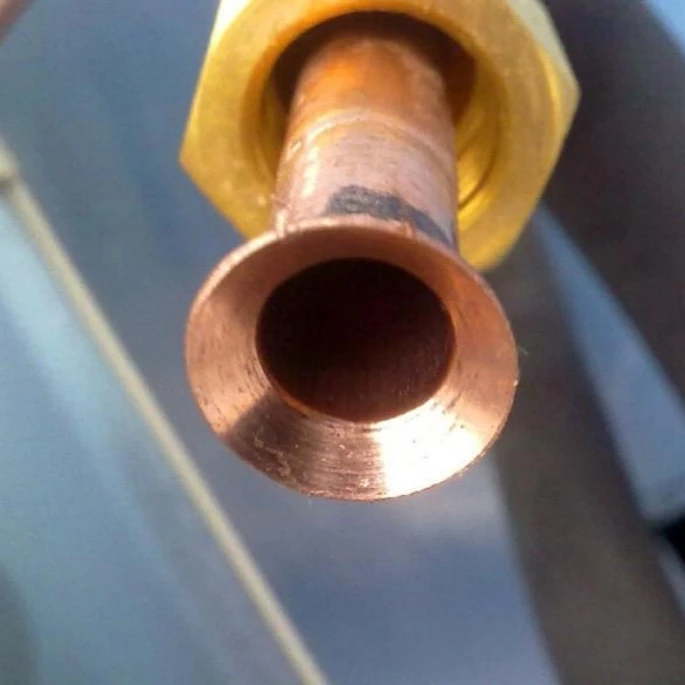
Flaring Test
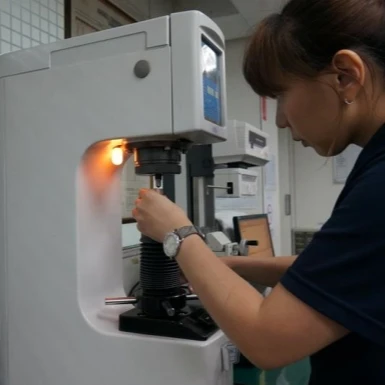
Hardness Test
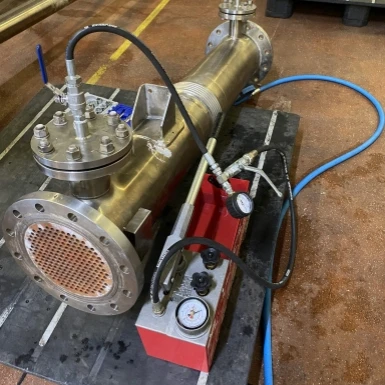
Hydrostatic Pressure Test
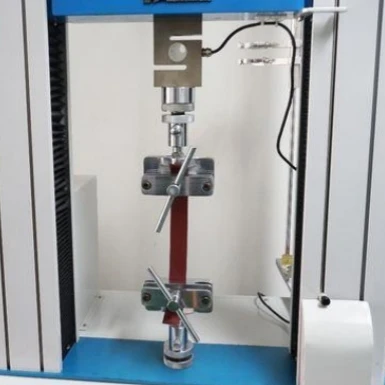
Mechanical Property Testing
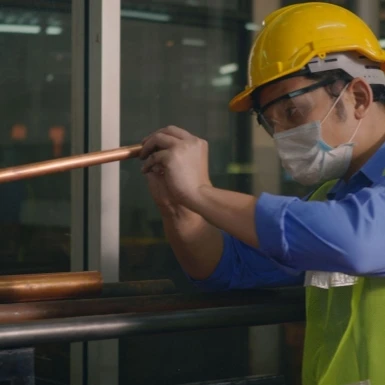
Surface Quality Inspection
FAQ
1. What is the difference between T1 and TU1?
Both have 99.97% minimum copper content, but TU1 has tighter oxygen control: TU1 requires oxygen below 10 ppm, while T1 allows up to 20 ppm. TU1 also has slightly tighter limits on some impurities. For most applications, T1 is sufficient. For ultra-high vacuum or semiconductor applications, TU1 is required.
2. What is the difference between T2 and TU2?
This is a big difference. T2 has 99.90% copper and 200-500 ppm oxygen. It is not oxygen-free. TU2 has 99.95% copper and oxygen below 20 ppm. It is oxygen-free. TU2 welds excellently. T2 welds poorly. TU2 is safe in hydrogen. T2 is not. They are completely different materials despite similar names.
3. Is TU1 better than T1?
For applications that need the absolute lowest oxygen content, yes. For most applications, no. TU1 costs more but delivers benefits that only matter in critical applications like ultra-high vacuum or semiconductor manufacturing. For welding, cryogenic, or general electrical use, T1 is just as good at lower cost.
4. Is TU2 oxygen-free?
Yes, TU2 is oxygen-free copper. The standard requires oxygen content below 20 ppm. TU2 is specifically designed for applications that need oxygen-free properties at a lower cost than TU1. It is an excellent choice for welding, hydrogen atmospheres, and vacuum brazing.
5. Which grade has the highest purity?
TU1 has the highest purity with 99.97% minimum copper and the tightest impurity controls, including oxygen below 10 ppm. T1 also has 99.97% minimum copper but allows slightly higher oxygen. TU2 has 99.95% minimum copper. T2 has 99.90% minimum copper.
6. Which grade is best for welding?
T1, TU1, and TU2 are all excellent for welding. They have very low oxygen content, which prevents porosity and embrittlement. T2 is poor for welding. For most welding applications, T1 or TU2 are the best balance of performance and cost.
7. Which grade is cheapest?
T2 is the cheapest of the four grades. It is standard copper with 99.90% purity and no oxygen-free requirement. T1 is more expensive. TU2 is more expensive than T1. TU1 is the most expensive.
8. Can TU2 replace T1?
For most applications, yes. TU2 has 99.95% minimum copper compared to T1's 99.97%. The difference is very small. Both are oxygen-free. Both weld excellently. Both are safe in hydrogen. TU2 is typically slightly less expensive than T1. For many buyers, TU2 is a cost-effective substitute for T1.
9. Can T2 replace TU2?
No, absolutely not. T2 is not oxygen-free. It contains 200-500 ppm oxygen. If you need oxygen-free properties (welding, hydrogen atmosphere, vacuum), T2 will fail. Do not substitute T2 for TU2 in demanding applications.