


The difference between aluminum bronze ZCuAl9Fe4 and aluminum bronze ZCuAl9Fe4Ni4Mn2

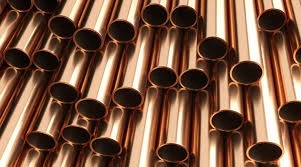

Aluminum bronze ZCuAl9Fe4 and aluminum bronze ZCuAl9Fe4Ni4Mn2 both have high strength and good wear resistance, and can be used for parts with relatively high strength such as screws, nuts, copper sleeves, sealing rings and other wear-resistant parts.
The aluminum content of aluminum bronze generally does not exceed 11.5%, and sometimes appropriate amounts of iron, nickel, manganese and other elements are added to further improve the performance. Aluminum bronze can be heat-treated and strengthened, and its strength is higher than that of tin bronze, and its resistance to high-temperature oxidation is also better. Aluminum bronze containing iron and manganese elements has high strength and wear resistance. After quenching and tempering, the hardness can be increased. It has good high-temperature corrosion resistance and oxidation resistance. It has good corrosion resistance in the atmosphere, fresh water and seawater, and has good machinability. It can be welded but not easily brazed, and it has good pressure processing under hot state.
QAl9-4 aluminum bronze
Grade: ZCuAl9Fe4
Standard: GB/T13808-1992
Characteristics and scope of use: It is an aluminum bronze containing iron, with high strength and antifriction, good corrosion resistance, good pressure processing under hot state, and can be welded by electric welding and gas welding, but the brazing performance is not good. 9-4 aluminum bronze can be used as a substitute for high-tin wear-resistant bronze.
Chemical composition:
Copper Cu: balance
Tin Sn: ≤0.1
Zinc Zn: ≤1.0
Lead Pb: ≤0.01
Boron P: ≤0.01
Aluminum Al: 8.0-10.0
Iron Fe: 2.0-4.0
Manganese Mn: ≤0.5
Silicon Si: ≤0.1
Note: ≤1.7 (impurities)
Mechanical properties:
Tensile strength σb (MPa): ≥540
Elongation σ 10 (%): ≥15
Elongation δ5 (%): ≥17
Hardness :110-190HB
9-4-4-2 aluminum bronze
Grade: ZCuAl9Fe4Ni4Mn2
Standard: GB/T1176-1987
Characteristics and scope of use: It has high mechanical properties, good corrosion resistance in the atmosphere, seawater and fresh water, high corrosion fatigue strength, good castability, good wear resistance, heat resistance below 400℃, can be heat treated, good welding performance, and is not easy to braze.
Chemical composition:
Copper Cu: balance
Lead Pb: ≤0.02 (impurities)
Nickel Ni: 4.0-5.0
Aluminum Al: 8.5-10.0
Iron Fe: 4.0-5.0
Manganese Mn: 0.8-2.5
Silicon Si: ≤0.15 (impurities)
Carbon C: ≤0.10 (impurities)
Note: Total impurities ≤1.0
Mechanical properties:
Tensile strength σb (MPa): ≥630
Yield strength σ (MPa): ≥250
Elongation δ5 (%): ≥16
Hardness: ≥160HB


